

Ethiopia to Pay $213.7 Million in Awash-Kombolcha Railway Arbitration After $1.2 Billion Claim
#EBR_News Oct 20, 2026
Ethiopia has been ordered to pay $213.7 million in net compensation to Turkish construction company Yapi Merkezi over the abandoned contract for the 392-kilometre Awash-Kombolcha-Harabegeya railway project, sharply reducing a claim that initially exceeded $1.2 billion, according to BBC Amharic.
The London Court of International Arbitration issued its final decision on September 23, 2026, following years of arbitration over the railway project, which was disrupted by construction delays and the war in northern Ethiopia.
Yapi Merkezi had sought more than $1.2 billion, including interest, citing delays, unpaid amounts, right-of-way and power supply problems, as well as damage and looting during the conflict.
The arbitration court initially ordered Ethiopia to pay $242.8 million. After deducting $29.1 million in advance payments that the Ethiopian Railway Corporation (ERC) was entitled to recover, the net amount payable to Yapi Merkezi was reduced to $213.7 million.
The award will also accrue interest at 9 percent annually from the start of the legal proceedings until payment, with the daily interest reportedly exceeding $52,000, according to documents obtained by the BBC from the corporation.
War-related damage represented the largest component of the net award, at $89.2 million, or 36.7 percent. Construction delays accounted for 31.6 percent, unpaid payments for 27.7 percent, and lost profits following termination of the contract for the remaining 3.8 percent.
The dispute dates back to the suspension of construction following the outbreak of war in northern Ethiopia in 2020. Yapi Merkezi terminated the contract in January 2021, arguing that ERC had failed to meet key contractual obligations. The contractor subsequently pursued arbitration after negotiations over compensation failed.
One significant outcome for Ethiopia was the removal of the Ministry of Transport and Ministry of Finance from the case. The ministries had initially been included alongside ERC, but the corporation’s lawyers successfully argued that the dispute should remain between the contracting parties. According to sources cited by the BBC, this prevented the case from potentially extending enforcement to broader government assets.
The ruling also transferred ownership of approximately 1,500 vehicles and pieces of equipment to ERC. The equipment had been associated with the compensation claims for war-related damage and could include machinery requiring repairs or maintenance.
Before the arbitration, ERC had reportedly been prepared to pay up to $400 million during a year-long negotiation. Sources close to the corporation told the BBC that the final decision was considered fair because claims that ERC disputed were rejected by the tribunal, while compensation was awarded for circumstances the corporation accepted as established.
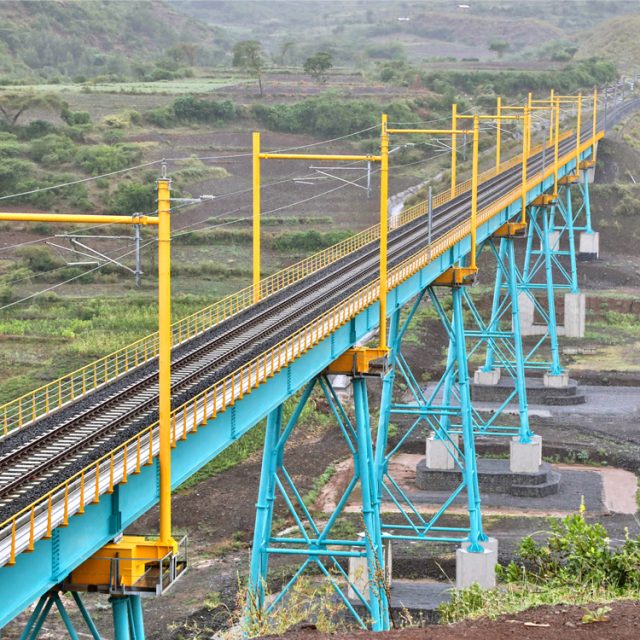
The Awash-Kombolcha-Harabegeya railway was originally contracted as a 42-month project and has a planned length of 392 kilometres and a reported project budget of $1.7 billion. Construction had reached about 92 percent before the project was halted, but sections of the railway subsequently suffered damage from conflict, looting, theft and landslides.
ERC resumed construction using its own capacity in May 2025 and says it expects to complete the remaining work within two years. The project includes 10 stations, tunnels, bridges, power control stations and a maintenance centre.
The railway has been financed partly through external borrowing, including a $1.2 billion loan from Credit Suisse and $300 million from the Export-Import Bank of Turkey. The arbitration settlement therefore adds a significant financial obligation to a project that remains unfinished and requires further investment to restore damaged sections and complete construction.
 Betegbar Yaregal