

 Shimelis Araya
The negative impact on African economies of the COVID-19 pandemic was easily evidenced by the shrinking real GDP of all countries, according to reports released from international organizations. Reports further demonstrated that the extent of the economic slowdown in most countries is linked to the level of integration to the global value-chain, particularly to trade and tourism. A drop in world demand leads to a decline in prices for many of the primary commodities. Specifically, the economic contraction is bigger for exporters of fuel and horticultures. This hugely affected production and export of all economies. African countries through the African Union (AU) are calling to the world’s creditors to reduce or cancel debt. The demand for debt reduction is mainly due to the pandemic that has a devastating effect on the continent’s economy.
 Ashenafi Endale
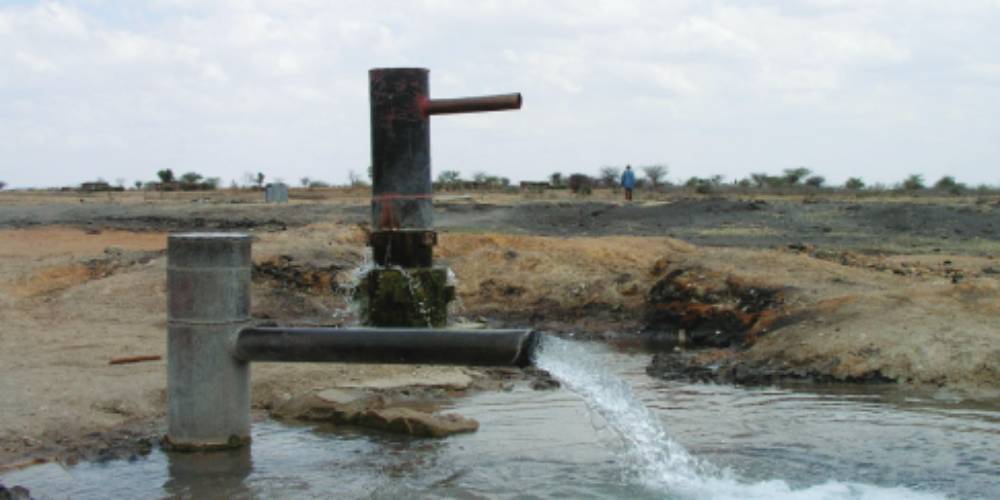
Ethiopia has vast water resources. However, only a fraction of the potential has been realized thus far. Access to fresh water is still a problem in both rural and urban parts of the country. Given the high population growth rate, Ethiopia should utilize groundwater for both agriculture and household use. However, little has been done to tap the huge groundwater resource in the country. EBR’s Mubarek Jemal reports.

Digital health is the provision of health care services using digitized health recordings and electronic mechanisms. In developed countries, it evolved into an ecosystem where even surgery operations are remotely operated, or blood is delivered by drones at emergency spots.
But recently, physical distancing measurements introduced under COVID-19 increased the demand for digital health services even in developing countries like Ethiopia, where even the concept of digital health is at an early stage.
A number of medical graduates and computer engineers are teaming up to design applications to solve the completely manual health services of Ethiopia. Newly established startup incubation centers are also targeting idea creation, nurturing, and linking digital health innovators with investors. Nevertheless, they can hardly find financers as a startup, nor favorable support and policy environment from government. EBR explores the opportune moments knocking at the door for digital health innovators, and the monumental task ahead in digitizing Ethiopia’s health system.

 Abiy Wendifraw
For the sport community, the Olympics are almost a ritual coming every four years but taking a lifetime of preparation. There were only few unfortunate years including during the world wars that forced the world’s greatest sporting festival to not be held. But this time, it is the invisible virus that forced the rescheduling of the Tokyo Olympic Games.
The cost was not only endured by Japan. Especially in track athletics, where Ethiopia beginning with Abebe Bikila had reigned supreme alongside its neighbor Kenya, Ethiopian athletes were dropping every sweat for the Tokyo tournament. EBR’s Abiy Wendifraw witnessed the emotional breakdown hard-trained athletes faced upon the postponed, and possibly cancelled, Olympics.

 Samuel Habtab
Producing a television drama series that airs daily is overambitious, especially considering the broadcast production capacity of Ethiopia. Yet, new approaches are emerging to capture the growing viewership of addictive TV series.
Sewmehon Yismah, 38, is Founder of Sewmehon Film Production. He recently reached an agreement with DStv to produce the first-of-its-kind daily show, titled Adey. The script of the series is contextually adapted from English and other foreign languages. Once produced with localized characters in Ethiopia, it will be aired on a new TV channel to be launched on DStv. DStv outsourced the production to Sewmehon, a new arrangement in Ethiopia’s television drama series production history.
Sewmehon, a movie maker and cinematographer, has produced sensational music clips including Mar Eske Twaf and a number of Amharic movies like Balageru and Sewnetwa, displaying quality that DStv could not ignore. He is also currently producing a documentary on the life and work of Tilahun Gessesse. EBR’s Samuel Habtab visited Sewmehon’s studio to converse on his upcoming work.





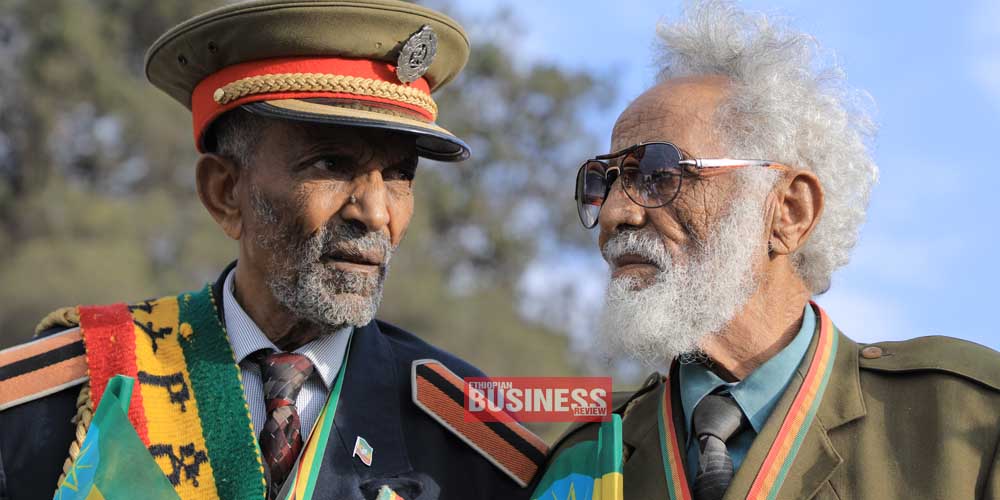









Although the largest trade block, African Continental Free Trade Area, was officially operationalized on January 1, 2021, only Ghana has started tariff free shipments to south Africa and Guinea, so far.
“surely other countries will start trading, as soon as the covid19 pandemic restrictions are lifted,” Brian Mureverwi, trade advisor at Department of Trade and Industry at African Union, told EBR.
However, Ethiopia is among African states that did not offer the types of goods and services it wishes to trade under tariff free, though it is among the 34 countries who ratified the agreement. Countries are expected to liberalize 90pct of the 5,708 items, to start trading.
“technically we have analyzed which items we will liberalize now and which will be held as sensitive sectors, which will be liberalized in the course of the next 13 years. However, we are waiting for Ministry of Finance to approve the items. The ministry is reconsidering the offers, in terms of customs revenue loss, and competitive edge,” Muse Mindaye, Director of Trade Relations and Negotiation at Ethiopia’s Ministry of Trade and Industry, and member of the national negotiator team, told EBR.

Connecting all of Africa to mobile internet by 2030 would add 5.5pct to projected economic growth of the region over the next decade, a latest report by Global System for Mobile Communication (GSMA) indicated. At the end of 2019, the economic benefits generated from mobile technology in Africa accounted for 6.2pct of the continent’s GDP.
Nonetheless, the report also revealed Africa allocate low spectrum but charge higher price.
African governments had licensed an average of around 80 MHz of spectrum per operator and 250 MHz per country, half less than the global average of 150 MHz assigned per operator and 480 MHz per country,
Yet, median prices of telecommunication spectrum in Africa are four times higher than in the developed world and twice as high as the global median. ‘This gap in spectrum assignments has emerged and expanded over the last decade, making it difficult for African operators to offer fast mobile broadband speeds.’
Despite continued progress with the expansion of mobile service and mobile internet connectivity, 50pct of Africans (680 million people) did not use mobile and almost 75pct (950 million people) did not access mobile internet services in 2019.
Ill-advised spectrum allocation policies are affecting spectrum fees operators pay to access spectrum, affecting development of telecom industry, particularly mobile connectivity, according to the report. ‘For instance, when spectrum is auctioned, governments can increase fees by setting excessive minimum prices (i.e. reserves), artificially limiting spectrum supply or creating uncertainty around the future availability of spectrum,’ states the report, which assessed 50 African countries against benchmark of 80 countries around the world, for 2010 to 2019 period.
The report indicated many African countries still have unsold spectrum, which could accelerate connectivity of 3G, 4G and 5G.
‘African governments should assign spectrum that is left over for use in the 900, 1800 and 2100 MHz bands, and further assign spectrum that facilitates 4G coverage expansion, including digital dividend spectrum (700 and 800 MHz bands), as well as capacity spectrum (2300 and 2600 MHz bands). Authorities should also plan to allocate mmWave spectrum, which will be required for 5G,’ recommends the report.
PM Abiy Ahmed (PhD) approved an initiative to establish the first agricultural bank in Ethiopia. The idea to create a specialized bank that serves the sector, was imbedded in the draft Agriculture and Rural Development Policy, which is revised and expected to be launched soon.
Though the idea was forwarded by Agricultural Transformation Agency (ATA), while the Ministry of Agriculture has initiated the move and is already in preparation to establish the agricultural bank, Chimdo Anchala (PhD), Senior Director for Production and Productivity at ATA, confirmed to EBR. “employees working in the agriculture sector, and also the private sector engaged in agricultural businesses will be the shareholders. many new banks are being established but none are specializing in agriculture.”
There are over 3,000 people employed in the sector, expected to be shareholders.
“Access to finance is big problem in agriculture. Capital is formed in agriculture sector but invested in other sectors such as construction. It is very difficult to access foreign currency even to import fundamental inputs such as fertilizer, although foreign currency is generated by exporting agricultural commodities. The new agricultural bank will solve these problems, especially in financing agricultural input supply,” said Mengistu Tesfa, Director of Agricultural Inputs and Market Directorate at the ministry.

 Ethiopian Business Review