

 Ethiopian Business Review
The foreign direct investment (FDI) in Ethiopia, in 2011/12, was hugely dominated by two countries. Perhaps, contrary to what many people might think, Turkey and India took 58.75 per cent of the total FDI capital registered in the last fiscal year. If we see the data of only the top 10 total capital, the two countries’ contribution increases to more than 81 per cent. In terms of job opportunities, 62 Indian projects which created employment opportunities for 46,131 people (over 28 per cent of the total jobs FDI brought in the year) leads the group, while Turkish investors with 22 projects created 12,004 people is the second. Investment from neighbouring Sudan which created 11,645 jobs was the third.
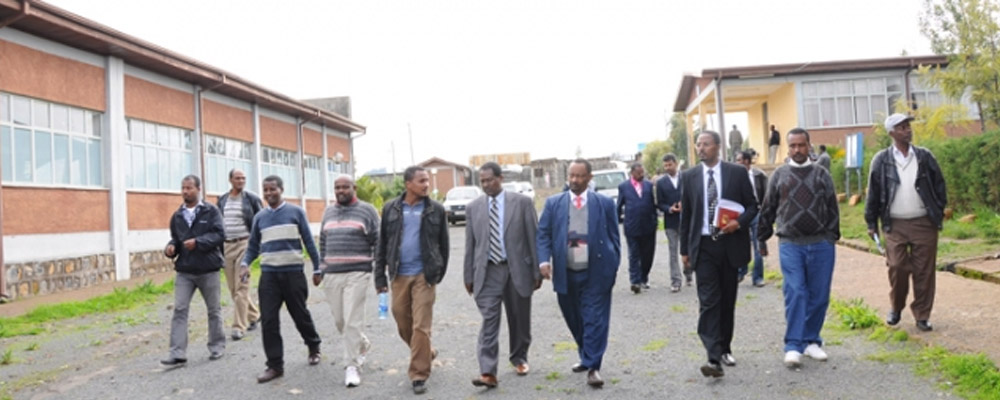
- Acquires a New Campus in Fitche Town
Addis Ababa University (AAU) expands its horizon to Agriculture by opening departments of Animal Science, and Plant and Horticulture Science at a new campus named Selale Campus in Fitche Town, North Shewa Zone, Oromia National Regional State. The College of Veterinary Medicine and Agriculture will host the departments. The newly formed college came about following a recent restructuring of academic units in the University. The College comprises the former School of Veterinary Medicine, located in Bishoftu (Debre Zeit) which was then under the College of Health Sciences.
The Ethiopian Revenue and Customs Authority’s achievement in collecting an aggregate of 70.7 billion birr in 2011/12 is 39.22 per cent higher than the previous year, and almost 93 per cent of its stretched plan for 76.3 billion birr. However, the government expected ERCA to collect 70 billion birr for the year. From what it was supposed to collect as per the plan of its supervisors, ERCA’s achievement was above target.
 Abiy Wendifraw
In mid February 2010, Ministry of Finance and Economic Development (MoFED) representatives attended a workshop in Mombasa, Kenya. The Workshop was about Integrated Financial Management Information System (IFMIS), which MoFED had planned months earlier.
IFMIS, which is expected to raise efficiency, effectiveness and transparency in financial sector has “successfully” finished its pilot phase, after two years. The pilot project, which consumed USD 19 million, had been running under close supervision of MoFED. Since last September, the project has been moving to implement the system in selected ministries, federal agencies and regional bureaus.
Ethiopian Airlines will extend the Addis Ababa – Bangkok route to Kuala Lumpur on October 31, 2012 with a frequency of three flights per week, the airline said in an email response to Ethiopian Business Review. The airline has also postponed the launching of flight to Sao Paulo, Brazil from its original schedule in December 2012 to March 2013. Ethiopian needs to finalize formalities with the Civil Aviation Authority of Brazil to get regular landing permission at Latin America’s busiest city.
Ethiopian Airlines will be the second African Airline to operate flights to both destinations after South African Airways.

For most, the Olympics is just a huge sporting event. But for some, it is more than that. Some sport pundits love to compare nations’ status in the Olympic medal table with the level of their global power. At some stage, during the cold war, the relative power of United States and Soviet Union were usually evaluated by the number of (Gold, Silver and Bronze) medals they scored in the Olympics. In the last three Olympics though, it has been China and America competing for the supremacy in the biggest event of the globe.
 Addisu Deresse
Are you one of those who think they have a job merely because the alarm is set to wake you up every morning and tackle Addis Ababa’s discomfort of transportation to get to office? Are you coerced to do a part time job when what you want is to work 40 hours a week in an office? Are you a secretary, these days referred administrative assistant, using an old typewriter in the world of computers or simply using the latest Macintosh computers for solitary games? Or, are you an Engineering graduate who took up a cobblestone job with the nation’s road construction projects?
Ethiopian Revenues and Custom Authority (ERCA) is planning training of more than 1200 logistic operators in November, 2012 Ethiopian Business Review learned. Applicants have paid 6528.84 birr each to receive training. Upon completion, the trainees will receive certificate of competence which will make them eligible to get license for transit and logistics services.
The authority set the new training after considering repeated request by importers and exporters.
- UNDP, EU and Other Development Partners Sponsor MoFED
For fast growing economies like Ethiopia, economic forecasting is very crucial. Making strategic decisions with uncertainties means that nations are frequently in need of forecasts. This effort can be put into practice at the macro level for country’s GDP, inflation, unemployment or fiscal deficit. It can also be applied at the micro level for specific sectors in the economy or even specific firms. But doing this is not as such an easy task, especially, in developing countries. The lack of analytic forecasting experts of their own, forces least developed countries to rely on global institutions such as the World Bank and International Monetary Fund (IMF).
 Alemayehu Geda (Prof.)
Macro policy is not made in a political vacuum. The political economy context, both internal and external, in which macro policy is formulated, has a strong bearing on the resultant macro policy and hence the macroeconomic environment that private economic agents do face.
Macro Policy making in Africa has been primarily driven by the influence of the World Bank and International Monetary Fund (IMF) (International Financial Institutions, IFIs henceforth) for the last three decades. This is complemented by the political and intellectual support of IMF to the bank. The macro policy that emerged from the IFIs, termed as ‘Structural Adjustment Programs [SAPs]; and ‘Poverty Reduction Strategy Papers [PRSPs], was, and still is, effectively implemented in the continent. This is mediated through aid conditionality.
