
Kenya Could Have Saved $900 Million on SGR, World Bank Says, Citing Ethiopia Line
#EBR_News Nov 12, 2026
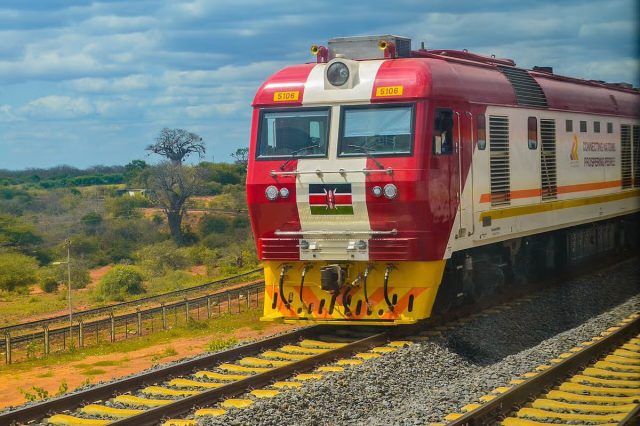
Kenya could have saved up to $900 million on the initial construction of its Mombasa–Nairobi Standard Gauge Railway (SGR) had it matched the per-kilometre cost of comparable lines in the region, including Ethiopia’s Addis Ababa–Djibouti railway, according to the World Bank’s latest Kenya Economic Update.
The report, released in November 2026, puts Kenya’s cost at about $7.6 million per kilometre, against $5.7 million for Tanzania and $5.3 million for the Djibouti–Addis Ababa line.
The report describes Kenya’s line as diesel-powered, while the Tanzanian and Ethiopia–Djibouti lines are electrified. According to the report, Kenya’s higher cost reflects, in part, weaknesses in procurement and land acquisition.
The World Bank estimates that at least 30 percent of the potential savings can be attributed to governance challenges rather than terrain or engineering differences. It cites a preference for direct contracting over competitive tendering, land speculation, and fraud in land titling, valuation and compensation payments.
The figure is a benchmark, not a finding of theft. The report itself acknowledges that construction dates, terrain and technical specifications affect each project’s price, and the 30 percent applies to the estimated savings, not to the entire SGR budget.
Rio Times, in its coverage, noted that the comparison has limits because Kenya’s line uses diesel locomotives while the other two are electrified. Any finding of individual wrongdoing would require separate evidence and due process.
The report also points to a 2026 Transparency International Kenya assessment, which used the Infrastructure Corruption Risk Assessment Tool and flagged the SGR as particularly vulnerable to corruption. Beyond the railway, the World Bank noted that direct procurement and public-private partnerships arising from unsolicited proposals remain common in Kenya.
It warned that awarding contracts to connected parties increases the likelihood of collusion and cost markups during project execution. Africa Sustainability Matters, citing the World Bank, reported that corruption and collusion cost Kenya an estimated 2 percent of gross domestic product annually.
The Addis Ababa–Djibouti line was financed partly by commercial loans from China’s Exim Bank and partly by concessional loans from the Chinese government, and it opened to commercial service in January 2018.
Media reports have put its total cost at about $4 billion for roughly 756 kilometres, which is broadly consistent with the World Bank’s per-kilometre estimate. The railway has cut the journey between Addis Ababa and the Port of Djibouti from about two days by road to around 12 hours, and it serves the government’s export-led industrialisation strategy.
The cost question carries weight because of how Kenya paid for its railway. Rio Times reported that Kenya borrowed about $5 billion from China in 2014 and 2015 for the Mombasa–Nairobi line.
Kenya’s government has long-standing plans to extend the line westward through the Rift Valley to Kisumu and Malaba on the Ugandan border, to link the port of Mombasa to landlocked neighbours. The World Bank’s analysis adds pressure on Nairobi to show value for money before committing to further phases.
 Betegbar Yaregal