558929922_1243345384501043_5727068775813381471_n-1-1280x853.jpg

Betegbar Yaregal

#EBR_News Aug 29, 2026

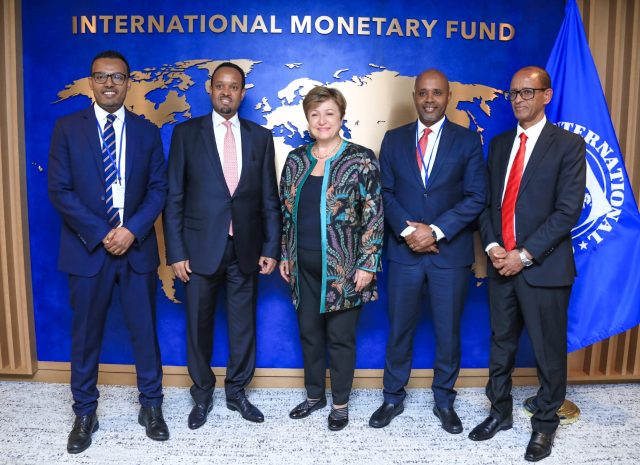
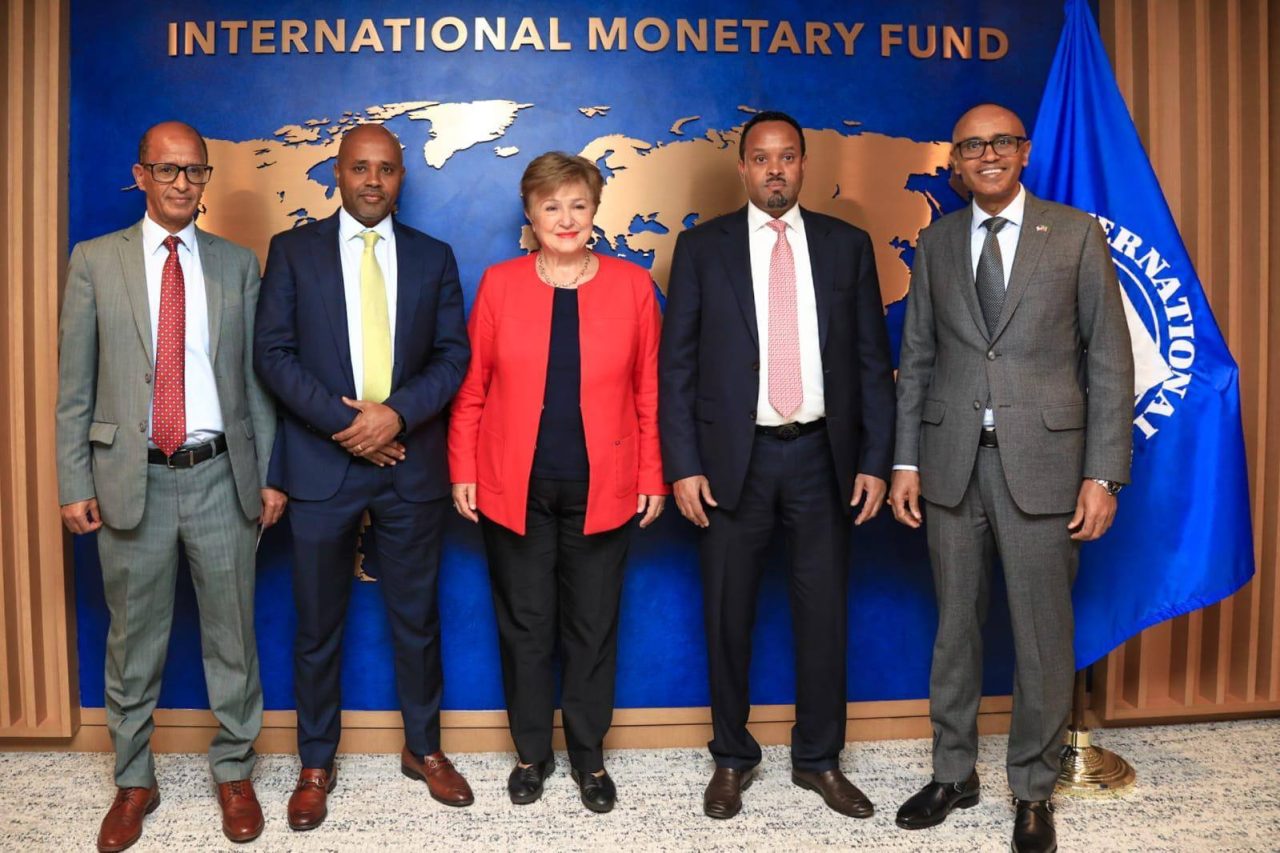
Ethiopia’s standing at the International Monetary Fund is back in focus as the Fund’s Executive Board has pushed back the deadline for member countries to formally consent to a landmark 50 percent increase in IMF quotas, giving Addis Ababa and other members until 15 November 2026 to sign off on a reform years in the making. Even as Ethiopia continues to draw down significant sums under its own four-year reform programme with the Fund.

According to IMF records, Ethiopia currently holds a quota of 300.7 million SDRs, equivalent to about 0.06 percent of the Fund’s total resources, giving it 4,459 votes, or 0.09 percent of overall voting power.

The quota increase was approved by the Board of Governors in December 2023 under the 16th General Review of Quotas. It would raise the Fund’s permanent capital base by 50 percent, from roughly 476.4 billion SDRs to about 715.7 billion SDRs, equivalent to around 960 billion USD, while reducing the Fund’s reliance on temporary borrowed resources.

The increase is equi proportional, meaning each member’s quota rises by the same percentage, so relative voting shares are not expected to shift significantly once it takes effect. The Fund said the 15 November cut-off is itself an extension of an earlier May 2026 deadline, reflecting how many member governments still need domestic ratification before consenting.

Within the Fund’s governance structure, Ethiopia does not sit on the 25-member Executive Board alone. It is represented, alongside 16 other African countries including the Democratic Republic of Congo, Kenya, Sudan and Uganda, in a constituency led by Executive Director Regis Olivier N’Sonde, which together commands 70,549 votes, or 1.40 percent of total Fund voting power.

By comparison, the United States alone holds 17.42 percent of quota and 16.49 percent of votes, an effective veto over major Fund decisions. Ethiopia’s Finance Minister, Ahmed Shide, was among officials from the Intergovernmental Group of Twenty-Four who in April 2026 called for the timely completion of the 16th review, while also welcoming newly agreed principles to steer the Fund’s next quota review.

Beyond the governance debate, Ethiopia’s practical stake in the IMF is considerable. The Fund’s Executive Board completed the fifth review of Ethiopia’s Extended Credit Facility arrangement on 1 July 2026, releasing an immediate disbursement of about 464 million USD, or 342.05 million SDRs.

The completion of that review brought total disbursements under the arrangement to about 2.647 billion USD, out of a 48-month programme worth roughly 3.4 billion USD approved in July 2024, a sum equivalent to 850 percent of Ethiopia’s IMF quota.

The IMF said Ethiopia’s macroeconomic performance under the programme has been strong, citing solid export growth, improved revenue mobilization and reserve accumulation, while noting that authorities continue working on debt restructuring.

The Fund also flagged the war in the Middle East as a significant external shock, particularly through higher import fuel prices, and said around 200 million USD of the programme’s resources would be brought forward, or “rephased,” to ease near-term financing pressure linked to the conflict.


The United States has imposed a 10% tariff on Ethiopian exports as part of President Donald Trump’s latest global trade policies, a move that could have implications for Ethiopia’s export sector.

In a statement from the White House on Wednesday, President Trump justified the sweeping tariff increases—ranging from 10% to 50% on various trading partners—as a strategy to prioritize American economic interests and reduce the country’s trade deficit. Ethiopia was among the nations affected, with exports to the U.S. now facing added costs.

“The United States must protect its economy from unfair trade practices. If other nations impose high tariffs on us, we will respond accordingly,” Trump declared.

He has long advocated for reshaping international trade agreements, claiming that high tariffs imposed by other countries have unfairly subsidised their economies at the expense of the US.

Ethiopia has exported products such as textiles, coffee, and agricultural goods to the U.S. under various trade agreements. The new tariffs could affect the competitiveness of these exports in the American market amid Ethiopia’s suspension from AGOA.

Ethiopia previously benefited from the African Growth and Opportunity Act (AGOA), which provided duty-free access for many products. However, recent policy shifts have changed the trade dynamics between the two nations. With the added tariff, Ethiopian exporters may face increased costs that could impact trade volumes.

The tariff changes come at a time when Ethiopia is seeking to boost exports and attract investment. It remains to be seen how local businesses and policymakers will respond to these trade adjustments.

“Countries such as Kenya, Ghana and Ethiopia with the lowest tariffs of 10% are potential African Winners,” Zemedeneh Negatu, CEO of CBE Capital shared on his social media. “They have a unique opportunity to expand their exports to the U.S. at low tariffs which could make their products more price competitive.”

The new tariffs have prompted reactions from various global stakeholders. The European Union, Japan, and South Korea have raised concerns over the potential impact on global trade and economic stability. Some analysts warn that these measures could lead to inflation in the U.S. and disruptions in supply chains.

“Globalization has entered a new uncharted era and African countries need to prepare,” Zemedeneh Warned

For Ethiopia, the decision adds a new factor to the evolving trade landscape. Businesses may need to evaluate alternative markets or strategies to mitigate potential economic effects.

However, Zemedeneh said that Ethiopia, which has invested hundreds of millions in labor intensive industries for exports such as garments, and competes globally with garment industry heavyweights such as Vietnam and Bangladesh, could price outcompete these two countries which are facing increased U.S. tariffs of 46% and 37% respectively.

The tariff varies across countries. China faces a 34% tariff, while the European Union is subject to 20%. Vietnam is hit with 46%, Taiwan with 32%, and Japan with 24%. India, South Korea, and Thailand face tariffs of 26%, 25%, and 36%, respectively. Switzerland and Indonesia both receive a 32% tariff, while Malaysia is at 24%. Cambodia faces the highest rate at 49%, while the United Kingdom, Brazil, Singapore, Chile, Australia, Turkey, and several other nations, including Ethiopia, are subject to a 10% tariff. Bangladesh is taxed at 37%, while Sri Lanka and Myanmar (Burma) face 44%. Madagascar sees a 47% tariff, Laos 48%, and Lesotho the highest at 50%. Other notable rates include Nigeria at 14%, Côte d’Ivoire at 21%, and Namibia at 21%. Several Middle Eastern and African nations, including Saudi Arabia, Egypt, and Kenya, face a 10% tariff. These tariff adjustments reflect the broader changes in U.S. trade policy under President Trump’s administration.


Ethiopian Business Review | EBR is a first-class and high-quality monthly business magazine offering enlightenment to readers and a platform for partners.


2Q69+2MM, Jomo Kenyatta St, Addis Ababa

Tsehay Messay Building

Contact Us

+251 961 41 41 41