
coffie.jpg

In Ethiopia, coffee is a means of  economic gains for close to 30Pct of the population. Despite being among the top coffee producing countries in the world, Ethiopia lags behind in export earnings. In fact, export revenue from coffee only increased by 22.7Pct to USD882 million from USD719 million seven years ago. Part of the problem is the decline of price observed in the international market especially since 2011, which had adverse effect on the country’s earning. To reverse the situation, the Ethiopia government has been focusing on boosting the volume of export of raw green coffee in the past, which has low value globally compared with roasted coffee. However, there have been interventions in legislations and institutional setups that facilitate the environment for local value adding accompanies in the sector. EBR’s Mikiyas Tesfaye explores Ethiopia’s expedition towards exporting roasted coffee that has more than twofold value compared with the traditional raw green coffee in the international market.


Broadening-the-Tax-Base.jpg

At the end of the just ended fiscal year, Ethiopia’s parliament approved ETB320 billion budget for 2017/18 fiscal year. The Ethiopian Revenue and Customs Authority (ERCA) also planned to collect ETB199 billion in the year, 62Pct of the approved budget. The tax collection in the preceding year was ETB160 billion. The Authority has been working to increase the tax-to-gross domestic-product (GDP) ratio from 13Pct currently to 17Pct in 2020.
However, the recent effort to increase tax collection, thereby improve the tax-to-GDP ratio, by collecting more taxes ended up being controversial. Tax payers repeatedly voice their frustrations in high sales assessment which implies exaggerated tax amount to be required. Experts also challenge the way the government tries to boost domestic resource mobilisation because efforts to create an enabling business climate for small and informal businesses to go formal and contribute more to the national development endeavour remains minimum. EBR’s Samson Hailu explores the issue to offer this report.


Smallholder-Farming.jpg

Small scale farming holds a dominant role in Ethiopian Agriculture. Though productivity is still low, it employs almost 85Pct of the population, produce for consumption, export and industrial raw materials. That’s why; transforming the sector has been a priority for the government.
The annual production by small-scale farmers during the main harvesting season increased from 171 million quintals to 290.4 million quintals within the last ten years, showing a 70Pct increment.
However, with the surging population and looming climate change, experts stress that smallholder farmers cannot continue feeding themselves and the rest of the population and be engines for economic growth in the long run. Experts recommend that enough attention should be given to large scale farming. EBR’s Samson Hailu explores the saga behind small scale farming to offer this report.


Minimum-Wage-SAGA.jpg

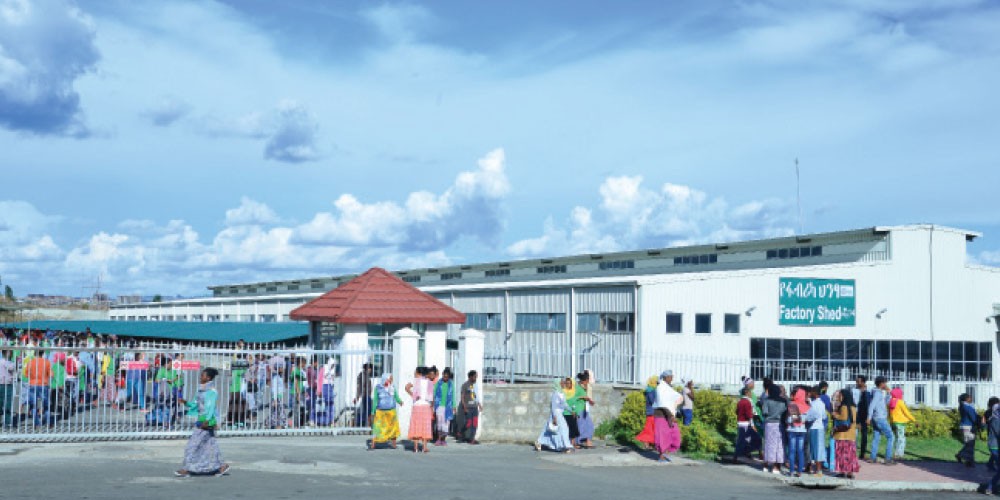
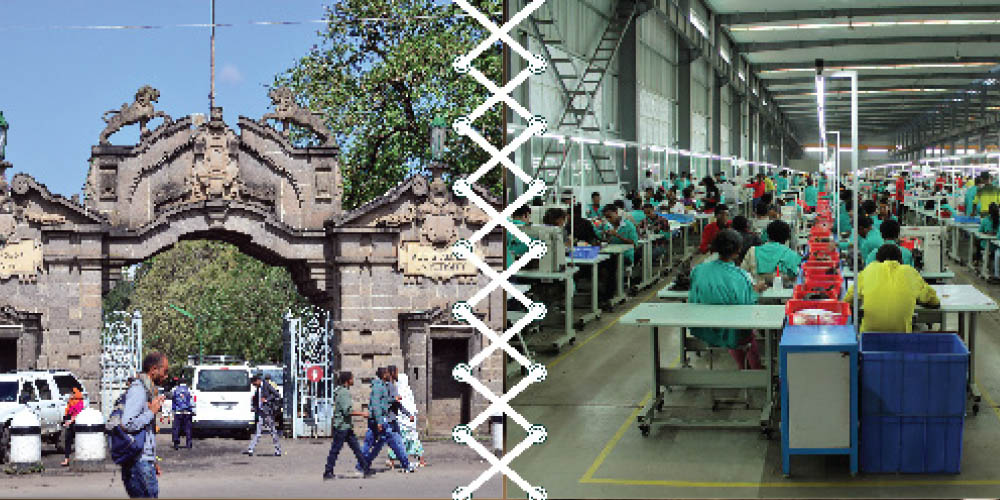
An Old Challenge Surfaces in the new emerging Industry Zones

Industrial Parks have multifaceted benefits. They attract foreign investors with financial, technological and management capabilities, resources that least developed host countries are usually in short supply. Countries which fast expanded parks, such as Vietnam, achieved tremendous leap in manufacturing, thereby increasing job creation and export revenues.
Ethiopia has long realised these benefits and started building more than a dozen parks. Cheap labour and electricity along with lucrative tax incentives, and quota and tariff free access to the big USA, EU and Chinese markets have attracted investors. The presence of ‘cheap labour’ and highly subsidised electricity has especially contributed to Ethiopia’s leading position in Africa as FDI destination. However, the fact that employees are paid as low as USD35 per month, is hugely contributing to low labour productivity, high staff turnover and poor industrial culture. EBR’s Ashenafi Endale visited the Bole Lemi and Hawasa industrial parks to see the extent of the problem.


As-Good-As-No-Policy-.jpg

Lose Code Enforcement Exacerbates Construction Accidents

Construction plays a key role in Ethiopia’s growth narrative. Building construction, a core sub sector of the industry, plays a vital role in catalyzing the growth momentum.
Despite its promises, the safety of construction workers and residents remain problematic especially in big cities like Addis Ababa where massive construction projects are under way. In the current fiscal year alone, 22 people died and 34 workers were injured at construction sites in the capital due to the lack of safety measures.
The sector is plagued by negligence and poor capacity of contractors. Even though the country has a policy and code to ensure quality and safety, it’s not properly implemented due to mediocrity and institutional inefficiency of regulatory organs. EBR’s Ashenafi Endale explores the issue to offer this report.


university-industry-linkages.jpg

Higher education is fundamental to ensure development. Countries that have established research universities with strong linkages with industries have achieved fast and sustainable social and economic transformation. This is because such arrangements help to advance innovations, which can also be incubated into feasible businesses and interventions that help to improve quality of life.

For the last two decades, Ethiopia has hugely invested in education. However, university-industry linkages remain loose. This has hampered industries from improving their competitiveness because they are not getting qualified human resources, and technologies to improve productivity. The universities are also producing research less consumed by the very industries they aim to serve.


slowdown-echonomy.jpg

After a decade of impressive economic growth, Ethiopia has been experiencing a slowdown in the past two years. The situation is evident in all sectors. However, the construction sector and international trade have suffered more visibly. The lack both of local and hard currencies exacerbated the problem.
However, according to NBE, during the first quarter of the current fiscal year, ETB23.3 billion was disbursed in fresh loans, indicating a 19.7Pct yearly growth. Out of the loans, the housing and construction sector received ETB2.8 billion, 10.2Pct of the total disbursed credit while the import and export sector was also one of the major beneficiaries of the fresh loans amounting to ETB4.4 billion, which is 18.8Pct of the total loans.
EBR’s Tamirat Astatkie talked to stakeholders, experts and consulted relevant reports and documents to compile this story.


Trade-Integration.jpg

A Pressing Issue for the New AU Executives

The 28th African Union (AU) Summit on Harnessing the Demographic Dividend through Investments in the Youth was attended by heads of State and Governments in late January 2017.
A key issue for discussion, however, was the election of the new leadership for the AU Commission. More now than ever, the Commission aspires to deepen continental integration. This is a cornerstone for the creation of a prosperous Africa, envisioned under Agenda 2063, which is a strategic framework for the socio-economic transformation of the continent. The Agenda seeks to accelerate the implementation of past and existing continental initiatives for trade and economic integration as well as growth and sustainable development. EBR’s Samson Hailu explores the level of intra-Africa trade and analyses what the role of the newly elected AU executives may take in contributing to the creation of a prosperous Africa.


Energy-Paradox.jpg

The Puzzle of Intermittent Power Outage While the Nation Invests Heavily in Power Generation

In Sub-Saharan Africa, where nearly 600 million people live without electricity according to the Rockefeller Philanthropy, Ethiopia has been a champion of investment in renewable energy. With billions of US dollar investment made in power generations since 1991, the country has increased power production to more than 4200MW. This is an enormous achievement especially when one notes that the country produce only 378MW in 1991. The production will surpass 10,000MW when the USD4.8 billion Grand Ethiopian Renaissance Dam starts power production.
However, within this phenomenal achievement lies an astounding truth – residents and industries suffering from erratic power outages on daily basis. Not only that, up to 30Pct of the power generated are lost due to poor distribution lines exacerbating the already unreliable power supply. The cost has been terrible on personal, institutional and state level. Unregulated power voltages sometimes damage properties and companies fail to produce per target due to power interruption. The implication of these to the national economy is considerable. EBR’s Tamirat Astatkie delved into this complicated matter and consulted researches to shed light on this gruesome reality. He has spoken to government officials and experts to understand what the nation is doing to provide reliable power supply.


Fuelling-Tension.jpg

Fuel’s Small Profit Margin Creates Strain Between Private Sector, Government

Private investors involved in the sale and distribution of fuel know Ethiopia has the smallest profit margin on these goods in Africa – just 1Pct. As a result, investors shy away from the business, thereby contributing to imbalanced supply and demand, even as the number of vehicles in the country increases on a daily basis. To remedy this, the government has stepped in, announcing plans to build fuel stations throughout the capital. However, private sector insiders say they should work instead to improve the profit margin. EBR’s Ashenafi Endale spoke with key stakeholders to learn more about the debate and the growing tension between the public and private sector.


Ethiopian Business Review | EBR is a first-class and high-quality monthly business magazine offering enlightenment to readers and a platform for partners.


2Q69+2MM, Jomo Kenyatta St, Addis Ababa

Tsehay Messay Building

Contact Us

+251 961 41 41 41