
NBE Lifts Credit Cap and Raises Policy Rate to 16 Percent in Unified Shift to Interest Rate-Based Monetary Policy
Betegbar yaregal
#EBR_News Jul 13, 2026
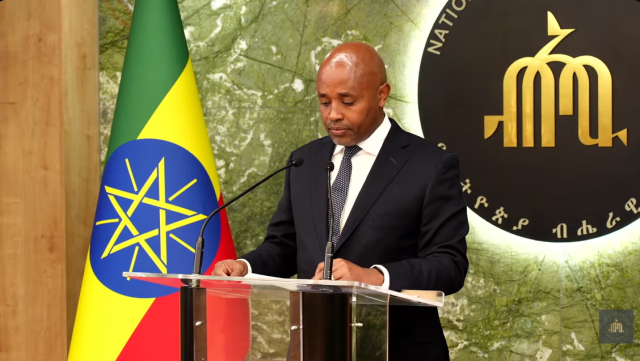
The National Bank of Ethiopia (NBE) has removed its annual credit growth limit known as the credit cap and simultaneously raised its benchmark policy rate by one percentage point to 16 percent, in what Governor Eyob Tekalign described as a single, unified policy package rather than five separate decisions.
The measures were approved by the NBE Board following recommendations by the Monetary Policy Committee (MPC) at its 7th regular meeting held in Addis Ababa on July 13, 2026, and mark a significant shift in how Ethiopia’s central bank manages monetary policy moving from direct administrative controls on credit to an interest rate-based framework using indirect policy instruments.
Eyob said in his remarks following the board’s approval that the credit cap was introduced as a temporary transition instrument until the NBE fully moved to an interest rate-based monetary policy system.
“The National Bank of Ethiopia used the annual credit growth limit as a temporary measure until it fully transitioned to an interest rate-based monetary policy system that utilises indirect monetary policy instruments,” he said, adding that the central bank has now achieved that goal. He was emphatic that the removal of the cap does not signal a loosening of policy. “Lifting this credit growth limit is absolutely not a change in policy, but rather a change in instruments or operational methodology,” Eyob said.
To counter the potential inflationary impact of removing the credit cap which could allow banks to expand lending more freely the MPC recommended and the board approved a one percentage point increase in the policy rate, bringing it from 15 percent to 16 percent, while keeping the existing interest rate corridor of plus or minus three percentage points unchanged.
The MPC press release stated that the NBE will also implement a targeted reserve requirement, an additional reserve requirement applied to individual banks based on regular assessments of their loan-to-deposit ratio in cases where credit expansion poses a risk to the inflation outlook. The committee described the five measures together as a unified package aimed at maintaining a tight monetary policy stance through indirect instruments.
The remaining two measures in the package address the foreign exchange market. According to the MPC statement, the NBE’s foreign exchange commission rate has been reduced from 2.5 percent to 1.5 percent, a move the committee said is intended to reduce import-related costs, contain inflationary pass-through, and promote a more efficient foreign exchange market.
Additionally, the foreign exchange surrender requirement on goods exports has been reduced from 50 percent to 30 percent, a measure the committee said is aimed at enhancing export competitiveness, building market confidence, deepening the foreign exchange market, and improving price discovery.
The policy decisions come against a backdrop of renewed inflationary pressure. According to the MPC statement, headline inflation rose to 13.4 percent in May 2026, up from 11.7 percent in April and 9.7 percent in December 2025, driven by increases in both food inflation at 15.0 percent and non-food inflation at 11.1 percent. The committee attributed the rebound to fuel supply disruptions resulting from the Middle East conflict, which pushed up transportation costs.
The statement noted that Ethiopia had achieved single-digit inflation by December 2025 following the July 2024 macroeconomic reforms, a significant milestone after a prolonged period of elevated rates but that the oil price shock reversed that trend. The committee said inflation is projected to moderate by December 2026 but will likely remain in double digits over the six-month forecast horizon.
On the broader economy, the MPC statement indicated that real GDP grew by 9.2 percent in FY 2024/25, with the industrial sector contributing 3.7 percentage points, services 3.1 percentage points, and agriculture 2.3 percentage points. GDP growth is projected to reach 10.2 percent in FY 2025/26, according to the statement.
The external sector also showed marked improvement, with Ethiopia’s foreign exchange reserves increasing to 20 times their pre-reform levels and the current account deficit narrowing from $6.2 billion in 2023/24 to $1.8 billion in 2025/26, driven by a threefold increase in goods export earnings. The MPC said its next meeting will take place at the end of September 2026 or earlier if warranted.
#NationalBankEthiopia #MonetaryPolicy #CreditCap #EthiopiaEconomy #NBEPolicyRate
 Betegbar Yaregal