gomeju.jpg

Not more than 10 oil suppliers were operational in Ethiopia a decade ago. Now that is just history. The number has now tripled, reaching 33 as of December 2019. Not only this, the ownership structure of these companies has also changed greatly. While oil suppliers established a decade ago were largely owned by foreigners or big corporate, they are now being replaced by locals. But making a profit and staying afloat has not been easy for the majority of them, largely because of the low profit margin set by the government and shortage of forex needed to import lubricants and bitumen. EBR’s Ashenafi Endale explores.


Turning-back-on-agricultural.jpg

The agricultural sector remains underdeveloped and untapped in Ethiopia. Although the sector contributes a third of the country’s GDP and accounts for two-thirds of the workforce, it has not been given the attention it deserves as demonstrated by the minimal finance provided to the sector. Agriculture modernization plans have also remained a myth. Mentioning that it is high-risk, commercial banks are not willing to provide loans to farmers and other actors in the agricultural sector. Even the Development Bank of Ethiopia is no longer interested in financing farmers. Even worse, microfinance institutions, expected to reduce poverty and reach out financially excluded communities, are not in a position to provide much-needed agricultural finance. EBR’s Ashenafi Endale explores.


the-overlooked-local.jpg

Being home to many internationally-acclaimed historical sites, Ethiopia has an immense local tourism potential. But the country has never capitalized on the opportunity. Adding to the minimal travelling habit amongst Ethiopians, the sector is still at its infancy. Tour companies also give more attention to international tourists, largely because it garners foreign currency. Investors are not interested in joining the local tourism sector as there is a sentiment that it is a low rate-of-return investment. Meanwhile, the Ministry of Culture and Tourism is attempting to create awareness amongst the public, but little has been achieved thus far. EBR’s Kiya Ali explores.


Market-Driven-Foreign-Currency-Market.jpg

Is it applicable in Ethiopia

Recently, officials of the National Bank of Ethiopia (NBE) pledged to implement a market-driven exchange rate regime over the next three years. Governor of the NBE, Yinager Dessie, said that his government will opt for a more flexible foreign exchange market to stabilize the level of its currency, deemed overvalued by the IMF. While this is a decision welcomed by the Bretton Woods institutions, it also stirred up controversies over its relevance in solving the forex crisis which has existed for over two decades. Experts fear that it would worsen inflationary pressures and result in an economic crisis shortly thereafter. EBR’s Kiya Ali explores.


Cottage-Industries-Locked-in-a-Cottage.jpg

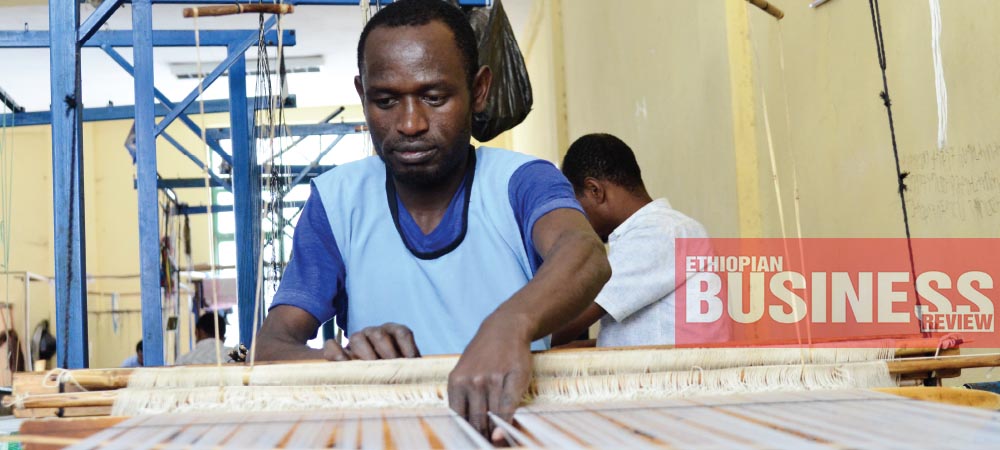
Cottage industry is a segment of the economy whose importance is usually sidelined in Ethiopia. Though accounting for an insignificant share of the economy, it is still believed to be a source of income for many relying on the production of handicrafts and small industry items. Requiring a very small amount of capital, cottage industries employ below 10 individuals and are known for very quality products that are hand-made and preferred by environment-sensitive consumers. Now, this traditional manufacturing system is facing extinction as the government prioritizes medium and large enterprises as well as industrial parks. EBR’s Ashenafi Endale investigates


avocado-the-next-coffee.jpg

Despite its importance and better productivity, little attention is given to the production of avocado in Ethiopia. Excluded from the extension programs run by the government, there is no support system deployed to help avocado farmers. Nonetheless, the consumption of the super nutritional fruit is growing throughout the country as people started to use it in different forms including as an edible oil. Understanding the potential of the fruit, many are joining the avocado market which is also bringing in a considerable amount of foreign currency into the country. EBR’s Ashenafi Endale explores.


growing-gift-delivery.jpg

Businesses that deliver gifts are growing in Addis Ababa. First, it started as a service mainly used by the diaspora community. But lately, the locals are also embracing it. While this has become a source of revenue for many, it has helped individuals save time and strengthen social ties with their loved ones. EBR’s Ashenafi Endale explores.


vehicles-remain-unaffordable.jpg

Buying a car continues to be a daunting task in Ethiopia. Because of its unaffordability, many are forced to become commuters. Although there is hope that it would decline soon following the pledge of the government to reduce taxes on new cars, the price keeps on increasing every day. The local assemblers are also not in a position to fill the existing gap as they sell their cars for a price equal, if not higher, compared to the imported ones. The spike in the price of cars is also worsening the income inequality and implies that the value of the local currency is dwindling against the basket of major foreign currencies. EBR’s Kiya Ali reports.


taxi-hailing-taking-root.jpg

Taxi-hailing services that use online-enabled platforms to connect passengers and drivers are becoming common in Addis Ababa. With the help of apps, these service providers are enabling customers to hail a cab and allow users to pay flat fare in advance, contrary to the metered taxis. The number of companies that provide such services are now six, an increase from two just three years ago. EBR’s Kiya Ali explores the progress of these companies as well as the challenges facing them.


youtube-for-medai.jpg

Lately, more and more people have been waking up to the fact that YouTube can be considered a serious channel for making a living. Many are seizing the opportunities in the digital media industry, inspired by the growing interest of a large audience to video content. The growth of internet users and smartphone ownership in the country, has also led to a considerable growth in the number of people who use YouTube as a source of news and information. This, in turn, enables many YouTubers with content focused on Ethiopia to earn revenues from views, subscriptions and Advertisments. EBR’s Samson Berhane probes into the matter.


Ethiopian Business Review | EBR is a first-class and high-quality monthly business magazine offering enlightenment to readers and a platform for partners.


2Q69+2MM, Jomo Kenyatta St, Addis Ababa

Tsehay Messay Building

Contact Us

+251 961 41 41 41