As-scarce-as-Hen’s-Teeth.jpg

Daily queues to buy edible oil in Addis

If you rely on palm oil for cooking, you may have noticed that it’s increasingly becoming scarce throughout Ethiopia. This shortage has made the government intervene, by lifting a four-year ban on the importation of edible oils for local companies. However, some critics say that this move isn’t enough to change the situation on the ground – and that it won’t be profitable for local companies. EBR’s Ashenafi Endale spoke with experts and people involved in the industry to learn more about what can and should be done to remedy the edible oil shortfall.


Lack-of-Policy.jpg

More than four billion birr was not disbursed in nine months

Five years ago, the Development Bank of Ethiopia (DBE) announced that it planned to give out a large amount of loans to the manufacturing sector, which faced a lack of finances for years. Despite these stated efforts, many local investors argue that they’ve had difficulty in accessing finances. They say that the Bank is plagued by bureaucratic inefficiencies and that it tends to favour foreign investors. In fact, a closer look at the nine-month report of the Bank from the just-ended fiscal year shows that DBE had disbursed only 54Pct of what it planned. They claim that unsettled land issues of loan applicants, and their limited capacities to upfront 30Pct of the equity they need to get 70Pct financing were the major reasons for the Bank’s weak loan disbursement. DBE leaders say policy hurdles that the Bank faces, i.e., the limitation it not accept requests from Small and Micro Enterprises, have contributed to the reasons why a large sum of money has been idle this fiscal year. EBR’s Fasika Tadesse spoke with Bank officials and local investors to write why more than four billion birr was not disbursed to those who need it.


Awakening-the-Sleeping-Giant.jpg

The Commercial Bank of Ethiopia (CBE) was the sleeping giant in the financial sector of the country for decades. Its operating procedure was highly bureaucratic. Often, its staffs used to leave the Bank in search of better prospect to grow. Many senior managers in Ethiopia’s financial sector are in one way or another has an opportunity to work in CBE. They used think that it has nothing new to introduce. Now, that seems thing of the past as the bank is in the process of implementing drastic changes in the way its handles its business in the past six year. The work the bank is currently undertaking seems restoring hope that was once lost for its more than 22,000 employees. EBR’s Pawlos Belete dig deep into what CBE is doing and what it means for the rest of the financial sector.


Inefficient-Transportation.jpg

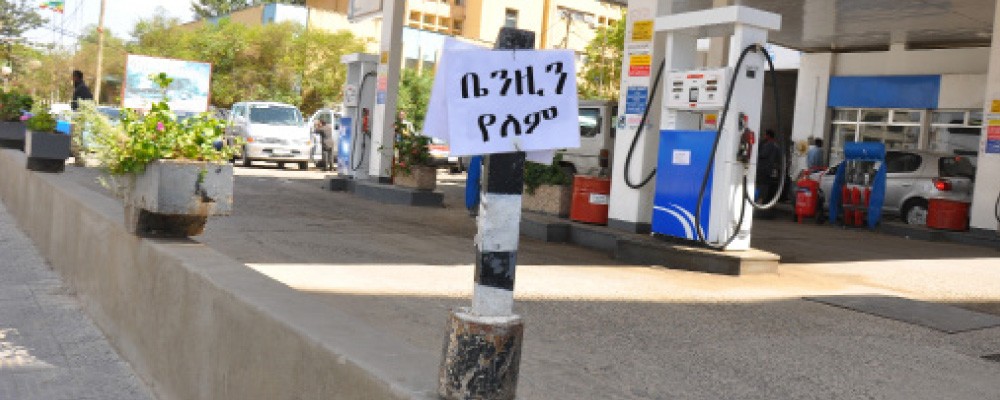
Recently it has been common to see a long queue of vehicles around petrol stations in Addis Ababa searching for fuel, particularly gasoline, commonly known as ‘benzene’. People including taxi drivers and other private vehicle owners run here and there filling up their tanks if they get lucky. The lineups near the stations have exacerbated the high traffic jams that are already annoying people throughout the city.


Pick-’n-Pay.jpg

The saying; ‘a burnt child dreads the fire’ applies to many people who have given their money to real estate developers in Ethiopia because they have been burned repetitively.
More than a few legally registered real estate developers have sold out the land, they have leased from the government to build homes, illicitly, pillaging millions of birr in profits in a villainous process. Then, several other developers who have made promises and deals to deliver finished houses were not able to finish the job on time. They made their clients wait in vain and incur extra costs. Still today, there are some real estate companies that collected pre-payments over seven years ago and haven’t delivered the houses yet.


Getting-Better.jpg

For Americans, the beginning of 2014 marked the launch of a new healthcare system popularly known as “Obamacare”. This health insurance coverage is expected to cut the number of uninsured in half, or about 25 million people, in the next 10 years. Under the much publicized scheme, the US government plans to reshape the healthcare system by allowing as many as seven million people to buy insurance and 8.7 million new beneficiaries to enroll in 2014 alone.


Fixing-the-Leaks-.jpg

Ethiopia Benefits from Remittance Boom Through Formal Channels

Many Ethiopian migrants, who send money for their relatives and families from abroad, previously paid an average of 12 Pct of the remitted amount for the money transferring agents. Sending remittances to Ethiopia, which is one of the top 10 remittance receiving countries in Sub-Saharan Africa, has been costly though the amount varies depending on the remitted amount, the service chosen and the destination. The cost of a money transfer for an average transaction in Ethiopia ranges from as low as around 1 Pct to a maximum of 20 Pct of the amount remitted. The most expensive are the services of global money transferring companies.


On-the-Hook.jpg

Is Ethiopia’s Public Debt Sustainable?

Neither be a lender nor a borrower, for money you lose both your friend [the borrower] and the money itself” has been one of the famous lines from William Shakespeare’s plays. That was many, many years ago. The game has changed now. Not only people, but countries, including the richest ones on earth, from the United States to Japan, from Australia to the UK, borrow a huge amount of money. They have even established institutions that specialize in lending money in massive amounts. Countries borrow money from these institutions and provide loans to one another.


WTO-Accession.jpg

A Quest to be Equal in the Club of Unequals

It has been a decade since Ethiopia applied and began preparations to become a member of the world’s trade governing body, the World Trade Organization (WTO). It submitted the application for the accession in January 2003. Since that time it has accomplished some of the basic requirements and negotiations to be able to ascend. It is expected to complete the negotiations and be a full member as speculated in the Growth and Transformation plan (GTP) by 2015.


Ethiopian Business Review | EBR is a first-class and high-quality monthly business magazine offering enlightenment to readers and a platform for partners.


2Q69+2MM, Jomo Kenyatta St, Addis Ababa

Tsehay Messay Building

Contact Us

+251 961 41 41 41