Unfinished-Task-of-Ensuring-Ethiopian-Coffees-Worth.jpg

Persisting efforts to reposition Ethiopian coffee in the international market have begun to bear fruit, as the price of the nation’s specialty coffee has grown by 35Pct from last year, notwithstanding coffees fetching way above that during the recent Cup of Excellence competition. Yet, international markets are still not working to the interest of coffee growers but rather for processors, who use Ethiopian coffee to spice up their final coffee recipes and thus compensate for low quality coffees bought in bulk from other countries.

Ethiopia has undertaken substantial investment in increasing productivity, as well as straightening the local supply chain. However, such accomplishments domestically are not equally backed with efforts of reasserting the worth of Ethiopian coffee in international markets. Ethiopia still has no decision-making power over its coffees internationally, as coffee is mainly exported just to generate foreign currency. EBR’s Ashenafi Endale explores the remaining homework in removing the glass ceiling looking down on Ethiopian coffee.


cement-factory.jpg

It is to be expected that whenever demand is high, the market usually responds by supplying more. But this year in Ethiopia, supply of cement was 5.5 million tons below demand. Though shortages began in 2018, major fluctuations have twice been seen in 2021 owing to spare part and maintenance problems on one side, and political insecurity and war on the other—even to the extent of the full shutdown of Messebo Cement Factory in Tigray and its 2.1 million tons of production.

Additionally, the government is handicapped to effectively oversee distribution of even produced cement, to the point where it could only be accessed from the black market for a certain period. EBR’s Ashenafi Endale assesses how Ethiopia could go from self-sufficiency to the reconsideration of cement imports.


the-gravity-of-paper.jpg

Of the under-pressure media sector in Ethiopia, private press is perhaps enduring the highest burden—constantly increasing rates by printers. This expense, which takes up half of Ethiopian periodicals’ annual outlays, persists in an overall rough environment where distributors are cartel-like and government is not the friendliest. Add to this encroachment by cheaply produced digital news and reduced advertising activity, private weeklies and monthlies in Ethiopia are an endangered species. EBR’s Ashenafi Endale looks into the company’s parent industry where solutions are found in better local pulp and paper production, in-house printing and distribution, and better-quality journalism.


Conflict-Displacement-Hinders-Agriculture.jpg

Missing out on rain is equivalent to relinquishing the harvesting of crops in Ethiopia’s rain-based agricultural system. As Ethiopia’s chief cultivation season arrives alongside the major rainy season, over 2 million farmers have abandoned their farms to find shelter in safer areas. Ethiopia’s internally displaced population is still out of control three years after the challenge started rising.
But the recent influx of dislodged people in high agricultural corridors including northern Shewa, Wello, western Oromia, Benishangul, and of course, Tigray comes at the crucial time of Ethiopia’s major farming season. As farmers have not prepared the land for the tilling period that ends in June, the upcoming Meher harvest season is forecasted to experience substantial setbacks. The uncultivated lands will result not only in production reductions, but will also place its society in a cyclical fight against poverty. Humanitarian assistance for farmers is stressing the nation’s coffers. Also, as farmers supply 30Pct of their production to markets, the reduction will also contribute to food inflation. EBR’s Mersha Tiruneh assessed the disruption which conflict and farmers’ displacement are pouring onto agriculture and the economy at large.


Inflation-Hits-Lower-Income-Families-Hard.jpg

The urban poor in Ethiopia are being hit by the invisible hammer that’s getting larger in size day by day. It is hard to recall a time where inflation was so prevalent and unrelenting. Even salaried workers—most employed by the government—are falling below internationally accepted thresholds of poverty. Former middle-class residents are now slipping into the low-income bracket and are utilizing consumer association shops to access basic commodities at cheaper prices that were previously destined for the poor. Further down, those with low incomes are falling into the ‘poor of the poor’ level, which can only be handled through direct support including the SafetyNet program. The administration is exerting efforts to help with the pain, but the underlying causes are yet to be tackled. Subsidies and direct payments to urbanites can only go so far as the regime’s pockets are getting shallower. EBR takes a close look at the toll inflation is inflicting upon urban residents and possible coping mechanisms both structurally and temporarily.


Ethiopias-Thorny-Quest-for-Public-Investment-Finance-.jpg

Ethiopia’s sources of finance are thinning, calling into question the sustainability of the large government-financed GDP expansion of the last fifteen years. The recent decision of the US to impose economic sanctions on Ethiopia has only worsened the situation of Ethiopia’s external financial sources, already crippled with high debts.

In a bid to maintain the 10Pct average annual growth, government needs to invest 37Pct of GDP—very difficult to fulfill from only tax and FDIs weakened by conflict and COVID-19. Even the highly expected telecom license sale did not garner expected amounts.

New investments are critical to maintain the pace of growth and fulfill the demands of a fast-growing population and fend off soaring inflation and unemployment. Finalizing the megaprojects of the past decade needs further investment and starting new ones seams dreamy. EBR’s Ashenafi Endale navigates alternative venues left for development financing.


Can-Ethiopias-Coal-Bonanza-Substitute-Imports.jpg

Coal is the second-most used source of energy globally. Primarily used for power generation, it is the raw material of choice for 40Pct of electricity production worldwide. With an estimated 430 million metric tons of coal deposits in the country, the Ethiopian government is trying to utilize this resource by encouraging small- and large-scale coal producers and investors. As a result, the country has managed to satisfy 40Pct of its annual demand from the local market. However, the quality of the coal produced is of poorer quality compared with imports from countries like South Africa. Resultantly, manufacturers going local are incurring additional costs. EBR’s Ashenafi Endale explores.


A-Birds-Eye-View-of-the-Revised-Commercial-Code.jpg

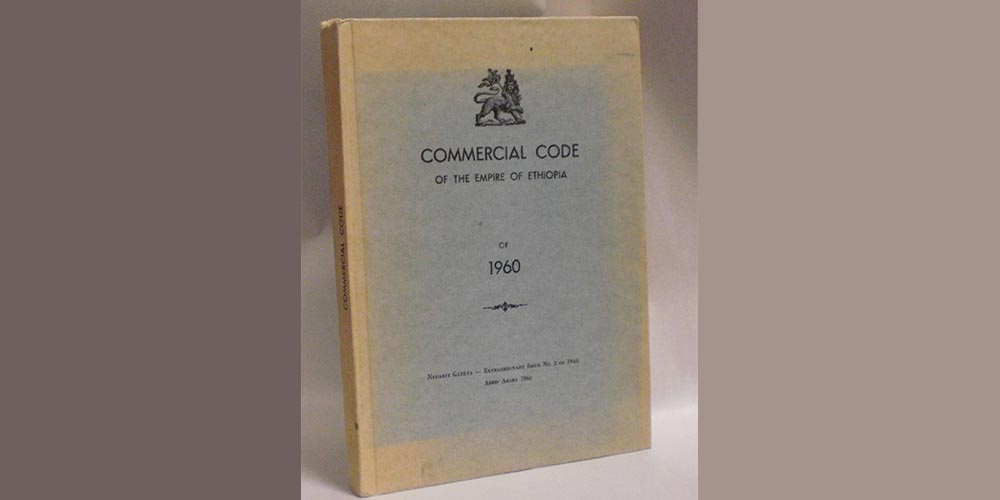
The House of People’s Representatives recently unanimously approved the revised Commercial Code of Ethiopia, replacing the 61-year-old document which was in place since 1960. The revision sought to amend 825 sections of trade-related issues and is expected to serve intact for 30 years as up-to-date technological advancements have been considered, according to the government.
The amendment introduced two new organizational arrangements for a company’s establishment while excluding ordinary partnership. It is now permitted to establish a one-person private limited company as well as a limited liability partnership. EBR’s Ashenafi Endale assesses the new commercial code.


Housing-Debacle-.jpg

Addis Ababans spend two-thirds of their income on housing. Although there is an additional 250,000 units of new housing demand created every year in the city, only one third is supplied, mainly by government programs.
The contribution of private developers to Addis Ababa’s housing supply is limited to less than 5Pct. The property market is dominated by the land allocation policies adopted to fit only a few as well as the lack of finance and construction materials. Land supply is constrained to generate more revenue for the government, rather than as a vehicle to solve sheltering problems. The city administration is currently finalizing revising the land lease directive, expected to increase land lease prices by several fold.
Government is also devising new state-led property development schemes on state landholdings in the capital, despite inefficiency and resource wastage lessons garnered from condominiums.
In a bid to outmaneuver the land supply grip, private developers are exploiting possibilities in partnering with individual landlords, who contribute their land, to jointly develop apartments and villas. This arrangement has also been picked up by the government which is offering its federal landholdings in the capital to partner primarily with foreign developers to build complexes for housing, business, education, health, and leisure. EBR’s Ashenafi Endale navigated newly surfacing housing options.


African-continental.jpg

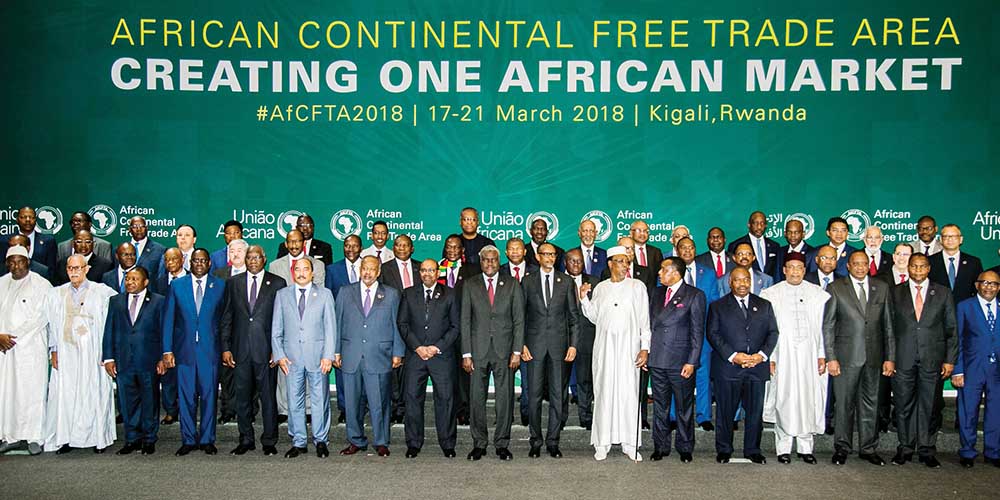
Despite the COVID-19 pandemic and other teething problems, African countries opened their markets in January 2021 under the African Continental Free Trade Area (AfCFTA). The new market, which allows for the duty-free trade of goods and services across borders, is expected to lift up to 30 million Africans out of extreme poverty. It is also expected to boost intra-African trade, promote industrialization, create jobs, and improve the competitiveness of African industries on the global stage. However, the new trade block is encountering problems from its birth. African countries, fearing trading through AfCFTA will immensely cost their economies, are retreating. In fact, more than 20 African nations, including Ethiopia, have not fulfilled necessary requirements to start trading under the agreement. EBR’s Ashenafi Endale explores.


Ethiopian Business Review | EBR is a first-class and high-quality monthly business magazine offering enlightenment to readers and a platform for partners.


2Q69+2MM, Jomo Kenyatta St, Addis Ababa

Tsehay Messay Building

Contact Us

+251 961 41 41 41