gomeju.jpg

Not more than 10 oil suppliers were operational in Ethiopia a decade ago. Now that is just history with the number almost quadrupling to 42 in November 2021. Not only this, the ownership structure of these companies has also changed greatly. While oil suppliers established decades ago were largely foreign-owned or big corporates, they are now being replaced by those owned by Ethiopians. But making a profit and staying afloat has not been easy for the majority of them, largely due to the low profit margin set by the government and shortage of forex needed to import lubricants and bitumen, which are more profitable. EBR reprints an updated version of an article published in February 2020, EBR 82.


automobile-fashion-in-addis.jpg

If anything, most people who have been closely watching Ethiopia’s import-dominated economy would agree on the flood of cars that have been passing through the nation’s dominantly-used Port of Djibouti. The import of automobiles has been continuously increasing throughout the last two decades despite the rise in the cost of living and other socio-political challenges. With the mass import of vehicles in the last several years, one also may notice how it has been following various trends of brands and models. In this article, EBR’s Trualem Asmare investigates what dictates the brands of cars seen on the streets of Addis Ababa.


addis-hearing-stage-sound-again.jpg

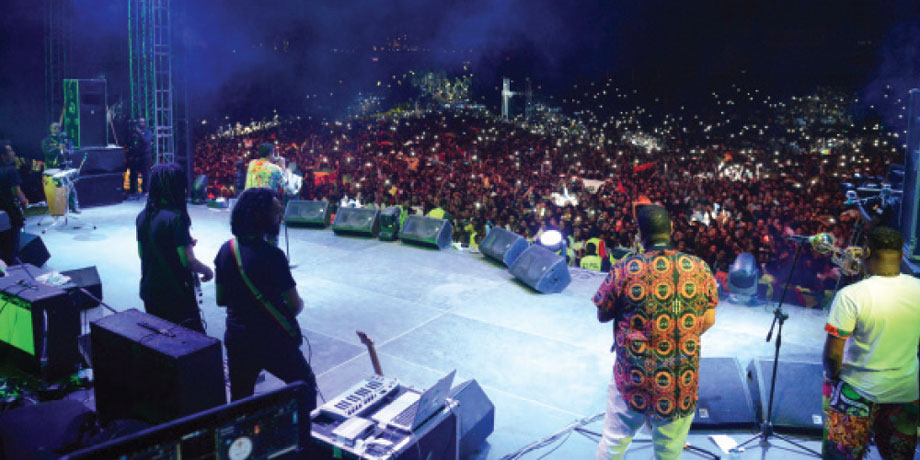
Concert business in Addis Ababa has been booming and getting the attention of music lovers as well as local and international performers. All was joyful before the bad news of a global pandemic kicked in. As has been the case for many other businesses in the hospitality sector, concerts and live events were banned from the public scene. Conflicts in the northern part of the country also meant that international and regional performers would not bet on visiting Ethiopia. Even when restrictions eased, it was not easy for these businesses to have showtimes. Slowly, but surely, the African capital is hearing the sound of musicians from live concerts again, writes EBR’s Trualem Asmare.


The Key Line of Defense Against Mounting Cyber Threats in Ethiopia

Cybercrime has been on the rise in Ethiopia and elsewhere in the world causing substantial financial losses, business interruptions, and impairment to the reputation of endangered companies. Official reports from Information Network Security Agency (INSA) officials indicated that Ethiopia has recorded more than 2,800 cyber-attack attempts during the year 2021, cataloging an alarming increase in such attacks, which is more than double the 1,080 similar cyber-attack attempts recorded during the previous year. Observing the cyber risks affecting Ethiopia, the agency cautioned companies to reinforce their cyber security systems to safeguard against imminent challenges. We have also heard that cyber attacks have been increasing in the country principally in association with the second filling of the Grand Ethiopian Renaissance Dam (GERD).


Fast-growing companies and startups were once the preserve of Silicon Valley and Seattle. No longer. Today, the United States boasts several innovation hotspots, including Austin, Miami, New York City, and Washington, DC. In recent years, similar hubs have also emerged in Europe, including Amsterdam, Berlin, Helsinki, London, Paris, and Stockholm. But this phenomenon is no longer limited to the advanced economies of the West. In fact, startup culture has gone global.


COVID-19 has sharpened the focus on many challenges with which the world has long been grappling, including rising inequality, insufficient access to adequate health care and education, and climate change. Long before the pandemic, people had begun to ask hard questions about globalization and technological progress. Despite all the wealth creation and reductions in global poverty in recent decades, economic opportunity has remained elusive for many people, irrespective of their abilities. The resulting fracturing of society poses a grave threat to the long-term health of businesses, citizens, and economies.


ethswitch-2022.jpg

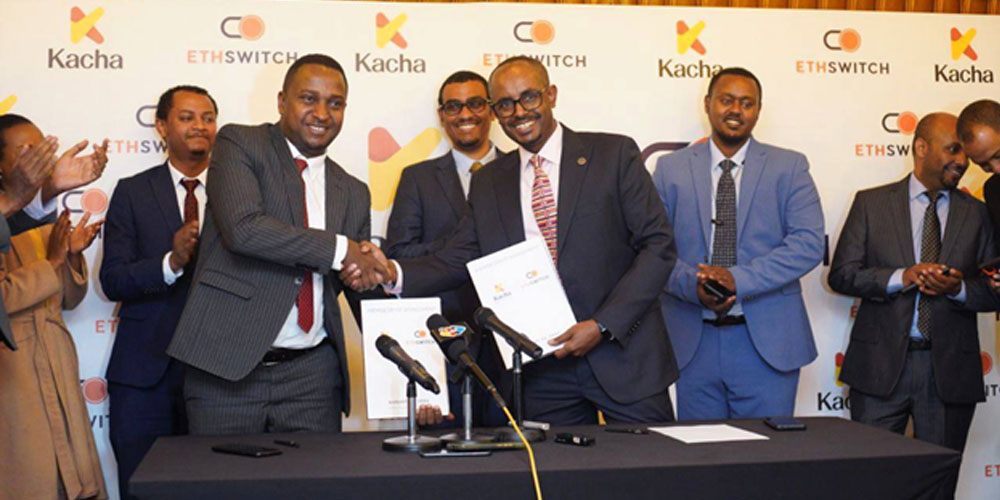
The national payment processing system EthSwitch has welcomed Kacha Digital Financial Services—Ethiopia’s first ever private mobile money service provider. Ensuant to financial sector reform and subsequent directives, the road has been paved for payment instrument issuers like Kacha, for which the National Bank of Ethiopia has granted the first such license. Kacha has thus bought shares in EthSwitch.

Kacha is undertaking final preparations and is piloting its platform before its commercial launch which will avail its cashless transaction services through 30,000 agents by virtue of the partnership formed with banks, microfinance institutions, and saving and cooperative organizations that are all part of EthSwitch.


car-assembly-1.jpg

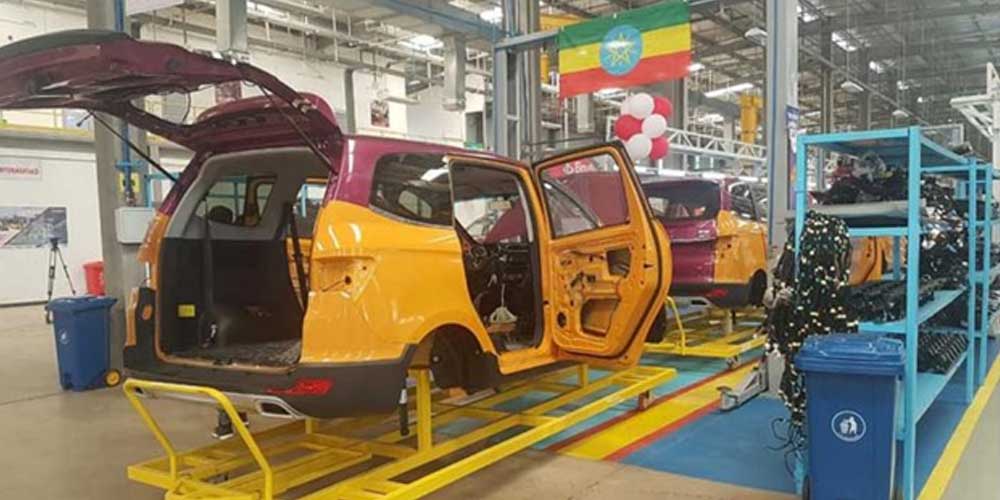
Elauto Engineering and Trading has inaugurated an ETB600 million factory inside the nation’s first free trade zone with the capacity to assemble up to 12,000 cars annually.

Jointly inaugurated by Bekele Abebe, General Manager of Elauto, and Tokicha Alemayehu, Founder and President of Elnet Business Group, the parent company of Elauto, as well as Kedir Juhar, Dire Dawa city mayor and Sandokan Debebe, Industrial Parks Development Corporation CEO, the factory will assemble four car models, both four-seater and seven-seater types.

While 80 employees are currently employed, the factory has plans to hire up to 300. There are also plans to grow from assembly to fully manufacturing vehicles in Ethiopia.

Elauto has opened a branch in neighboring Kenya where it is undertaking engine assembly.


Ethio-Telecom-12.jpg

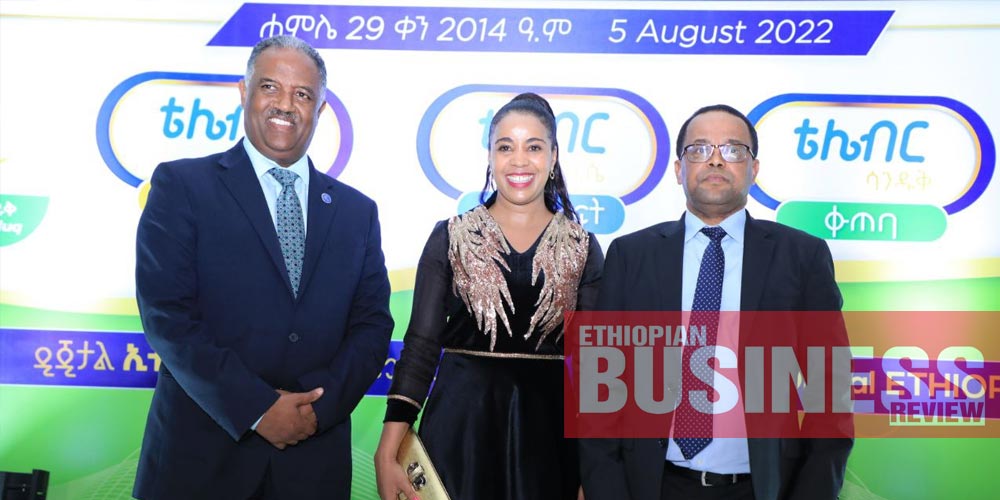
Looking to bring unbanked sections of the Ethiopian population into the formal financial sector and enable low-cost credit and savings service, Ethio Telecom has partnered with Dashen Bank to launch telebirr digital financial services. Micro loan, overdraft and micro saving are services to be offered in partnership with the 25-year-old bank as per a permit given by the National Bank of Ethiopia.

Accordingly, Ethio Telecom offers three different financial services, namely telebirr Mela (micro credit), enabling customers to borrow money for any transaction or withdrawal, telebirr Endekise (credit pay/ overdraft service), permitting users to borrow up to ETB2,000 in an emergency transaction, and telebirr Sanduq (micro savings service). The services are accessible on the telebirr app as well as by dialing *127#.

Photo Credit: Samuel Habtab


niyala_1.jpg

Nissan Navara PRO-4X pickup vehicle’s latest edition was presented to the public by Nyala Motors—the 50-year-old local representative of Nissan Motors. According to Mesfin Bogale, General Manager of the company, the “Nissan Navara PRO-4X” is a luxury vehicle that is both comfortable and having better safety features than other vehicles made by Nissan, while adding that it is also dependable, fuel-efficient, modern, and appropriate for the country.


Ethiopian Business Review | EBR is a first-class and high-quality monthly business magazine offering enlightenment to readers and a platform for partners.


2Q69+2MM, Jomo Kenyatta St, Addis Ababa

Tsehay Messay Building

Contact Us

+251 961 41 41 41