Copy-of-White-Minimalist-Economics-Headline-News-Instagram-Post-34.png

Ethiopian Airlines has reported a remarkable USD 5.6 billion in revenue during the first nine months of the current Ethiopian fiscal year, marking an 8% year-on-year growth. The milestone underscores the national carrier’s resilience and strategic momentum as it powers forward with its long-term Vision 2035 plan.

In an interview with the Ethiopian Broadcasting Corporation (EBC), CEO Mesfin Tasew attributed the success to expanded routes, fleet growth, and increased passenger volume. Over the period, the airline launched four new international destinations, took delivery of 10 additional aircraft, and transported 14.5 million passengers—a 13% increase compared to the same period last year.

Among the new aircraft is Africa’s largest Airbus A350-1000, positioning Ethiopian Airlines at the forefront of aviation modernization on the continent.

Looking ahead, the airline plans to deepen its global footprint, with new routes planned to India and the United Arab Emirates (UAE). CEO Mesfin also revealed that two more aircraft will be delivered in June alone, signaling continued investment in capacity and service delivery.

In infrastructure, Ethiopian Airlines is progressing toward its long-term goal of establishing a world-class aviation hub. Construction of a new mega-airport in Bishoftu is set to begin in November next year, with preparatory efforts underway to relocate farmers affected by the development.


Software licensing is a critical aspect of IT infrastructure management, where ensuring compliance and maximizing cost-effectiveness are paramount. KMS tools have emerged as key facilitators in the process of software activation, particularly through mechanisms like kms activation. These tools offer streamlined approaches for managing and deploying licenses across extensive networks, especially in organizational environments. With the increasing complexity of software ecosystems, having a robust licensing system is more important than ever to avoid legal pitfalls and ensure seamless operations.

The Basics of KMS Activation

KMS, or Key Management Service, is a technology utilized for activating software on multiple computers within a network. This method involves setting up a local activation server that communicates with client systems to enable software use without the need for individual product keys. KMS activation is particularly beneficial for large-scale deployments as it simplifies license management. By using a local server, businesses can ensure that their software remains active and compliant with minimal input from end-users. This systematic approach reduces administrative burdens significantly while enhancing productivity.

How KMS Activation Works

The core function of kms activation involves configuring a local server that acts as an intermediary between client machines and Microsoft’s activation services. Client machines connect to this server, which verifies their eligibility and activates the installed software. This method reduces the need to interact directly with external servers for individual activations, enhancing efficiency. The local server checks in with Microsoft’s servers at regular intervals, ensuring that all connected devices remain activated and functional. This periodic validation helps maintain network integrity and ensures uninterrupted access to essential applications.

Benefits of KMS Tools

  • Centralized control over software licensing and activation.
  • Reduced administrative overheads by automating several tasks related to license management.
  • Flexibility in managing licenses for both Windows and Office products, using solutions like kmspico office activator.
  • Increased security by reducing exposure to external activation requests.
  • Improved scalability, allowing organizations to easily expand or modify their network without worrying about individual license issues.

KMS tools not only simplify the technical aspects of software deployment but also contribute to strategic planning by providing insights into usage patterns and compliance levels. These insights can inform better decision-making regarding resource allocation and future IT investments.

Understanding Volume Activation through KMS

KMS tools play a significant role in volume activation, allowing organizations to activate numerous installations with minimal hassle. By leveraging a single host machine configured as an activation server, businesses can deploy software across multiple devices efficiently. This approach is often crucial for enterprises dealing with hundreds or thousands of licenses. Volume activation not only streamlines the process but also provides a cost-effective solution for managing large quantities of licenses. Moreover, it aligns well with dynamic business environments requiring rapid scaling or restructuring efforts without compromising on compliance or performance metrics.

KMS Activation for Microsoft Products

KMS tools are frequently used for activating Microsoft products such as Windows and Office suites. Tools like the windows activator enable organizations to manage activations efficiently across diverse environments without relying on individual product keys for each installation. This is particularly useful in educational institutions and large corporations where numerous systems require access to vital applications. The ability to activate software quickly across various departments enhances operational agility and ensures continuity in learning or business processes.

Exploring the Impact of Windows 10 KMS Activation

With the advent of Windows 10, kms activation has become increasingly vital in corporate settings. The ability to automatically activate this operating system using a centralized server helps maintain compliance and streamline updates without user intervention. This ensures that all systems run the latest versions with essential security patches applied promptly. As cyber threats evolve, maintaining up-to-date systems becomes critical in safeguarding sensitive data against breaches or unauthorized access.

The Role of an Office Activator

An office activator like the office 2019 activator complements KMS solutions by enabling seamless license management for Microsoft Office products. It ensures all users have access to necessary features while remaining compliant with licensing agreements. Such tools are indispensable in environments where productivity relies heavily on office suite functionalities. By automating routine checks and balances inherent in license management, these activators help organizations focus on core activities rather than logistical challenges.

KMS Tools: Practical Application and Considerations

KMS tools require careful planning and deployment to ensure they meet organizational needs effectively. One popular solution, kmspico office activator, demonstrates how these tools enhance operational efficiency by automating complex tasks associated with license management and kms activation. Proper configuration is crucial to avoid potential disruptions or security vulnerabilities during implementation. Organizations must invest time in training IT personnel on best practices surrounding kms deployment to maximize benefits while minimizing risks associated with misconfigurations.

Popular Commands and Tools

One essential command utility associated with KMS is DISM (Deployment Image Servicing and Management), which aids in managing Windows images before deployment. This tool supports the implementation of volume licenses by facilitating image creation compatible with kms activation processes. Additionally, understanding other command-line tools can optimize deployment strategies and reduce potential errors during setup. Mastery over such utilities translates into smoother rollouts and heightened efficiency when introducing new systems or updates into existing frameworks.

Infrastructure Constraints

  • A typical lab setup might require at least VM configurations with 2 vCPUs and 4 GB RAM to simulate effective KMS operations.
  • The timing of snapshots during testing phases can affect the reliability of kms activation simulations, necessitating strategic planning in software deployment cycles.
  • Network bandwidth considerations must be taken into account when deploying updates across multiple systems simultaneously.

The infrastructure supporting kms operations is just as crucial as the software itself; hence adequate resources must be allocated towards maintaining robust setups capable of handling organizational demands efficiently without significant downtime or degradation in performance quality.

Challenges in Digital Licensing

While digital licensing offers many benefits, incorporating kms tools isn’t without challenges. Ensuring compatibility across various network setups and minimizing potential security risks are ongoing concerns that IT departments must address proactively. Regular audits and monitoring help identify vulnerabilities before they can be exploited; thus safeguarding digital assets requires continuous vigilance alongside technological acumen from IT teams tasked with overseeing these critical components within modern enterprises.

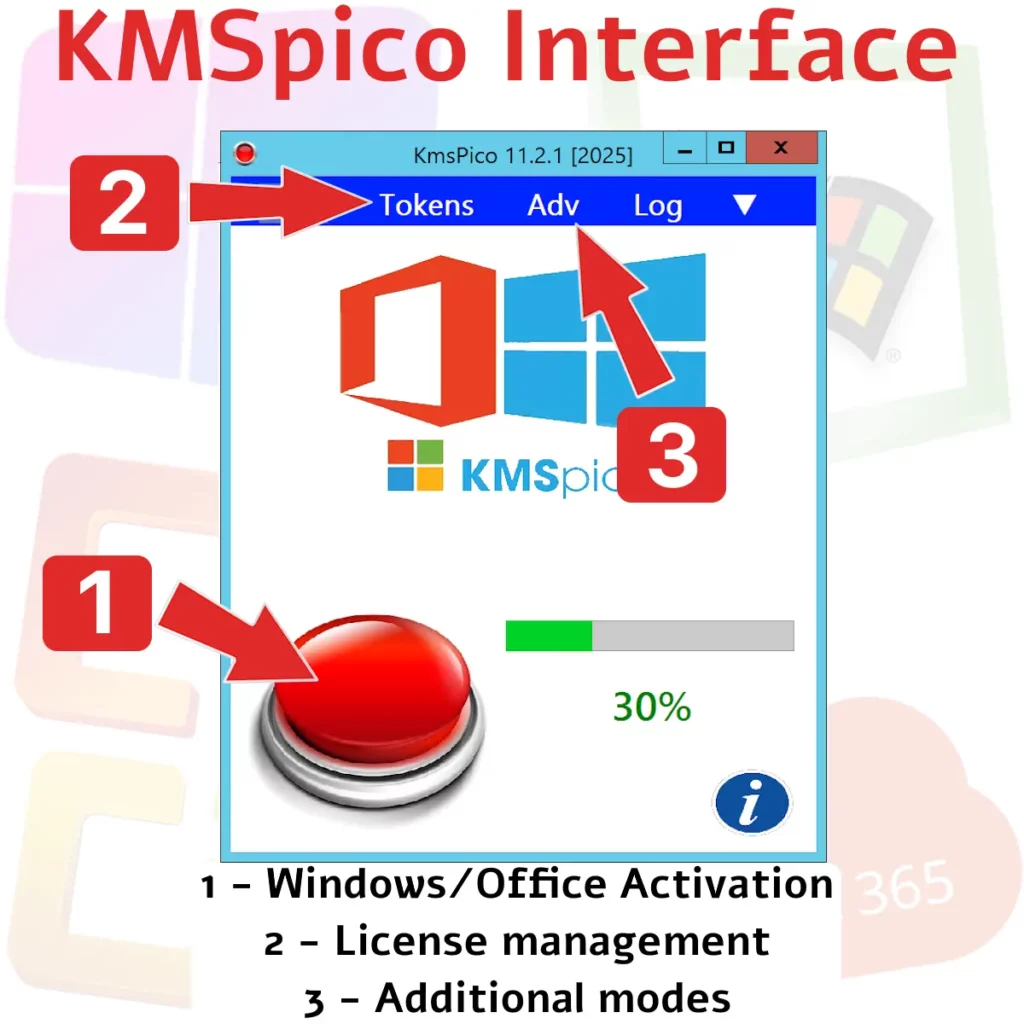
kms activation with kmspico office activator basics

The Future of License Management with KMS Tools

As organizations continue to transition towards digital ecosystems, tools supporting kms activation will remain pivotal in smoothing this journey. Continuous enhancements in these technologies will further simplify license management processes while improving compliance standards globally. Innovations such as cloud-based solutions may soon integrate seamlessly with existing KMS infrastructure, providing even greater flexibility and efficiency.

The potential integration of artificial intelligence within license management systems could revolutionize how businesses approach usage analytics—offering predictive insights aimed at optimizing both costs incurred through licensing fees alongside user experience enhancements driven by tailored service provisions stemming from real-time data analysis capabilities embedded within sophisticated AI-driven platforms tailored specifically towards enterprise-level clientele seeking competitive advantages amidst ever-evolving technological landscapes shaping industry dynamics today!

In summary, understanding the intricacies of kms activation and effectively utilizing corresponding tools can significantly enhance an organization’s ability to manage software licenses seamlessly. As businesses strive towards operational excellence, integrating robust license management solutions remains essential for long-term success. By staying informed about advancements in KMS technologies, companies can maintain competitive advantages while ensuring legal compliance across all digital assets.


499835027_1298258968538062_5699520481536285422_n-750x430-1.jpg


The 51st Annual Conference and General Assembly of the African Insurance Institute opened in Addis Ababa today, marking Ethiopia’s return as host after 23 years and capping a five-year effort to bring the forum back to the capital. The event attracted delegates from over 93 countries, bringing together policymakers, insurers, and economists to confront the mounting pressures facing Africa’s insurance landscape—most notably the deepening crisis of sovereign debt.

In his opening address, Ethiopia’s Deputy Prime Minister Temesgen Tiruneh outlined the country’s ambition to become Africa’s preferred insurance destination. He pointed to sweeping economic reforms, a fast-growing private sector, and a policy framework designed to encourage innovation, trade, and investment. Among Ethiopia’s major initiatives is the formation of an independent insurance regulatory authority, aimed at bolstering oversight, protecting policyholders, and improving the overall competitiveness of the financial sector.

However, much of the discussion at the conference was grounded in hard fiscal realities. Dr. Corneille Karekezi, CEO of African Reinsurance Corporation, delivered a stark assessment: 72% of GDP in many African countries is being channeled toward debt repayment. “Imagine spending 72% of your salary on debt—what’s left is hardly enough to sustain operations,” he said. Africa has borrowed more than USD 1.1 trillion since 2010, equivalent to 40% of its collective GDP. This rising debt burden, he warned, is directly linked to the vulnerability of the insurance industry, especially where insurers hold significant portions of government securities.

Fikru Tsegay, Deputy CEO of Ethiopian Reinsurance, echoed those concerns, stressing that sovereign debt levels shape how international rating agencies evaluate domestic insurers. “The credit rating of a country, macroeconomic stability, and the regulatory environment all feed into how companies are assessed,” he explained. “Even well-managed firms in low-rated economies are penalized in the global market, undermining their competitiveness.”

Governor of the National Bank of Ethiopia, Mamo Mihretu, echoed the reformist outlook, noting that Ethiopia’s ongoing macroeconomic shifts are laying the groundwork for a more sustainable and inclusive financial and insurance system. “Resolving credit-related constraints is key to unlocking the full potential of our insurance industry,” he stated. Mamo highlighted legal and operational improvements already underway and credited strong national leadership for guiding reforms that encourage private sector growth and investment. He further stressed that Ethiopia’s digital transformation is improving efficiency across the board, particularly in the insurance industry where digitalization is expected to improve service delivery and risk assessment.

Experts also highlighted the persistent gap between GDP growth and insurance penetration across much of Africa. Despite the continent’s vast population and growing economic footprint, insurance uptake remains low. Dr. Karekezi attributed this disconnect to underdeveloped financial literacy, weak economic structures, and limited investment in value-added industries. “Africa is rich in resources,” he said, “but converting that into economic power requires knowledge, innovation, and investment.”

The discussion also turned inward, with speakers urging African governments to take greater responsibility for domestic inefficiencies. While global shocks like COVID-19 and geopolitical conflicts have played a role, Dr. Karekezi stressed that internal mismanagement is a major factor behind the debt spiral. “We can’t blame everything on external shocks,” he said. “Many of our problems are homegrown, from poor allocation of loans to a failure to prioritize long-term resilience.”


Copy-of-White-Minimalist-Economics-Headline-News-Instagram-Post-33.png

the National Bank of Ethiopia (NBE) has enacted a comprehensive new directive requiring all banks to implement robust recovery planning frameworks. The Recovery Plan of Banks Directive No. SBB/93/2025, effective since May 13, 2025, represents a paradigm shift in Ethiopia’s approach to banking sector risk management.

The directive establishes rigorous standards for crisis preparedness, mandating that financial institutions develop detailed strategies to maintain viability during periods of severe stress. Banks must now incorporate sophisticated monitoring systems to detect early warning signs of financial deterioration, with specific thresholds triggering predefined corrective actions.

A cornerstone of the new regulation is the requirement for institutions to conduct extensive scenario analyses. These stress tests must evaluate potential impacts from both institution-specific difficulties and broader market disruptions, with particular attention to liquidity pressures, capital adequacy, and operational continuity. The framework emphasizes the importance of maintaining critical functions even during periods of financial distress.

Governance requirements under the directive are particularly stringent. Bank boards now bear direct responsibility for approving and regularly reviewing recovery plans, with clear lines of accountability established for crisis decision-making. For foreign bank branches operating in Ethiopia, the rules mandate close coordination with parent institutions while ensuring local obligations are fully safeguarded.

The NBE has established a phased implementation timeline, with banks required to submit their inaugural recovery plans within eight months. Ongoing compliance will involve annual updates and prompt reporting of any material changes to business models or risk profiles. The central bank has introduced strict penalties for banks that fail to comply, including fines of ETB 100,000 for missing the initial submission deadline and ETB 50,000 for delayed annual updates. Persistent non-compliance could result in further administrative actions under the Banking Business Proclamation.


Copy-of-White-Minimalist-Economics-Headline-News-Instagram-Post-31.png


The Commercial Bank of Ethiopia (CBE) and the Addis Ababa City Administration signed a memorandum of understanding (MoU) on Friday to finance housing for more than 41,000 government employees under the 25/75 cost-sharing program.

As part of the agreement, CBE will provide 120 billion birr in long-term financing, with a 20-year repayment period and favorable interest rates. The loan is expected to ease the persistent housing shortages faced by civil servants in the capital.

CBE President Ato Abe Sano said the initiative demonstrates the bank’s commitment to social development and financial inclusion. “We are offering this financing not just to build houses, but to solve a long-standing problem that affects public service delivery and worker morale,” he stated during the ceremony.

He also urged the city administration to accelerate the housing construction process and deliver the promised units swiftly.

Ms. Kidist WoldeSelassie, Head of the Housing Development Bureau, welcomed the partnership and said the city will prioritize teachers in the first phase of the program. “We’re prepared to move quickly and ensure these homes are delivered within a short time frame,” she added.


Copy-of-White-Minimalist-Economics-Headline-News-Instagram-Post-30.png

The International Monetary Fund (IMF) is expected to convene this summer to consider the third review of Ethiopia’s USD3.4 billion support program, according to a spokesperson cited by Reuters. The review remains on track with the original schedule, signaling continued confidence in Ethiopia’s reform trajectory despite recent delays in securing a staff-level agreement.

An IMF delegation visited Addis Ababa in mid-April for routine assessments. At the time, Ethiopian authorities anticipated a swift announcement of a staff-level agreement. However, no official update has since been issued, leaving observers awaiting clarity as the Executive Board meeting nears.

If approved in June, the review will unlock a 191.70 million Special Drawing Rights (SDR) tranche—equivalent to about USD265 million—to support the country’s sweeping macroeconomic reform agenda. The disbursement would represent a crucial injection of liquidity as Ethiopia navigates fiscal consolidation, foreign exchange liberalization, and structural adjustments.

The IMF program, agreed upon last July, was a key requirement for Ethiopia’s participation in the G20’s Common Framework for debt restructuring. Since then, the government has secured a preliminary deal with official creditors and is preparing to engage with private bondholders in the coming weeks and months.


Copy-of-White-Minimalist-Economics-Headline-News-Instagram-Post-25.png

The National Bank of Ethiopia (NBE) has sold USD 50 million in its sixth bi-weekly foreign exchange auction, part of its ongoing commitment to a market-based forex mechanism aimed at enhancing price discovery and external stability.

The weighted average rate of successful bids in this round reached ETB 133.1715 per US Dollar, compared to ETB 132.9643 in the previous auction held on May 7, 2025. This reflects a slight depreciation of the Birr by approximately 0.16%, consistent with the central bank’s strategy to gradually align the official rate with real market dynamics.

A total of 14 commercial banks received foreign currency allocations in today’s auction. The results suggest continued demand for USD among local banks, while the Birr’s modest weakening indicates a controlled shift towards a more competitive exchange rate regime.

The auction mechanism, introduced as part of broader monetary reforms in 2024, is designed to narrow the gap between official and parallel market rates, foster transparency, and ensure equitable foreign currency distribution.

The next forex auction is scheduled to take place in two weeks, with details to be announced ahead of time.


photo_2025-05-22_15-01-08.jpg

A newly released 22-year economic assessment by the Ethiopian Economics Association (EEA) has revealed that Ethiopia’s total public debt has surged to USD 62.5 billion, triggering renewed concerns over fiscal sustainability and the country’s broader economic trajectory. The report, which comprehensively reviews the nation’s economic performance and governance from 2001 to 2023, delivers a stark warning about the consequences of weak macroeconomic management, civil conflict, and slowing growth.

The 2025 edition of the assessment marks a turning point in methodology and depth, employing standardized and rigorous analytical tools to examine sectoral performance with greater consistency than previous editions. According to the findings, Ethiopia’s economic expansion has slowed considerably since 2016. Both gross domestic product (GDP) and GDP per capita have declined, signaling a reversal from the high-growth period of the 2000s and early 2010s. Inflation has accelerated during the same period, eroding purchasing power and weakening macroeconomic stability. Investment activity has also contracted, while the country’s productive capacity, which expanded until 2019, has since plateaued—limiting opportunities to enhance output and improve livelihoods.

The agricultural sector, historically the backbone of Ethiopia’s economy, has seen a steady decline in its share of GDP, particularly after 2004/05, as the service sector gained prominence. Despite its critical importance, fertilizer usage in the country remains far below international standards, and only 7.8 percent of total loans issued over the past two decades have supported agriculture. The consequences of this underinvestment have become evident in the nation’s food security. From 2020 to 2022, more than 21 percent of Ethiopians experienced food insecurity, with rural communities bearing the greatest burden.

The report also paints a grim picture of the manufacturing sector. In 2023, industrial output accounted for only 4.48 percent of GDP—well below the global average of 12.33 percent. Its contribution to employment was equally modest, at just 6.47 percent. Although import substitution efforts have yielded limited results, progress remains constrained by persistent shortages of raw materials and unreliable utility services. The report notes that challenges in electricity and water supply continue to limit productivity.

Ethiopia’s financial sector, described as shallow and underdeveloped, is struggling to support structural transformation. Credit allocation remains skewed toward non-productive areas, with key sectors like agriculture and industry often bypassed. While financial inclusion has improved overall, significant disparities remain between urban and rural populations, as well as between men and women.

On the fiscal side, government revenues have grown by over 200 percent in nominal terms between 2002 and 2022. However, these gains have been offset by rising inflation, which has reduced the real value of public spending. The country’s debt burden now equates to USD 575.6 per capita. With high levels of debt stress and an underperforming export sector, the report urges the government to improve revenue mobilization and expand foreign currency earnings.

Poverty trends also reveal troubling setbacks. Although the poverty rate dropped from 30.9 percent in 2018/19 to 26.1 percent in 2021/22, it remains higher than the 24 percent recorded in 2015/16. The poorest households have experienced the sharpest decline in living standards, worsened by inflation and recurring conflict.

Governance issues are another central concern. Since 2020, the report observes a deterioration in public trust and governance, contributing to increased unpredictability, internal conflict, and weak economic oversight. The erosion of investor confidence, rising unemployment, and stagnation in growth are all linked to prolonged instability and institutional weakness.

To address these challenges, the EEA emphasizes the need for consistent, prudent, and well-coordinated development policies. It advocates for stronger governance systems, renewed efforts to restore investor confidence, and the integration of peace-building initiatives into national development planning. In particular, the report recommends reallocating public spending towards long-term capital investment, broadening the tax base in a non-inflationary manner, and designing more inclusive financial policies.


Copy-of-White-Minimalist-Economics-Headline-News-Instagram-Post-24.png

Addis Ababa City Administration has officially inaugurated the Yeka No. 2 Car Park, a state-of-the-art eight-floor facility with the capacity to accommodate 1,000 vehicles simultaneously. Strategically located between Shola Gebeya and the major intersection, the project is expected to significantly ease traffic congestion in one of the capital’s busiest corridors.

The modern car park comprises five floors above ground and two underground, featuring advanced technologies, 24/7 security, sanitation services, three car wash bays, elevators for both passengers and vehicles, as well as inclusive facilities designed to serve people with disabilities.

Mayor Adanech Abiebie, announcing the launch on her social media page, emphasized the project’s contribution to “the comfort, safety, and dignity of Addis Ababa residents.” She noted that the facility is more than just a parking solution—it is a multi-functional urban infrastructure designed to boost economic activity and urban aesthetics. The structure also includes retail shops and office spaces, fostering business and employment opportunities for locals.

“This is part of our ongoing efforts to modernize Addis Ababa’s transportation system and make our city worthy of its name—‘the new flower,’” said Mayor Adanech.

The Yeka No. 2 Car Park marks a significant departure from previous parking infrastructure in the city. Before recent urban reforms, the government had only constructed two public parking lots, serving fewer than 500 vehicles. Today, Addis Ababa boasts 150 public parking facilities and 49 terminals, with combined capacity to serve up to 35,000 vehicles at once.


photo_2025-05-22_11-45-20.jpg


Fayda Wallet has officially launched in Ethiopia—marking a critical step toward nationwide adoption of biometric-based digital ID and financial access.

Co-developed with technology support from TECH5 and Visa, the Fayda Wallet allows citizens to download the official app and instantly request a digital version of their Fayda ID credential. The system is designed to eliminate paperwork and streamline access to both public and private digital services.

The Cooperative Bank of Oromia (Coopbank) has become the first bank to adopt the Fayda Wallet, enabling customers to open new accounts seamlessly using biometric eKYC verification, without the need for physical documents.

The initiative aligns with Ethiopia’s Digital 2025 Strategy and the Homegrown Economic Reform Agenda, both of which emphasize digital identity as a foundational enabler for financial inclusion and public service access.

With secure biometric verification at its core, the platform strengthens trust while simplifying processes for underserved and unbanked populations.


Ethiopian Business Review | EBR is a first-class and high-quality monthly business magazine offering enlightenment to readers and a platform for partners.


2Q69+2MM, Jomo Kenyatta St, Addis Ababa

Tsehay Messay Building

Contact Us

+251 961 41 41 41