

 Abebe Asamere
During the recent discussion Prime Minister Abiy Ahmed (PhD) held with the business community in Addis Ababa, one of the major issues raised by the representatives of the private sector was the shortage of foreign currency that has seriously affected their businesses as well as the entire nation. As part of the response, the Prime Minister asked the business leaders to bring back the hard currency they have in foreign banks in Dubai. He said Ethiopian businesses have lots of money deposited in foreign currency in Dubai and Chinese banks. Although asking the businesses to bring back the scarce foreign currency is a right thing to do as part of a short term solution, it is essential to see what factors the businesses to put their money in foreign countries.
 Mekonnen Fisseha
Corruption is a pervasive and very complex global phenomenon. The practice is as old as humanity itself. Although the magnitude and effect varies across history and geography, it affects all nations indiscriminately. With a view to curbing corruption, the UN and other international organizations have devised national anti-corruption strategies including the UN Anti-Corruption Convention. There are also international institutions that measure countries’ level of corruption. The most commonly cited corruption index is Transparency International’s Corruption Perception Index (CPI) which ranks the perception of corruption of public bodies using pre-determined criteria. According to the 2018 Annual CPI, Ethiopia is ranked 107 out of 180 countries. Ethiopia is considered among the most corrupt countries in the world.

 Ashenafi Endale
Mulugeta Beyene
Director, Manufacturers & Duty Free Support, ERCA
Ethiopia offers financial incentives such as tax reductions and holidays, as well as custom duty exemptions to companies engaged especially in manufacturing activities. But incentives are given and monitored in a scattered and uncoordinated manner. To address the issue, the Ethiopian Revenues and Customs Authority (ERCA) is currently establishing a directorate that will follow up and monitor the proper use of incentives, which have been exposed to abuse. EBR’s Ashenafi Endale sat down with Mulugeta Beyene, director of the newly established Manufacturers and Duty Free Support Directorate at ERCA to learn more about the government’s plans to enforce proper usage of incentives.
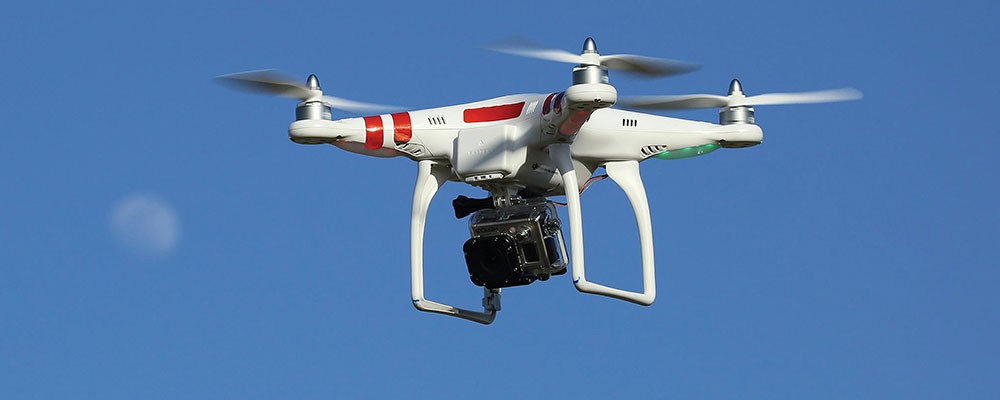
The Growing use of Drones in Ethiopia
The growing use of drones in cinematography is helping to increase the quality of Ethiopian-made films and music videos. However, the laws that govern the import and usage of drones are vague, with many people not aware of the agency that is responsible for regulating them. Many people have even been forced to return the drones they bring in from foreign countries. This has led to smuggled drones becoming the most available on the market. EBR’s Ashenafi Endale looks into the effects that unclear regulations and strict follow up by security forces have on those who work with drones.
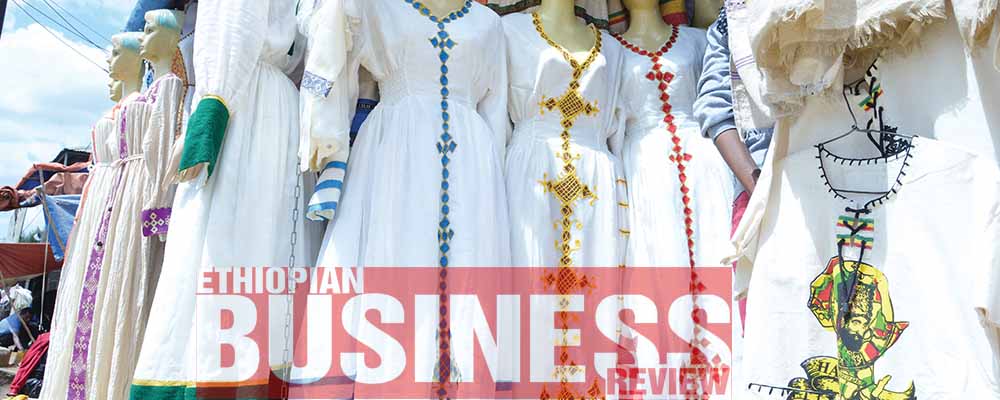
 Menna Asrat
From traditional small producers who sell their products in shops in Shiro Meda to international fashion designers, the traditions and patterns associated with Ethiopian traditional garments are making their mark all over the world. However, between fluctuating foreign exchange rates, and the unstable cotton market, some producers and sellers are finding themselves crowded out of the market. The age-old techniques of weaving traditional clothing are competing with modern machine woven textiles, cheaper imported fabrics, and a shrinking number of people willing to learn the craft. EBR’s Menna Asrat reports.
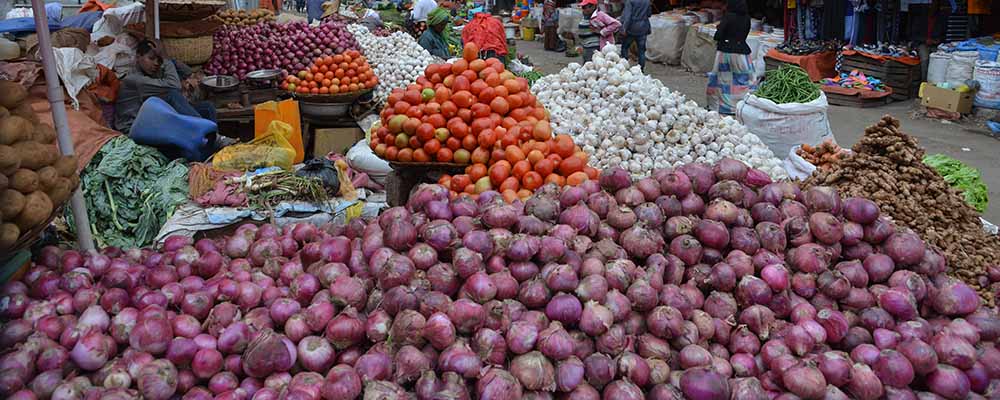
 Samson Berhane
What Goes Up Doesn’t Always Come Down
Since August 2017, the general year-on-year inflation has ballooned, exacerbated by a devaluation that came into the picture last October. In similar manner, food inflation has been severe and reached 19.9 Pct last month. The rapid rise of food price, on the other hand, highly affects urban wage earners living on limited and fixed incomes. EBR’s Samson Berhane investigates the issues behind it.

Born in Aksum, in the state of Tigray, Selome grew up with parents who were both teachers. This contributed to her outspoken and outgoing personality. After completing her primary and secondary education in Addis Ababa, she went to Addis Ababa University during the Dergue regime. But she didn’t finish her studies. Instead, she went to Eastern Europe and enrolled at the University of Belorussia, in the then-Soviet Union. After her third year, Selome dropped out and went first to West Germany, and then South Hadley, Massachusetts where she graduated with a Bachelor’s degree in International Relations.

 Ethiopian Business Review
On April 3, 2018, Members of the Parliament convened to endorse Abiy Ahmed (PhD), as Prime Minister of Ethiopia. This filled the vacuum created by the resignation of former Prime Minister Hailemariam Desalegn, who announced his decision to step down in mid-February with the hope of ending the unrest and political upheaval that has rocked the country since 2015.
Although travel and tourism competitiveness is underdeveloped in Sub-Saharan Africa, the performance of Eastern African countries has been the most improved among the sub regions of the continent, according to the Travel and Tourism Competitiveness Report published by the World Economic Forum. Neighboring countries such as Kenya, Tanzania, Rwanda and Uganda were among Sub-Saharan countries that made it to the top ten list. Mozambique, which rose eight places to 122nd, was the most improved nation in Sub-Saharan Africa.
 Otaviano Canuto
In emerging markets, manufacturing has historically been a source of productivity, growth, and jobs. Since the 1950s, industrialization has kept economies in Latin America, Asia, and Eastern Europe on a steady glide toward higher stages of development.