Before reflecting on what kind of economic model Ethiopia needs, it is imperative to analyze what Ethiopia’s economic potentials are. In order to achieve fast and sustainable growth, the model must prioritize three things. First, we must recognize that we are a low income economy or LDC. Second, we must recognize that we have huge untapped resources. There is huge underemployed and unemployed labor, land, and other resources. For instance, there is redundant labor in agriculture. The third is structural rigidity. There are many problems that hold us back from utilizing markets, infrastructure, resources and others. The model must remove the structural rigidities.



Ethiopia is currently undertaking a partial privatization of ethio telecom. The plan of the government is to maintain 55Pct of the stake while selling 40Pct of the company to a global telecom operator. It aims to sell the remaining 5Pct to the general public. The government has also expressed its intention to license two private telecom operators. Accordingly, 12 foreign multinational telecom operators have expressed interest for both opportunities.


Developing Capital Market in Ethiopia

An article published on the February 2020 edition of Ethiopian Business Review investigated whether Ethiopia is ready to establish a stock market. The article incorporates views of several notable finance and investment advisers who are both for and against setting up a stock exchange. This article argues for establishing a stock market and highlights strategies for developing a successful stock market.


ETB113-bilion.jpg

Why is it Outside the Banking System?

Just two months ago, Ethiopian Bankers Association (EBA) recommended change of currency to the government in order to reduce the amount of money circulating outside the banking system. The bankers thought this would improve the liquidity of commercial banks. However, the recommendation received a mixed reaction among the finance community. Many argue that the major reason for the sharp rise in the amount of money outside the banking system is the cash-based transaction system in the country. Economists also say that changing currencies cannot stop money laundering. They say, introducing monetary reforms is the best way to deal with the problem. EBR’s Ashenafi Endale reports.


coca-cola-ceo-ebr_2.jpg

EABSC Gazes at the Sunshine Across from the Discomfort of the Eye of the Storm

Daryl Wilson, CEO of East African Bottling Share Company (EABSC), arrived in Ethiopia just last year. Originally from south Africa, he was Managing Director of Nairobi Bottlers of Kenya for nine years before coming to Ethiopia. With 27 years in the business, Daryl Wilson has seen the troughs and the picks of the industry even before the turn of the century. He is already overseeing construction of two epic factories in Hawassa and Sebeta with an outlay of a staggering USD300 million. The two factories will triple the volume of coke products in Ethiopia, besides launching new products. He says Ethiopia is the fastest growing beverage consumer market in Africa. Nonetheless, the humorous CEO is not all that excited. The company already lost over 15Pct of its sales revenue due to the new Ethiopian excise tax regime and COVID-19. EBR’s Ashenafi Endale spoke to the CEO on various issues.


Corona-Induced.jpg

The world has been in a state of shock since January 2020. Every corner of the globe is struggling to survive the health and economic impacts of the Coronavirus. Ethiopia is already experiencing the brunt of the virus as it reports a fall in economic growth and bankruptcy of several private companies. The most powerful states in the world that were perceived to have economic prowess, developed health system and educated society were apparently not ready for a challenge like the Coronavirus. Supply gaps in essential medical equipment showed their neglect of the most basic products; their health systems were simply overwhelmed by the large amount of cases coming in and their educated population proved to be undisciplined and not so smart after all.


Desert-Locust.jpg

Hunger Hovering By

A swarm of locusts is pushing millions in East Africa to the brink of food insecurity. In Ethiopia alone, over a million people have so far become food insecure and in need of urgent assistance. About 3.5 million quintals of crop has been destroyed by the locust that damaged state and private farms. With predictions the locust attack may increase 400 times in the times ahead, disastrous damages are expected unless preventive measures are taken in time. EBR’s Ashenafi Endale explores.


Opened-Wide.jpg

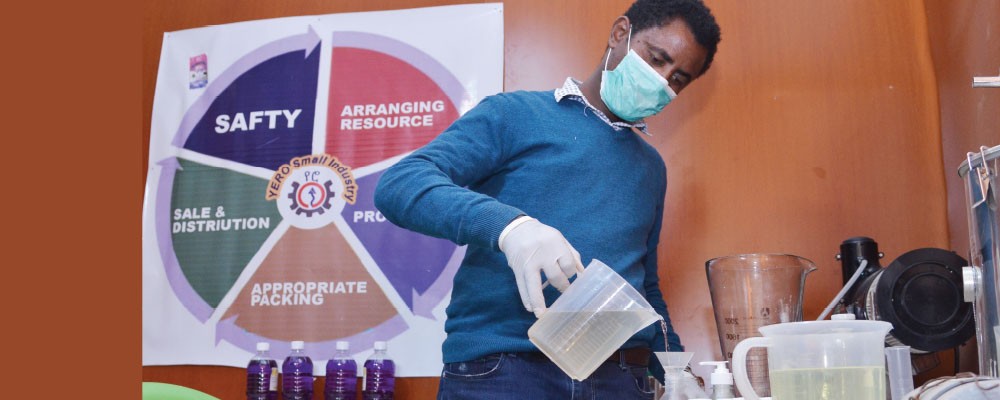
Coronavirus disrupted everything. It has altered the way people work, communicate and get basic services. It has also killed businesses, leading to loss of thousands of jobs. However, not everyone lost. Some, in fact, are capitalizing on the new realities under the pandemic. Taxi hailing companies, delivery service providers, producers of sanitizers, mobile money operators and mobile retailers are among a few of the businesses that cater to the changing demands of customers. EBR’s Kiya Ali explores.


Ethiopian Business Review | EBR is a first-class and high-quality monthly business magazine offering enlightenment to readers and a platform for partners.


2Q69+2MM, Jomo Kenyatta St, Addis Ababa

Tsehay Messay Building

Contact Us

+251 961 41 41 41