Indmi.jpg


A new report commissioned by the Embassy of India in Addis Ababa highlights significant export potential for Ethiopian gemstones in the Indian market, while emphasizing the urgent need for investment in local processing infrastructure to fully unlock this opportunity.

Ethiopia, renowned for its rich deposits of opal, emerald, sapphire, and over 40 other gemstone varieties, has attracted growing interest from Indian buyers. However, the report reveals that the country’s gemstone exports remain largely underdeveloped due to the absence of cutting, polishing, and value-addition facilities. In 2022 alone, Ethiopia exported USD4.65 million worth of gemstones to India, with opal constituting over 98% of that trade. The vast majority of these stones were shipped in raw form, resulting in significant lost revenue opportunities and limiting Ethiopia’s competitiveness in the global gemstone value chain.

“Ethiopia’s gemstone potential is exceptionally promising,” the report states. “But without modern processing facilities, much of the value is captured abroad.”

India’s jewelry and gemstone industry, one of the largest worldwide, depends heavily on imports of uncut stones, which are then processed and re-exported globally. As India’s middle class expands alongside rising global demand for jewelry, Ethiopia could emerge as a key supplier—provided it enhances local processing capabilities.

Geologically diverse regions such as Wollo, Tigray, Oromia, and SNNP produce high-quality sapphire, emerald, tourmaline, aquamarine, chrysoprase, and quartz. The study highlights recent discoveries that have increased Ethiopia’s known gemstone varieties to more than 40, many of which align well with India’s sourcing requirements. With targeted investments, the report suggests, Ethiopia could secure a larger share of India’s high-growth jewelry market.

Despite the clear potential, the report identifies several structural challenges. The lack of domestic cutting and polishing centers forces exporters to ship raw stones, missing crucial value addition. Customs and export bottlenecks lead to prolonged clearance times, reducing trade volume and reliability. Additionally, Ethiopia’s inadequate certification systems hinder the ability of its gemstones to meet India’s import standards. Although India’s Duty-Free Tariff Preference (DFTP) scheme offers Ethiopian exporters a zero-tariff gateway to one of the world’s largest gem markets, low awareness among exporters and inconsistent quality control have limited its utilization.

To address these issues, the study recommends a comprehensive approach that includes establishing domestic gemstone processing hubs with Indian technical support, developing traceability and certification systems aligned with Indian import regulations, and encouraging joint ventures and skills exchange programs between Indian and Ethiopian companies. It also calls for streamlining export procedures to reduce bureaucratic red tape and enhance market responsiveness.

The Government of Ethiopia has expressed its support for such measures, recognizing the mining sector’s potential contribution to export earnings and job creation. “Strengthening gemstone exports is not just about trade—it’s about building local industries and creating value at home,” said Ethiopia’s Minister of Mines, Habtamu Tegegne, in the report’s foreword.

mice.jpg

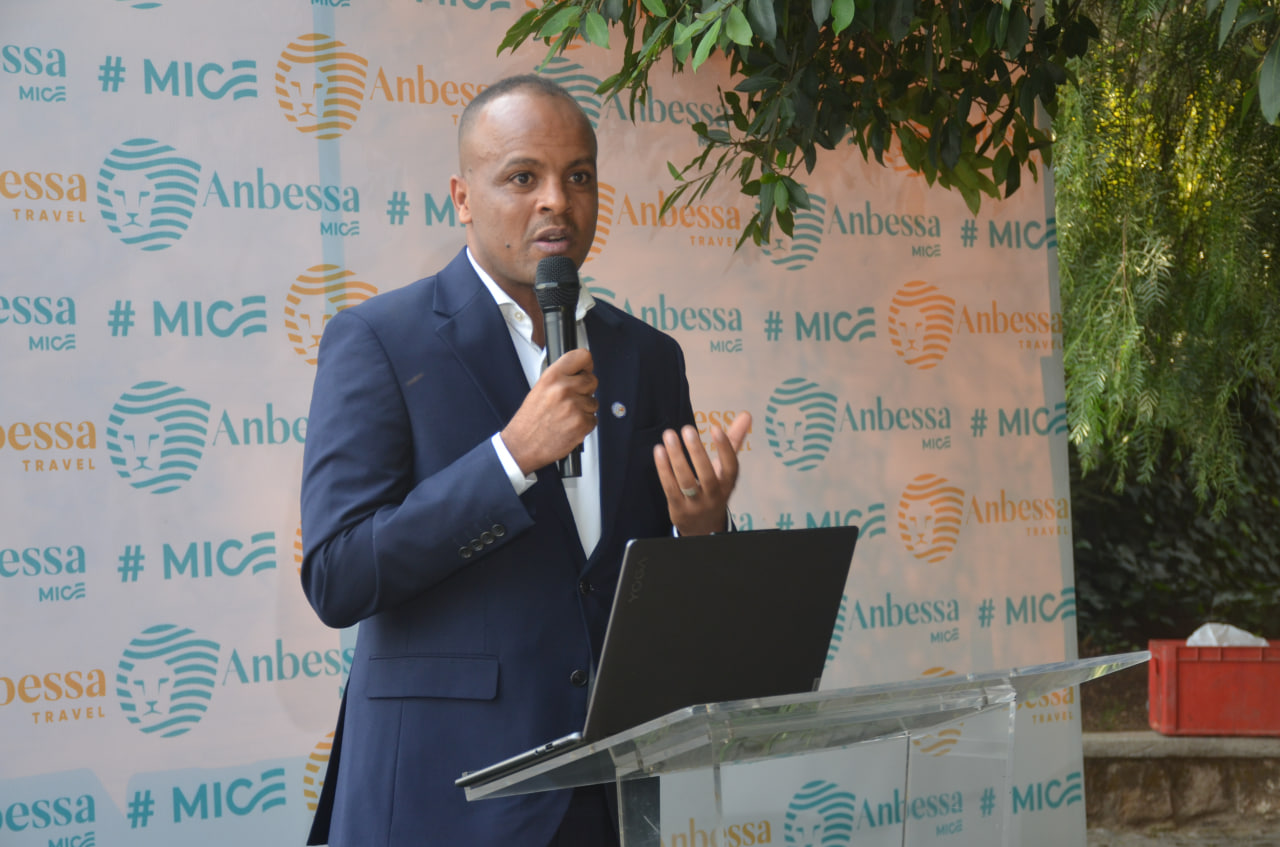
Anbessa Travel has officially launched its Meetings, Incentives, Conferences, and Exhibitions (M.I.C.E) division. The new service was unveiled at a high-profile event yesterday, attended by senior government officials, international guests, and company stakeholders.

The expansion marks a strategic pivot for Anbessa Travel, aligning its services with global tourism trends and responding to growing international demand. The company also introduced a rebranded logo to reflect its evolving vision and broader operational scope.

Established 13 years ago, Anbessa Travel has swiftly grown from a travel agency into a diversified service provider, offering car rental, air ticketing, and medical and electrical import services. Its latest leap into the M.I.C.E segment is driven by the ambition to transform Ethiopia from a traditional tourist destination into a globally competitive events and conferencing hub.

“M.I.C.E is a sleeping giant,” said Tewodros Derbie, Policy and Strategy Advisor at the Ministry of Tourism. “Ethiopia is increasingly becoming a center for international conferences, thanks to venues like the Addis International Convention Center, Skylight Hotel, and the African Union headquarters. The government is committed to supporting private sector players like Anbessa M.I.C.E in capitalizing on this potential.”

According to Anbessa’s CEO, Mola Mihretu, the company’s M.I.C.E services go beyond logistics. “Incentive travel, for example, fosters team-building and goal alignment among travelers,” he said. “We are creating platforms where professional goals meet cultural discovery, turning every event into a transformative experience.”

To support its expansion, Anbessa Travel has invested ETB 1.2 million in an Enterprise Resource Planning (ERP) system developed in partnership with Ashewa Technology. The system enhances financial management and operational efficiency. The company has also onboarded new professionals equipped with intensive training and industry insights. As a member of international M.I.C.E networks, Anbessa expects to benefit from continuous knowledge transfer and global best practices.

Anbessa Travel is already a recognized player in the tourism sector. It was named Best Destination Management Company for Ethiopia in 2023 and holds Sustainable Tourism certification from the Netherlands-based institution Travel Life, becoming the first Ethiopian company to earn this distinction. Additionally, it received a Loyal Taxpayer Award from the Addis Ababa City Administration for the 2022/2023 fiscal year.


Big-5-Construct-Ethiopia-Talks-1280x853.jpg

Addis Ababa is set to host the 2025 edition of Big 5 Construct Ethiopia from 26–28 June at the Millennium Hall, alongside the inaugural East Africa Infrastructure & Water Expo. The dual events, officially endorsed by the Ministry of Urban and Infrastructure, are expected to serve as key platforms for business networking, knowledge sharing, and international collaboration within Ethiopia’s expanding construction and infrastructure sectors.

The upcoming Big 5 Construct Ethiopia and East Africa Infrastructure & Water Expo will feature over 230 local and international exhibitors showcasing construction and infrastructure solutions tailored to Ethiopia’s fast-growing market. Key industry players such as Jotun, NAFFCO, USG, and Emirates National Copper Factory will present high-quality products, while first-time exhibitors like Signify (Philips Lighting) highlight the sector’s expansion. Country pavilions from Germany, Türkiye, China, Italy, and India reflect strong global interest. The events align with Ethiopia’s major development projects—including the Grand Ethiopian Renaissance Dam, Mesob Tower, La Gare redevelopment, and Abusera International Airport—as the nation ramps up investment in transport, water, power, and ICT infrastructure.

According to Josine Heijmans, Senior Vice President – Construction at dmg events, “The launch of the East Africa Infrastructure & Water Expo alongside Big 5 Construct Ethiopia supports the government’s development vision by facilitating investment, knowledge exchange, and strategic partnerships.”

The event will also feature CPD-certified professional talks, including the Big 5 Talks, which will cover topics in architecture, project management, construction technology, and sustainable materials. New programmes, Infra360 and Water360, will explore actionable solutions for East Africa’s infrastructure and water challenges. An invite-only East Africa Infrastructure & Water Summit will convene policymakers, developers, and technical experts to discuss long-term infrastructure strategies.

East Africa Infrastructure & Water Summit, a premium, invite-only programme, will convene policymakers, project owners and technical experts to explore unique strategies and infrastructure development pathways for the region. “Urbanization across Ethiopia and the wider East African region is creating new business opportunities at an unprecedented pace. Big 5 Construct Ethiopia alongside the East Africa Infrastructure & Water Expo, will support and accelerate this growth,” concluded Heijmans.


White-Minimalist-Economics-Headline-News-Instagram-Post-2025-06-05T131425.534.png

The Ministry of Agriculture has announced that Ethiopia’s agricultural exports have generated over USD 3 billion in revenue over the past ten months, with coffee exports alone contributing USD 2 billion. The announcement was made during a performance review meeting between the Standing Committee on Agricultural Affairs and senior officials from the Ministry and affiliated institutions.

The Minister of Agriculture, Dr. Girma Amente, attributed the performance to ongoing sectoral reforms and strategic investments. Over 400,000 tons of coffee were exported during the reporting period. In addition to coffee, other export items contributing to the total included horticultural products, spices, livestock, and animal products.

Dr. Girma also reported that more than 7 billion seedlings have been prepared under the Green Legacy Forestry Program, of which 500 million have already been planted. Notably, 3.5 billion seedlings are said to offer co-benefits such as economic value and ecological restoration.

Furthermore, he confirmed the procurement of 24 million tons of fertilizer for the upcoming farming season, with 12 million quintals already delivered to regional states. However, the Minister urged stakeholders to address existing distribution inefficiencies to ensure timely access for farmers.

Chairman of the Standing Committee on Agriculture, Hon. Solomon Lale, stated that 31 million hectares of land have been prepared for agricultural activity, with 7 million hectares of new land brought into production this year. He emphasized the importance of addressing soil acidity challenges affecting more than 7 million hectares nationwide and called for the accelerated implementation of recently ratified agricultural reforms.

The Committee also underscored the importance of resolving structural challenges—including logistical constraints, power supply interruptions, and governance issues—to maintain the current momentum in agricultural export performance.

The report further indicated that measures are underway to combat pest outbreaks, including pilot aerial spraying to mitigate the impact of coleoptera and other agricultural pests. In response to rising feed costs, the establishment of 28 animal feed processing plants is also in progress across various regions.

Moreover, strategies aimed at enhancing export performance in cotton, hides, and skins have been developed and are currently being implemented.


Holland.jpg

Holland Dairy has inaugurated a new cold storage facility and wastewater treatment plant in Bishoftu, built with an investment of over USD 4 million. The project is part of the company’s effort to support cleaner dairy production and tackle water use challenges in Ethiopia.

The new storage unit can hold about one million yogurt cups, or 400,000 liters of yogurt, giving the company the capacity to better handle demand while keeping products fresh.

Holland Dairy processes both milk and yogurt using between 2 and 2.5 liters of water per liter of product. As the company grows, it says wastewater levels are rising quickly. The new plant treats all used water, mostly drawn from underground sources before it’s returned to nature. Some of this water is reused to help safeguard the environment, nearby farms, and local lakes.

The company works closely with more than 4,000 dairy farmers and 15 to 20 cooperatives in areas like Chancho, Debre Birhan, Arsi, Bekoji, Fiche, and Mukturi. These farmers supply the fresh milk that feeds Holland Dairy’s production line.

“If we want to grow, they need to grow,” said Robin Veenstra, CEO of Holland Dairy. “That’s how we see it. We don’t just wait and hope things get better, we get involved and help improve quality and supply together.”

Looking beyond its current stronghold in Addis Ababa, Holland Dairy has expressed intentions to distribute Gouda cheese more widely across Ethiopia and launch new product flavors. The company is also eyeing regional markets in East Africa, including Tanzania, Kenya, and Uganda, as part of its long-term growth strategy.


WCIB1.jpg

Wegagen Capital Investment Bank S.C., a subsidiary of Wegagen Bank, officially launched operations, becoming the country’s first private investment bank under the newly established capital market framework.

The inaugural ceremony, held at Hilton Addis Ababa, drew a distinguished audience, including Dr. Tilahun Ismael, CEO of the Ethiopian Securities Exchange (ESX), as well as executives from financial institutions, regulators, and invited guests.

Speaking at the event, Dr. Aklilu Wubet, Chairperson of the Board of Wegagen Capital, emphasized that the bank was formed with a paid-up capital of ETB 385 million, contributed by visionary institutions and individuals who recognize the strategic importance of investment banking in driving national economic growth.

Dr. Aklilu noted that Wegagen Capital is the first private investment bank to be granted an operational license by the Ethiopian Capital Market Authority (ECMA), issued on March 21, 2025. The bank was also the first trading member registered with the Ethiopian Securities Exchange (ESX) on May 14, 2025.

“One of the biggest challenges during formation,” Dr. Aklilu added, “was the scarcity of trained professionals in investment banking. To address this, we invested in capacity building, brought in international expertise, and conducted rigorous profitability analysis—all made possible with strong backing from NBE, ECMA, and ESX.”

Brutawit Dawit Abdi, CEO of Wegagen Capital, highlighted the bank’s mission to set a new benchmark in the financial industry. “As Ethiopia’s pioneering private investment bank, Wegagen Capital carries the responsibility to lead with integrity, innovation, and impact,” she said. “Our formation stems from the pressing need to support capital market growth and fuel national development.”

She outlined the bank’s offerings, which include a full suite of investment banking services tailored to government institutions, public enterprises, corporations, and high-net-worth individuals. Services range from strategic advisory on mergers and acquisitions to capital raising through securities, IPO underwriting, trading and brokerage services, and intermediation between issuers and investors.

Dr. Tilahun Ismael reaffirmed the importance of institutions like Wegagen Capital in building Ethiopia’s capital market ecosystem. “Capital formation is everyone’s responsibility,” he stressed. “We must demystify the concept of capital markets for ordinary Ethiopians, foster a culture of saving, and build the trust necessary to attract foreign investment.”

Wegagen Capital operates independently from Wegagen Bank with its own corporate governance, management, and operational structure. This separation allows the firm to serve as a neutral investment partner for banks and institutions seeking capital market solutions.


Copy-of-White-Minimalist-Economics-Headline-News-Instagram-Post-51.png

The African Development Bank Group and the Federal Government of Nigeria have signed a protocol agreement committing USD500 million over 15 years to extend the Nigeria Trust Fund (NTF), providing long-term business continuity and planning certainty through 2040.

This extension comes after multiple previous renewals, reflecting the enduring value and relevance of Nigeria’s partnership with the African Development Bank.

Dr Akinwunmi Adesina, President of the African Development Bank Group said that the commitment will allow the Bank’s ability to expand hybrid capital instruments, increase securitization, and scale up private sector operations. This move is expected to mobilize more private capital for low-income countries. “Nigeria’s decision today proves that Nigeria is always on the right side. The NTF is the largest we have at the African Development Bank, which is part of the Bank. It helps to co-finance operations in many countries, as well as feasibility studies for some other countries.” he added

The agreement also enables deployment of resources from the fund in innovative treasury, structuring, and other transactions, including balance sheet optimization, structured finance, and catalytic risk-sharing solutions.

The Bank and Nigerian authorities are working on new financial products, updating approval processes, and developing a communications strategy to raise visibility for Nigeria’s contributions.

The Nigeria Trust Fund serves as a fully-fledged financial window of the AfDB. Since its creation, the NTF has financed 92 projects in 33 countries. The Fund has played a crucial role in filling financing gaps in high-impact sectors, particularly in the continent’s least developed countries.


Copy-of-White-Minimalist-Economics-Headline-News-Instagram-Post-50.png


The Trade and Development Bank Group (TDB Group) has been named Africa’s Bank of the Year at the 2025 African Banker Awards, held during the Annual Meetings of the African Development Bank. The honor recognizes TDB’s continued commitment to inclusive finance, service innovation, and its contribution to Africa’s sustainable economic growth.

TDB’s strength lies in its ability to adapt and lead through reform. Despite a rapidly changing financial landscape, the Bank has maintained its development impact by innovating its capital structure—most notably with the introduction of hybrid capital in 2024—and attracting institutional investors aligned with long-term development goals.

The Bank continues to deliver impactful project and trade financing, while also addressing upstream challenges through concessional finance, technical assistance, and development programs. Its work supports critical priorities such as women’s empowerment, youth employment, and responsible investment across African economies.


Copy-of-White-Minimalist-Economics-Headline-News-Instagram-Post-48.png

President Donald Trump has openly dismissed the idea of reviving America’s textile industry, despite the recent tariff policies that shook global trade.

“I’m not looking to make T-shirts, to be honest. I’m not looking to make socks… We are looking to do chips and computers and lots of other things, and tanks and ships,” Trump told reporters on May 25 before boarding Air Force One, as quoted by USA Today.

The remarks, paired with his agreement that the U.S. doesn’t need a “booming textile industry,” were met with sharp criticism from domestic producers. But they have also caught the attention of international observers who see a strategic opening for emerging manufacturing hubs.

Ethiopian-American economist Zemedeneh Nigatu framed Trump’s comments as a potential advantage for Ethiopia, where textile and apparel manufacturing remains a core part of the country’s industrial growth strategy.

“Emerging economies like Ethiopia, which have competitive and comparative advantages, can produce labor-intensive products like clothing at very competitive prices and still deliver high quality to American consumers,” he shared on social media.

With Ethiopia’s industrial growth accelerating from 4.8% in 2022 to 8.4% in 2024, and projections pointing to 12% by the end of the fiscal year, the country is positioning itself as a low-cost, high-capacity producer. Programs like Made in Ethiopia are aligning policy and investment to replace imports and boost exports.

Zemedeneh also called on U.S. entities—including private equity firms and development institutions like USDFC—to co-invest in African manufacturing, a move that could build resilient supply chains and offer American consumers alternatives to Asian production.

Local economists are also calling for structural reforms in Ethiopia’s textile value chain, especially in the use of abundant domestic raw materials like cotton. However, they stress that peace and political stability remain non-negotiable, forming the heartbeat of investment, industrial productivity, and uninterrupted supply chains.


Copy-of-White-Minimalist-Economics-Headline-News-Instagram-Post-47.png


In a strategic partnership aimed at enhancing Ethiopia’s international voice infrastructure, Ethio telecom has selected Bankai Group, a renowned international telecom solutions provider, as its preferred international voice termination partner. The partnership becomes effective on June 1, 2025.

According to The Fast Mode, the agreement is designed to improve voice quality, ensure regulatory compliance, and protect the integrity of international voice traffic. Ethio telecom and Bankai Group plan to collaborate in delivering high-performance and fraud-resistant voice services across major global corridors.

This marks a significant step in Ethio telecom’s efforts to strengthen Ethiopia’s role in the international telecom ecosystem, with a focus on supporting the country’s broader digital transformation agenda.

The agreement, however, excludes international voice traffic originating from Saudi Arabia, the UAE, Sudan, Jordan, Somalia, and Djibouti, which remain outside the scope of this partnership.


Ethiopian Business Review | EBR is a first-class and high-quality monthly business magazine offering enlightenment to readers and a platform for partners.


2Q69+2MM, Jomo Kenyatta St, Addis Ababa

Tsehay Messay Building

Contact Us

+251 961 41 41 41