lease-financing-progressing-amidst-challenges.jpg

Lack of access to capital and credit is one of the biggest barriers facing small and medium enterprises (SMEs), microbusinesses, and new ventures in developing nations even though they are crucial to economic growth and job creation. The paucity of funding required to increase productivity typically undermines such a substantial role. The government of Ethiopia passed the country’s first leasing law in 1998 in response to the need of hastening the growth and development of SMEs by allowing access to financing and providing operational machinery and equipment to businesses. Five capital goods finance companies (CGFCs) were granted licenses by the National Bank of Ethiopia in the early months of 2014. With the further entrance of the first foreign-owned leasing company and the revitalization of an already existing leasing service, lease financing seems to be slowly progressing amidst inter and intra-institutional challenges, writes Eden Teshome.


project-management-pride-not-whole-story.jpg

The timely completion and quality of delivered projects have been a source of pride for the ruling Prosperity Party members. One may not fall far from the truth for assuming that there are not many public appearances of the Prime Minister where he does not mention Entoto Park, Meskel Square, Friendship Park, the National Palace, and other such projects undertaken under his direct watch and without public participation. Of course, these projects have been completed in a timely manner with quality that has contented citizens who at the same time also raise questions of cost to value. However, that does not mean that this tradition has been reciprocated by other public officials and institutions that were given the task of executing projects. Addis Ababa is laden with developments stalled mid-construction and there is still a tradition of starting projects at the beginning of the rainy season knowing full-well the rains will halt work. Rampant corruption and inflation, as well as a struggling economy, pose further challenges to the completion of projects, writes EBR’s Eden Teshome.


mining-efforts-miss-the-jackpot.jpg

For the last several decades, industrialization and use of petroleum-powered vehicles has created enormous demand for oil. Countries that produce the ‘black gold’ have lived influencing the global economy and political landscape. Energy has always been the driving factor in economic growth, and hence, global clout. Recently, however, the world has witnessed the growing use of electric vehicles (EVs), with their use projected to rocket in the following decades. As such, cobalt is expected to be the new oil. The mineral used to make EV batteries last longer could have the potential to replace oil in becoming an important factor in deciding energy-induced influence. China is already trying to grab and lead the future by controlling large cobalt-producing regions such as the Democratic Republic of the Congo (DRC). In this article, EBR’s Eden Teshome investigates if Ethiopia is ready to take advantage of this growing global demand for cobalt.


labor-market-witnessing-new.jpg

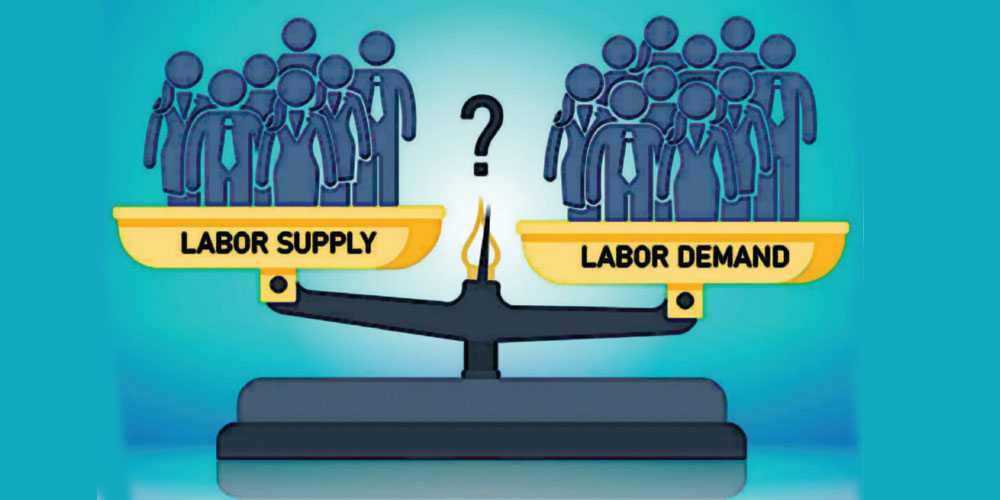
With the opening of dozens of universities and the ever-increasing graduates flooding out of these new institutions, unemployment and underemployment have been typical in Ethiopia’s labor market for more than the past decade. With new graduates continuing to rise, the labor market seems to be experiencing other developments, as well. While some sectors like education are dealing with a dwindling interest of employees, the financial sector seems to be entertaining a contrasting and dynamic interest. As the labor market continues to shape itself away from a mainly agrarian economy, new graduates are also preferring to work for themselves or as freelancers over full employment, writes Eden Teshome, EBR Staff Writer.


Will-Electric-Vehicles-Arrive-Sooner.jpg

Electric vehicles (EVs) are a fairly recent phenomenon around the world, and more so in Ethiopia. As much as the idea seems to be luxurious for African countries, recent developments show that they might not be far off. The automobiles’ environment- and cost-friendly operation seem to be fast-tracking their realization worldwide. Ethiopia is also a nation with some experience in electrifying public and freight transport. With the launch of assemblers and an ever-increasing interest of importers toward such automobiles, we are not far off from EVs becoming commonplace. Yet, even though Ethiopia might benefit by reducing foreign exchange outlays to import fuel, lubricants, and spare parts, the growing prospect of electrified cars could be puzzling in a country where half the population has no access to electricity, writes EBR’s Eden Teshome.


laboratory-testing.jpg

Lack of essential medication is a common recurrence facing patients. Mortality and morbidity caused by shortages of direly needed drugs during surgery and other critical points of treatment have become features of the medical industry. The common reason for the prevailing situation facing drugs is mostly tied with forex shortages and lack of sufficient local supply. Even though there are reports of sabotage in the industry, there has not been a consolidated effort to replace imported drugs and avoid the drug-induced chaos in the health sector. Recently, however, there are signs that that might be slowly changing. With the government’s high attention to the pharmaceuticals industry, there are new entrants in the sector coming with massive investments. With growing demand and an ever-expanding market for sector players, Ethiopians can benefit from newly revitalized efforts to increase the manufacturing of drugs within the country, writes EBR’s Eden Teshome.


Online-Education-Business-on-the-Rise.jpg

One of the success stories in the Ethiopian education sector is increased reachability over the past fifteen years. At one point, the Ministry of Education declared access to education has reached more than 99Pct. As much as public schools have played a significant role here, private investment in education has also played an indispensable role. Missing in the story, of course, is the quality of education—a point of discussion in most high-level dialogues concerning the nation’s social, economic, and political path. As a fairly recent phenomenon, online businesses have joined the sector in an attempt to offer increased access and quality. Even though their impact, both as a business model and educationalist, is yet to be tested, these new academic business models are believed to offer something unique and untried, writes EBR’s Eden Teshome.


shuttle-commerce-helping-create-independent-women.jpg

Women have always shouldered social and economic burdens facing their families. Even though there are encouraging signs of more and more of them going to work and earning for themselves, the challenge of raising children is always present in slowing down any progress made, to the point of pushing women out of economic activities. In recent years in Ethiopia, women seem to have found a way of earning by traveling to Dubai and other places.

This line of business has been providing decent income for women and their kin, all the while contributing to their independence as these women plan, manage, and deliver through shuttle or travel commerce. A new tax directive seems to be existentialist, however. This and, to a lesser extent, the receding pandemic are challenging the ladies’ fight for economic self-sufficiency, writes Eden Teshome.


Ethiopian Business Review | EBR is a first-class and high-quality monthly business magazine offering enlightenment to readers and a platform for partners.


2Q69+2MM, Jomo Kenyatta St, Addis Ababa

Tsehay Messay Building

Contact Us

+251 961 41 41 41