EBR_News Apr 16, 2026
By Betegbar Yaregal

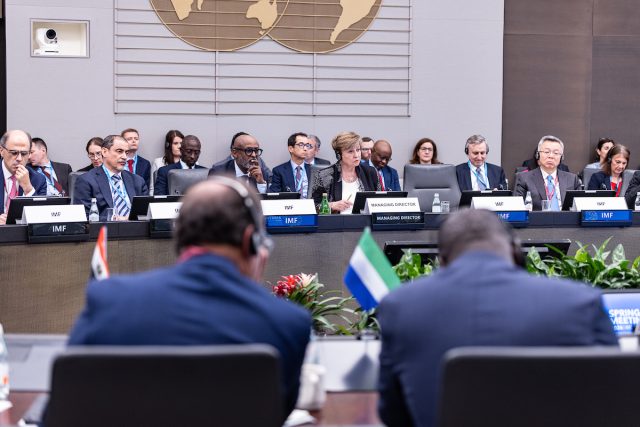
Sub-Saharan Africa entered 2026 with its strongest economic momentum in over a decade, achieving 4.5 percent growth in 2025, but the escalating conflict in the Middle East has clouded the outlook, forcing the International Monetary Fund to downgrade regional growth projections to 4.3 percent for 2026, 0.3 percentage points below pre-war forecasts, according to the IMF’s April 2026 Regional Economic Outlook released during the Spring Meetings in Washington.

Abebe Aemro Selassie, Director of the IMF’s African Department, highlighted that countries such as Ethiopia and Nigeria benefited from macroeconomic adjustments, including exchange rate realignments, fuel subsidy reductions, and strengthened monetary policy frameworks. These efforts contributed to improved fiscal positions, declining inflation, and stronger external balances across the region.

The Middle East war has triggered a major external shock, with oil, gas, and fertilizer prices surging alongside shipping costs. Trade with Gulf partners has been disrupted, while tourism and remittances are being squeezed. Financial conditions have tightened, particularly for fuel-importing countries. Median inflation is expected to rise to around 5 percent by the end of 2026.


EBR_News Apr 15, 2026

By Betegbar Yaregal

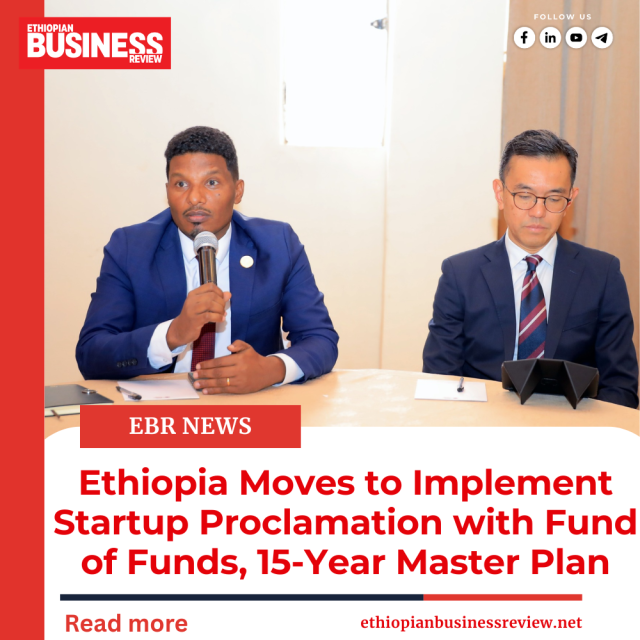
The National Startup Steering Committee has held its second round of consultations to review implementation of Ethiopia’s Startup Proclamation, with discussions focused on establishing a Fund of Funds, grants, and loan guarantee programs to address startup financing gaps.

State Minister of Innovation and Technology and Committee Chairperson Bayisa Bedada (PhD) noted that the proclamation will lay a crucial foundation for national economic growth by creating a conducive environment for startups and positioning Ethiopia as a competitor in global technological development. The implementation of twenty-four activities identified in the national implementation plan was presented at the consultation.


60abb89_3052-14bnhnm.4khr-1280x856.png

EBR_News Apr 15, 2026

By Betegbar Yaregal

Ethiopian music icon Teddy Afro has officially terminated his contract with Sewasew Multimedia by mutual agreement, returning 33 million birr to the publisher as he prepares to release his highly anticipated ninth studio album, “Etorika,” independently on Thursday, April 16.

The financial settlement covers the original 25 million birr advance the artist received four years ago, plus accumulated bank interest over the contract period, according to the artist’s management and confirmed by Sewasew Multimedia. The termination comes after prolonged disagreements over contract renewal terms, dispelling various political rumors circulating on social media.

The partnership, originally valued at 50 million birr, began four years ago with an initial payment of 25 million birr. However, during negotiations to renew the contract as the album release approached, new points of contention emerged that both parties could not resolve.


trtTysi-1.png

EBR_News Apr 15, 2026

By Betegbar Yaregal

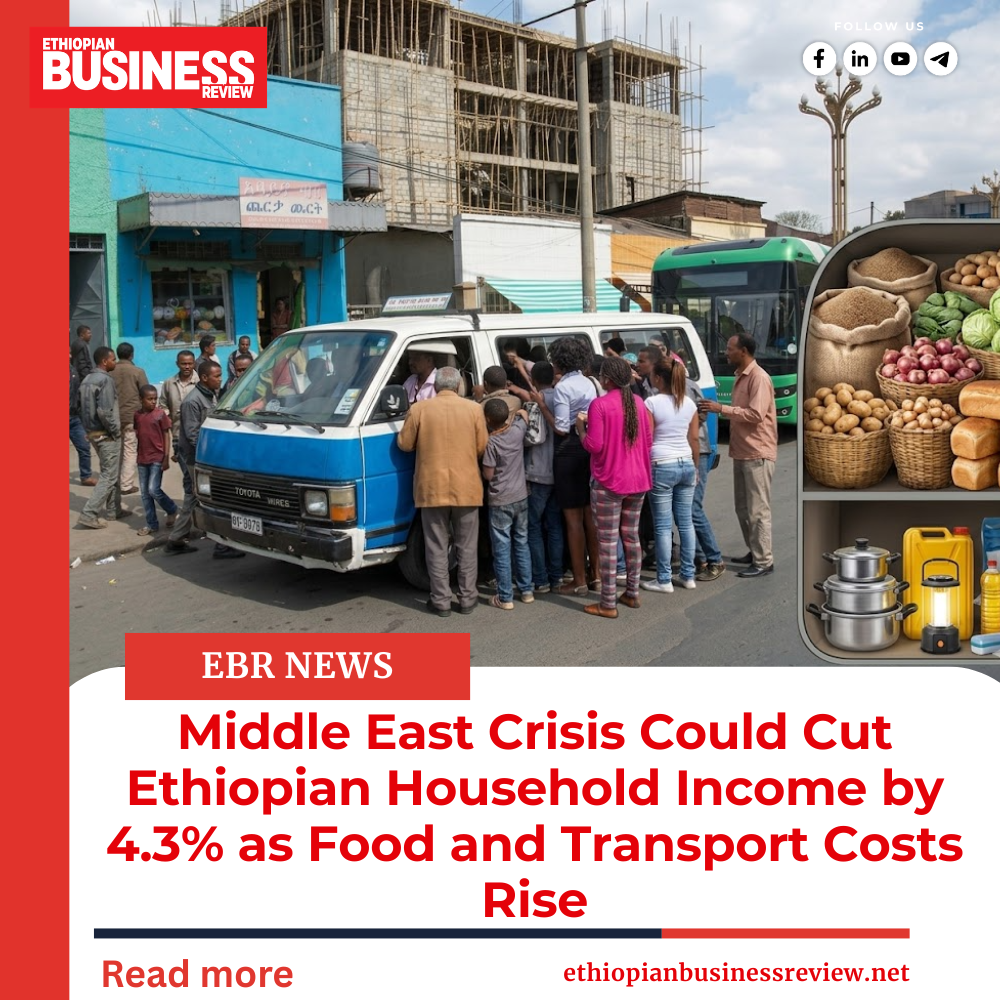
A prolonged Middle East conflict could reduce Ethiopian household income by an average of 1.5 to 4.3 percent, driven by rising food and transport prices and a potential decline in remittances from Gulf states, according to the World Bank’s Africa Economic Update released in April 2026.

Ethiopian households are particularly exposed to the crisis due to high food expenditure and widespread reliance on public transportation. The report notes that Ethiopian households allocate 58.5 percent of total expenditure to food, with even rural households partially exposed to market prices through food purchases. About 48 percent of households use public transport, rising to 62 percent among urban households, making them vulnerable to fuel-driven fare increases.


vdfFGfdgd.png

EBR_News Mar 18, 2026

Developing economies now use industrial policy more intensively than advanced economies, with low-income countries imposing average tariffs of 12 percent, more than double the 5 percent rate in high-income nations, according to new World Bank research that upends conventional wisdom about who practices industrial policy.

The report, “Industrial Policy for Development,” draws on unprecedented data collection across 183 countries, including analysis of national development plans, tariff schedules, and business subsidy programs. The findings challenge recent narratives focused on US and European industrial policy announcements.


dFGfdgd.png

EBR_News Mar 18, 2026

Oromia Bank’s interest-free banking (IFB) financing has grown to 7.5 billion birr as of February 28, 2026, up from 4.5 billion birr in June 2025, a 67 percent increase in just eight months, while total IFB deposits rose from 10.2 billion birr to 11.78 billion birr during the same period, according to figures shared with EBR.

The IFB customer base expanded from 1.8 million to 2.1 million over the eight-month period, reflecting continued strong adoption of the bank’s Sharia-compliant banking services. The bank also distributed 3.75 million birr to six charitable organizations at the bank’s annual Ramadan charity program held on Tuesday at its headquarters.


xCvdFGfdgd.png

EBR_News Mar 18, 2026

The Ministry of Finance has unveiled a comprehensive new directive aimed at overhauling the compensation system for temporary staff employed in development programs and projects funded by international partners. Directive Number 1125/2025, issued in March 2026, seeks to establish a uniform and transparent salary structure for workers across all federal and regional government offices, replacing the previous framework established in 2025.

The new regulation introduces standardized salary scales, detailed in four attached schedules, which apply to all project-funded personnel ranging from support staff to high-level specialists. By categorizing these temporary positions into four distinct groups Special Advisors, Sector-Specific Technical Professionals, Project Staff, and Support Staff the directive aims to eliminate pay discrepancies where similar roles across different projects might receive varying compensation.


xCvdFGfdd.png

EBR_News Mar 18, 2026

New data from the World Bank’s flagship industrial policy report reveals that Ethiopia employs a distinctive mix of policy tools with 33.2 percent of its interventions classified as “fiscally expensive” and average tariffs of 10.5 percent, positioning it among developing economies that rely heavily on second-choice instruments despite limited fiscal space, according to the newly released “Industrial Policy for Development: Approaches in the 21st Century.”

The report, authored by Ana Margarida Fernandes and Tristan Reed, provides the first comprehensive global database of industrial policy implementation, covering 183 economies. Ethiopia recorded 10 discriminatory policy measures between 2021 and 2023, with none classified as “firm-specific” suggesting the government relies on broad-based instruments rather than targeted interventions requiring intensive administrative capacity.


Ethiopian Business Review | EBR is a first-class and high-quality monthly business magazine offering enlightenment to readers and a platform for partners.


2Q69+2MM, Jomo Kenyatta St, Addis Ababa

Tsehay Messay Building

Contact Us

+251 961 41 41 41