harnessing-ethiopias-rice.jpg

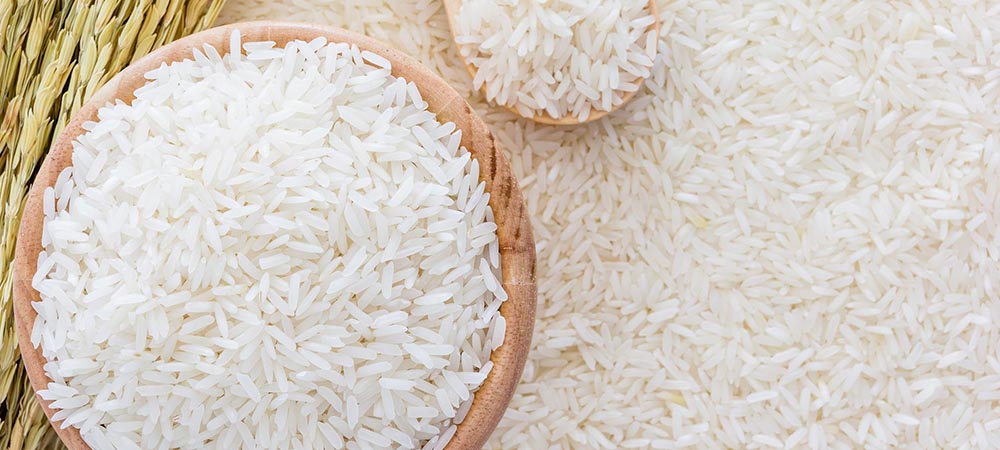
Rice has already become a major staple food in many parts of Ethiopia. This is because of the population growth and urbanization. However, the local rice production does not meet the growing demand due to low yields. As a result, the demand is currently being met by imported rice where in 2018, Ethiopia imported four million quintals of rice worth USD170.69 million. EBR’s Ashenafi Endale spoke with farmers, investors, experts and government officials to shed light on the matter


secondhand-clothing-market-booms.jpg

With the growth of the informal market, retailers who sell used clothes are rising in number. A glimpse of this is displayed at the biggest used clothing market in Asko near Atena Tera, in Addis Ababa. The second-hand clothes, which are discarded as worthless at charity warehouses or thrift stores in Europe and the USA, are sold off at a very cheap price to developing countries. This makes them preferable to a large portion of the society, chiefly because of the rise in prices of new clothes. The Secondhand clothes market is also becoming a source of revenue for businesses engaged in the illegal trading. EBR’s Ashenafi Endale visited the biggest used clothing market in the city and spoke with traders, contraband smugglers, custom officials, and experts for this report.


hedase-gedebe.jpg

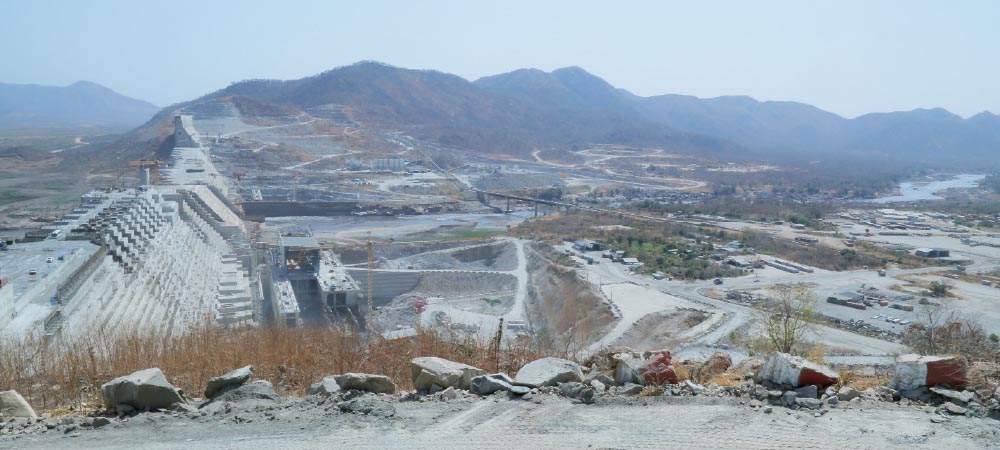
Grand Ethiopian Renaissance Dam

Eight years ago, when Ethiopia announced its bold decision to build the biggest possible dam on the Nile River, to which it contributes 86Pct of the water volume, with financing from domestic resources, the issue grabbed global headlines. Despite considerable consternation in Egypt and Sudan, the country was able to embark on the Grand Ethiopian Renaissance Dam (GERD), which will be the largest hydropower plant in Africa, and the seventh globally upon completion.

Seven years later, however, the Metal and Engineering Corporation (MetEC), the contractor for the electromechanical and hydraulic steel structure work on the project, became a focus of controversy amid allegations of delay, corruption, resource wastage and all sorts of mismanagement. The controversies have since put the GERD on the spotlight; and many even doubted the completion of the project. This was further complicated with the untimely death of Simengew Beleke (Eng.), manager of the project who was found dead of a gunshot wound on July 26, 2018, at Meskel Square, Addis Ababa.

Last year, the government cancelled all the contracts awarded to MetEC and signed contracts with five Chinese, French, and German companies to undertake the electro mechanical works. With this, the government seeks to start the project with a fresh schedule and finish the project in 2022, six years after its initially planned year of completion. However, there are still uncertainties over the finalization of the grand project. EBR’s Ashenafi Endale, who visited the game-changing power project, reports.


islamic-bank-are-not.jpg

Nassir Dino (PhD), associate professor of software engineering, is chairman of the organizing committee of ‘Zamzam Bank’. He is also the cofounder and president of Higher Learning Center of Excellence (HiLCoE), a specialized centre of excellence in education, research and consultancy in the field of information and communication technology (ICT). The Centre was established in 1997 and has since graduated thousands of skilled professionals.
Thirteen years ago, Nassir started to establish Zamzam, the first Islamic bank in Ethiopia. However, his effort did not bore fruit because the National Bank of Ethiopia (NBE), the financial regulatory body, denied them license to start operations in the final hours.
After 13 years of patience, however, his effort got favorable response from the administration of Prime Minister Abiy Ahmed (PhD). During the holy month of Ramadan, on May 22, Yinager Dessie (PhD), the new governor of NBE, met the founders of Zamzam; and informed them the good news. After more than a decade of stall, the Governor told them to resurrect Zamzam. On the same day, the Premiere also reaffirmed his support for the realization of the bank. This was announced in a historic speech the PM made at the grand Iftar at the Millennium Hall. For Nassir, his team and the tens of millions of Ethiopian Muslims, the ecstasy the news created was unprecedented and is still afresh.
Zamzam has already started floating shares and is set to start operations in about a year. EBR’s Ashenafi Endale discusses with the professor who also studied Islamic Banking and Islamic Insurance in London, the UK, about the prospect of the bank.


swelling-budget.jpg

Brews Inflation, Exacerbates Balance of Payment Problem

The budget deficit for 2019/20 fiscal year stood at ETB97.1 billion, twice the amount registered two years ago. Despite the escalating figure, the government claims it is under control since it accounts for only three percent of the gross domestic product (GDP).
Nevertheless, experts stress that the deficit goes as high as 17Pct of the GDP when the money borrowed by public institutions is included in the equation. As the budget deficit grows, there is a fear money supply would rise, which will ultimately lead to a rise in inflation, which has already reached 15.4Pct. The consequence will further exacerbate balance of payment problem, which is already at alarming stage. EBR’s Ashenafi Endale spoke with officials and experts to shed light on the matter.


bad-loan.jpg

Even under normal banking operations, not all loans can be collected fully because loans are not free of risks. This affects the financial performance of any bank because it leads to an increase in non-performing loans (NPLs). This is exactly what is happening in Ethiopia at the moment. Due to macroeconomic and bank specific factors, borrowers are increasingly finding it difficult to pay back loans. Industry insiders say the average NPL figure has now reached eight percent. The National Bank of Ethiopia (NBE) has set five percent as the upper limit any bank’s NPLs may go. EBR’s Ashenafi Endale examines the causes.


sesame-conundrum.jpg

Why Ethiopian sesame designaTed for export costs more locally than the international price

The price of sesame on the local market is ballooning. As accessing foreign currency becomes challenging for importers, many are turning to the export business as a way to retain some foreign currency and continue their work. This, coupled with other speculation, resulted in the price of sesame on the local market rising as high as USD230 a quintal, USD70 higher than the international price. Although the central bank enacted a directive that bans exporting at a loss beyond five percent, many are shipping the commodity despite making losses as high 60Pct of the original price of the product. EBR’s Ashenafi Endale explores.


climate-change-putting.jpg

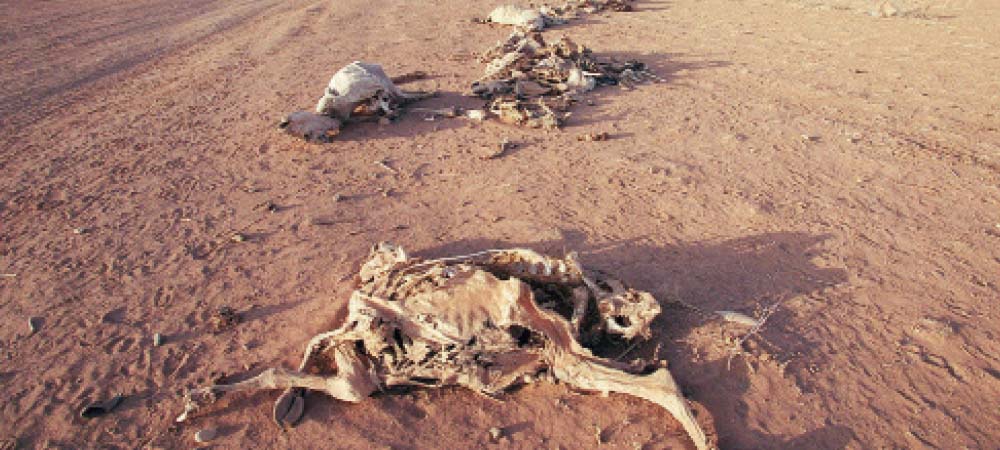
Ethiopia is one of the countries that are highly vulnerable to climate change. The number of people at risk due to climate change is increasing drastically. As rural livelihood systems, like crop cultivation, pastoralism and agro-pastoralism, remain highly exposed to dynamic and unpredictable climatic conditions, the increase in drought and desertification have resulted in significant losses of arable land and increased dependency on food aid, and has resulted in diminishing water resources and hunger. Climate change is also putting pressure on the country’s economy. EBR’s Ashenafi Endale investigates the extent of the problem.


carbon-trading.jpg

Adefris Worku (PhD), is director of Climate Science Research at the Ethiopian Environment and Forest Research Institute. He has conducted various research on climate change that has sbeen published on local and foreign journals. He blames the government for giving little attention to the forestry sector. Although schemes like carbon trading can have a positive impact on the country’s reforestation efforts, he stresses that it is only after the government focuses on the area that the nation can recover from the adverse impacts of climate change. EBR’s Ashenafi Endale sat down with him to further understand the issues the country is facing.


business-closure.jpg

Is the new Initiative Going to Address the Problem?

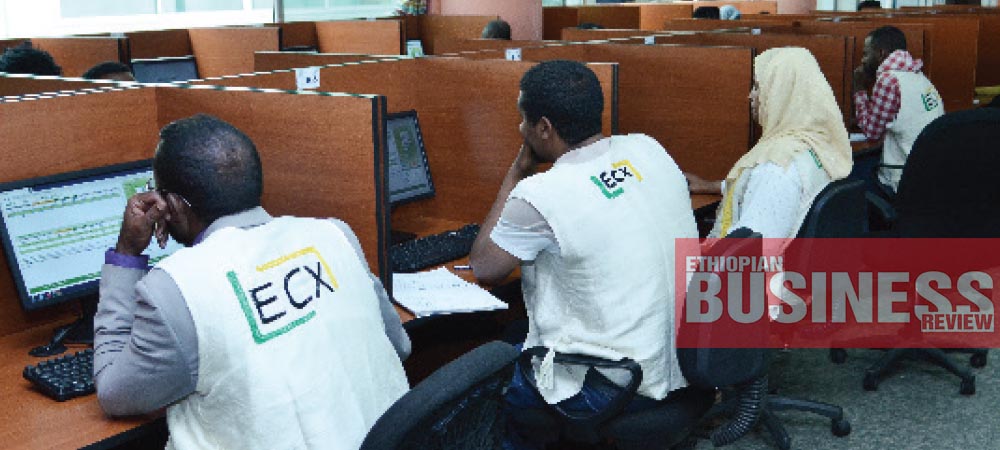
The number of businesses that return or fail to renew their licenses has increased over the last couple of years. At the federal level, 14,096 businesses returned their licenses in 2018, while 328,265 businesses didn’t renew their licenses in the past ten years. A decline in business activities and political unrest, coupled with forex shortages and a lack of raw materials, problems which have not been solved for many years contribute to the problem. The government, which is aware of the issue, recently launched a new initiative to solve the challenges faced by the private sector. EBR’s Ashenafi Endale reports.


Ethiopian Business Review | EBR is a first-class and high-quality monthly business magazine offering enlightenment to readers and a platform for partners.


2Q69+2MM, Jomo Kenyatta St, Addis Ababa

Tsehay Messay Building

Contact Us

+251 961 41 41 41