

Marketing, ICT and Supply Chain Associations Partner to Bring Pan-African Business Summit to Addis Ababa
#EBR_News Nov 15
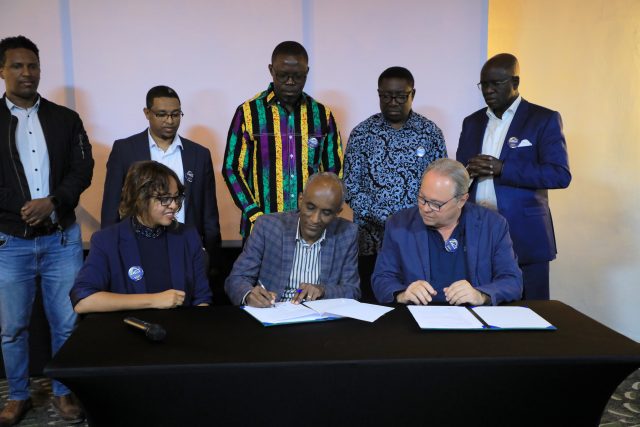
Three Ethiopian professional associations have formally launched a partnership with three continental confederations to host a pan-African business summit in Addis Ababa from September 27 to October 1, 2027.
The event, called ACCES 2027, was unveiled at a gathering at the Hilton Addis Ababa on November 13. It is expected to bring together about 1,000 delegates from more than 30 countries, according to the organisers. The host consortium comprises the Ethiopian Marketing Professionals Association (EMPA), the ICT Association of Ethiopia and the Ethiopian Logistics and Supply Chain Association (ELSA).
They will work with the African Marketing Confederation, Ticon Africa (the Technology Information Confederation Africa) and the African Supply Chain Confederation. Nigel Tattersall, who the co-founder of the confederation and originated the concept, said the bid was awarded to Ethiopia in September in Livingstone, Zambia, during the previous edition.
Ethiopia will host the sixth conference in the series. Previous editions were held in Zimbabwe, Uganda, Mombasa, Accra and Zambia.

Fana Abbay, president of EMPA, said the three-year effort to build a community of marketers in Ethiopia had now culminated in “bringing the conference home”.
She said the bid was prepared jointly with the ICT and supply chain associations, and described the joint organisation as rare, since professional associations usually hold such events alone. Tickets aside, she said the biggest benefit is cross-professional networking that would not otherwise happen.

The idea itself goes back more than a decade. Nigel Tattersall traced the initiative to a 2011 meeting in Zambia that brought together marketing bodies from South Africa, Zambia, Zimbabwe, Kenya and Nigeria. The network works on education, events, publications and research, and gained momentum after COVID-19, he said. The ICT sector was added later, followed by supply chain at the Accra conference.
Tattersall said each of the three confederations has about 20 member countries, which implies a network of some 60 professional bodies.

David Gowu, president of Ticon Africa, said the ICT confederation began in Victoria Falls, Zimbabwe, with five countries and has just welcomed Niger as its 23rd member. A notable feature of the Addis summit will be the launch of a fourth body, a confederation for the creative economy. Tattersall said artificial intelligence is pushing businesses to innovate, yet no professional body exists for creative work.
South Africa, Mozambique, Zambia and Ghana have already joined, he said, and talks are under way for an Ethiopian association to be part of the launch. Fana said the creative economy confederation would be formally launched in Ethiopia.
The visiting delegations spent two days meeting Ethiopian institutions, including Ethiopian Airlines, the Skylight hotel and conference facilities, the African Union, the National ID programme and EthSwitch. Gowu said that in his experience this was the first time a host country had won a bid and received the confederations’ leaders within two months.
He said Ethiopia’s digital ID and interoperable payment systems resemble efforts in Ghana, which began its own ID system around 2017. He argued that African professionals often develop such systems in silos, and that sharing experience would help countries that have not started yet.
Interoperable IDs and cross-border payments, he said, are what would make the African Continental Free Trade Area (AfCFTA) work in practice, for example by letting a visitor use mobile money across borders.
The organisers also stressed the trade and economic angle. Fana said intra-African trade stands at only about 15 percent, small compared with other continents. She said this gap cannot be closed quickly, but that practical action, rather than text alone, is required.

Yilkal Abate, president of the ICT Association of Ethiopia, said digital technology increasingly underpins cross-border trade, payments and wider economic activity. The summit will have tracks for ICT, marketing, supply chain and the creative economy, he said, and will bring together professionals, industry players, policymakers and young people.
Fana said 70 to 80 percent of delegates are expected to come from outside Ethiopia, with most speakers from Asia, America and Europe, although the main target is Africa.
She added that the government and the African Union are being engaged, and that the organisers still need volunteers, partners and sponsors.

John Karani, Secretary General of the African Supply Chain Confederation, who spoke on behalf of its president, Ronald Malazi (PhD), said the choice of Ethiopia was no accident. He pointed to the African Union’s presence and to Ethiopian Airlines, which he said connects Addis Ababa to more than 100 destinations. “Ethiopia chose itself,” he said.
Fana said the conference runs for four days, with three days of main sessions and additional training for smaller groups. Yilkal said the aim is to let participants shape the content, and he invited businesses and individuals to do so.
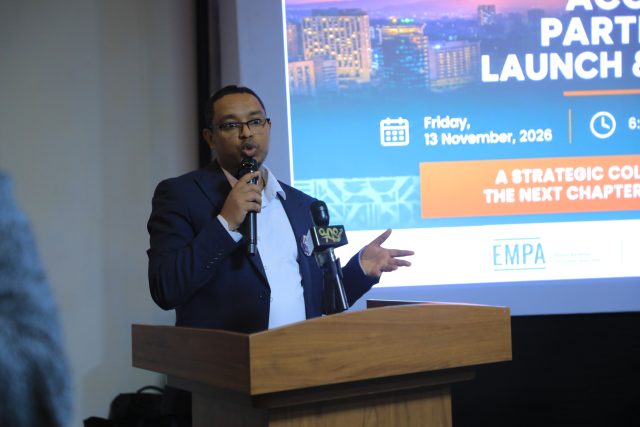
Girma, representing ELSA, said logistics professionals are not very visible, and that working with the marketing community is helping the sector promote itself.
Skills were a common thread. Matongo Matamwandi (PhD), president of the African Marketing Confederation, sad many African marketers still study mainly European and American case studies and pay for foreign qualifications.
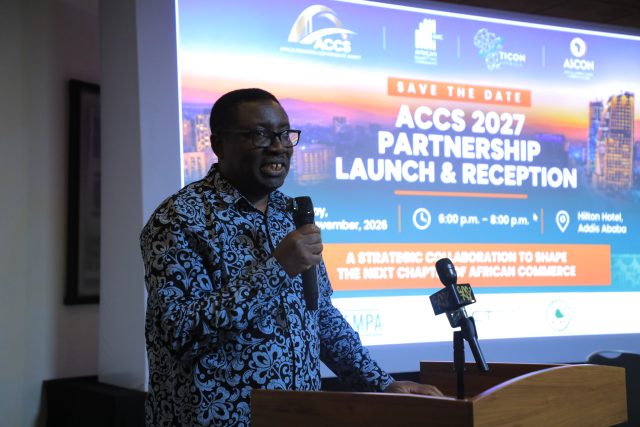
He said Africa has many degrees but too few practical skills in branding, selling and advertising, and that the continent has failed to build its own brands.
He added that Africa’s population could rival India’s by 2050, and that Africans should be able to work across borders without permit restrictions. Karani asked why Africa should not create its own pan-African certification for supply chain professionals, instead of relying on UK qualifications. The ACCI Institute, whose founder attended the event, aims to make professional credentials portable across borders, according to Yilkal.
Asked about the state of the marketing profession in Ethiopia, Fana said a proper study would be needed to answer fully. She said there are strong individual professionals and organisations that value marketing, and that the profession is growing, though more slowly than in the rest of the world.
She also noted that in a supply-constrained market, creating demand is less urgent than producing goods. If the summit delivers on its promises of portable qualifications and stronger links among the continent’s professionals, it could help ease the movement of skilled workers within Africa and strengthen the case for “Made in Africa” brands.
 Betegbar Yaregal