

EEU, Huawei, CRBC to Study Electric Charging for Trucks on Djibouti Corridor
#EBR_News Oct 31, 2026
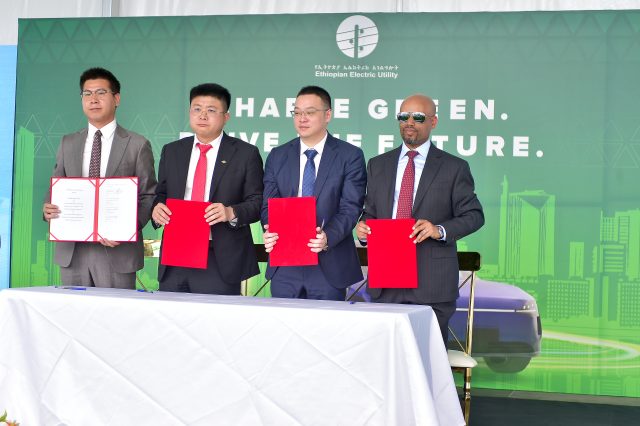
Ethiopian Electric Utility (EEU) has signed a memorandum of understanding with Huawei Technologies, China Road and Bridge Corporation (CRBC) and Beijing Forever Technology to study electric charging for heavy trucks along the Ethiopia–Djibouti corridor.
The signing took place in Bishoftu on Saturday, as the utility inaugurated a new batch of public charging stations in six cities.
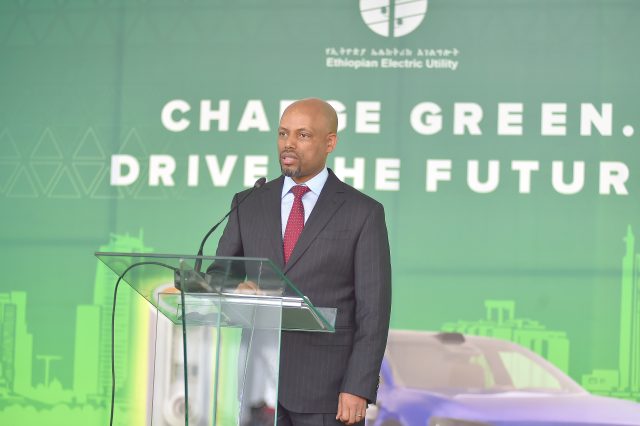
CEO Getu Geremew told journalists that the corridor initiative targets freight rather than private cars.
The corridor is the country’s main trade route, he said, and heavy trucks running on diesel carry much of the economy.
Each truck charging point would draw several megawatts of power, so the study will first assess whether transmission lines, substations and power capacity can cope, and then decide where stations should be sited and at what capacity.
No investment figure has been set. Getu said the study will determine the cost, which he expects to run to many millions of dollars, and that the MoU itself covers the study’s budget.
The CEO indicate that the implementation would follow once the study shows the project is viable within the coming six months.
On financing, he said the partner institutions and banks would be sources, alongside investment from EEU’s own revenue.
Getu also gave a rough sense of the economics. He said fuelling a heavy truck can cost 4,000 to 5,000 birr, against an electricity charge of roughly 700 to 1,000 birr.
Some of the new stations can already charge two heavy trucks at a time, he added, and the corridor plan will extend to Dire Dawa and Semera.
He said the utility had earlier spent about $10 million on procuring 40 charging stations, of which around 14 or 15 are now operating and more than 10 are under construction.
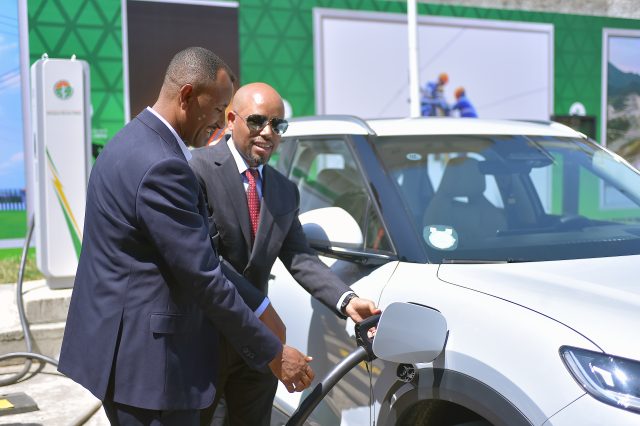
At the passenger-car end, a press release from the utility said the network has grown from three to 14 stations, with a combined capacity to charge 150 vehicles at once.
Eight of the stations are in Addis Ababa, with the rest in Bishoftu, Mojo, Adama, Dilla and Hawassa.
According to the EEU, 108,762 vehicles have been served so far, avoiding about 3.39 million kilograms of carbon dioxide emissions.
Charging costs 14.85 birr per kilowatt-hour overnight, 16.57 birr during the day and 18.28 birr at peak hours.
The Utility also acknowledged that charging capacity lags behind demand, putting the number of electric vehicles that have entered the country at nearly 140,000.
Ecofin Agency reported in June that government officials estimate more than 115,000 are on the road, with some authorities putting the figure higher.
The utility plans more than 40 stations nationwide, including 16 along the corridor, Getu said at a June launch.
Further phases will reach Mekelle, Bahir Dar, Gondar, Dessie, Kombolcha and other towns.
A Huawei vice president for North Africa, speaking at the event, said Ethiopia’s policy on green transport was among the strongest in the region, and that the company hoped to extend its work to heavy transport.
Getu linked the expansion to preparations for COP32, the climate summit Ethiopia will host, and to the aim of cutting diesel and foreign currency spending on fuel imports.
 EBR
 Betegbar Yaregal