22-gebiwoch.jpg

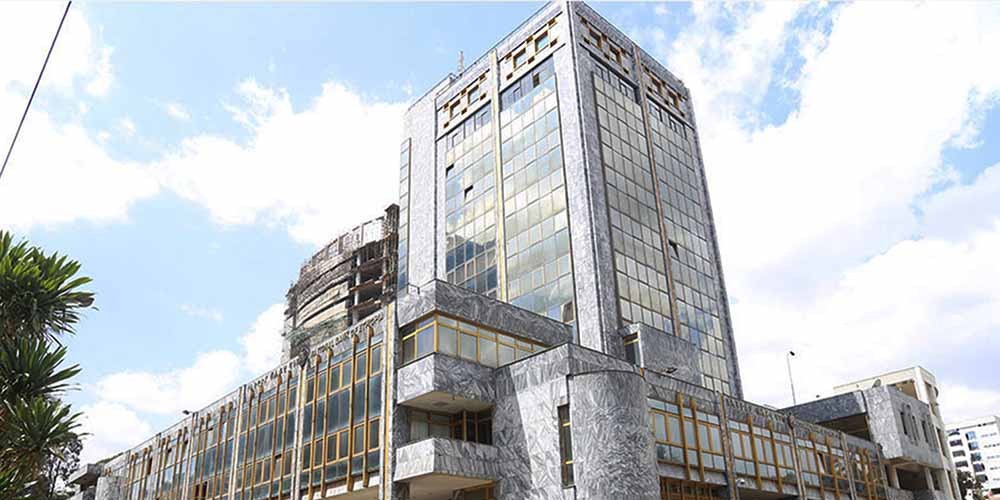
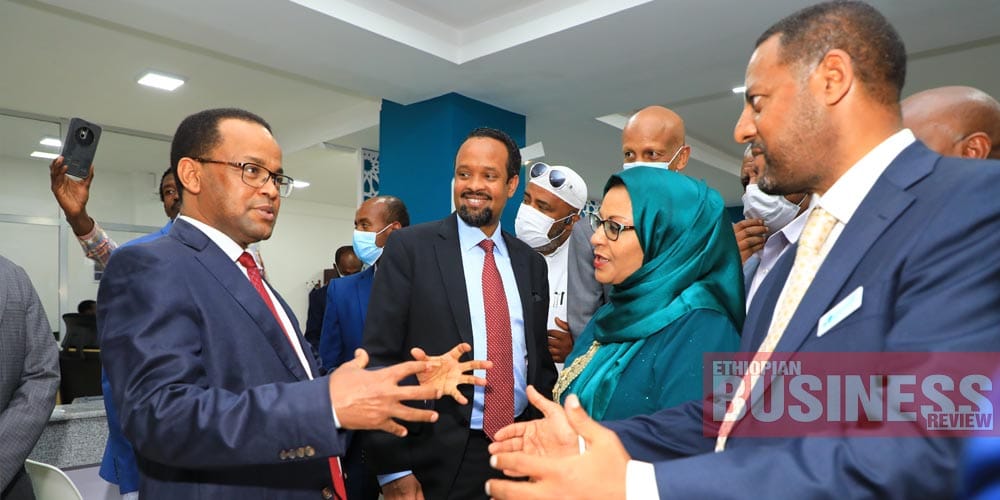
Electronic tax payment system dubbed e-tax is launched, in a bid to enable businesses to pay tax online. The Ministry of Revenue has signed agreement with five banks that includes Birhan International Bank, Dashen, Commercial Bank of Ethiopia, United Bank, and Awash International Banks, today at Hyatt Regency Hotel. Other banks are expected to follow suit.
e-tax is developed by Derash, a platform formed under the Information Network Security Agency (INSA). The system is highly expected to reduce taxpayers’ strains and queues while paying tax physically, at the ministry’s branches.

Zamzam-Bank.jpg

Zamzam Bank SC has started operation naming its first branch Alif, located around Wollo Sefer, Bole district in Addis Ababa. Zamzam has become the first full fledged non-interest bank to operate in Ethiopia. The grand inauguration ceremony today was attended by Yinager Dessie, governor of central bank of Ethiopia, and Grand Mufti Haji Idris, among others.


usa-and-ethiopia.jpg

The Ethiopian Ministry of foreign Affairs called the decision ‘ill-advised measure to unnecessarily overshadow the elections’, in a statement released on May 24, 2021. US president Joe Biden’s administration restricted economic and security assistance to Ethiopia, followed by visa restrictions on Ethiopian and Eritrean officials in relation with the six months military
operation in Tigray region of Ethiopia.


national-bank-of-ethiopia_1.jpg

Over the last two years the number of entrant banks has proliferated, almost equaling the amount of working banks. Nonetheless, a new directive issued by the caretaker National Bank of Ethiopia has shut the door on the further entrance of new banks, whilst also raising the bar on smaller banks and the close to 20 already in the pipeline.
Banks are now expected to raise their minimum paid-up capital to ETB5 billion within five years from the existing ETB500 million mandated in 2011. Although central bank authorities stress the intention is to discourage unbalanced proliferation and nurture few competitive banks, industry leaders and experts claim that this move is the interest of the leading banks. Up to six existing private banks are forecasted to consider merging, while a substantial number of under-formation banks will either abort their efforts or join hands. EBR’s Ashenafi Endale investigates the implications of the new move. 


Fikadu-Digafe.jpg

Fikadu Digafe is Chief Economist and Vice Governor of the National Bank of Ethiopia (NBE). He strides in the most laboring job in the central bank ever since the bank started baptizing itself with reforms ensuing the landslide reshuffle of October 2019. He was previously in charge of external economic analysis and international relations at the bank. For many years, Fikadu has been engaged in the research works of the central bank, including scripting for the quarterly bulletin of the bank, Birritu.


Can-Ethiopias-Coal-Bonanza-Substitute-Imports.jpg

Coal is the second-most used source of energy globally. Primarily used for power generation, it is the raw material of choice for 40Pct of electricity production worldwide. With an estimated 430 million metric tons of coal deposits in the country, the Ethiopian government is trying to utilize this resource by encouraging small- and large-scale coal producers and investors. As a result, the country has managed to satisfy 40Pct of its annual demand from the local market. However, the quality of the coal produced is of poorer quality compared with imports from countries like South Africa. Resultantly, manufacturers going local are incurring additional costs. EBR’s Ashenafi Endale explores.


Ethiopian Business Review | EBR is a first-class and high-quality monthly business magazine offering enlightenment to readers and a platform for partners.


2Q69+2MM, Jomo Kenyatta St, Addis Ababa

Tsehay Messay Building

Contact Us

+251 961 41 41 41