
Four Ethiopians Named Among Africa’s 100 Most Influential for 2025
December 20, 2025
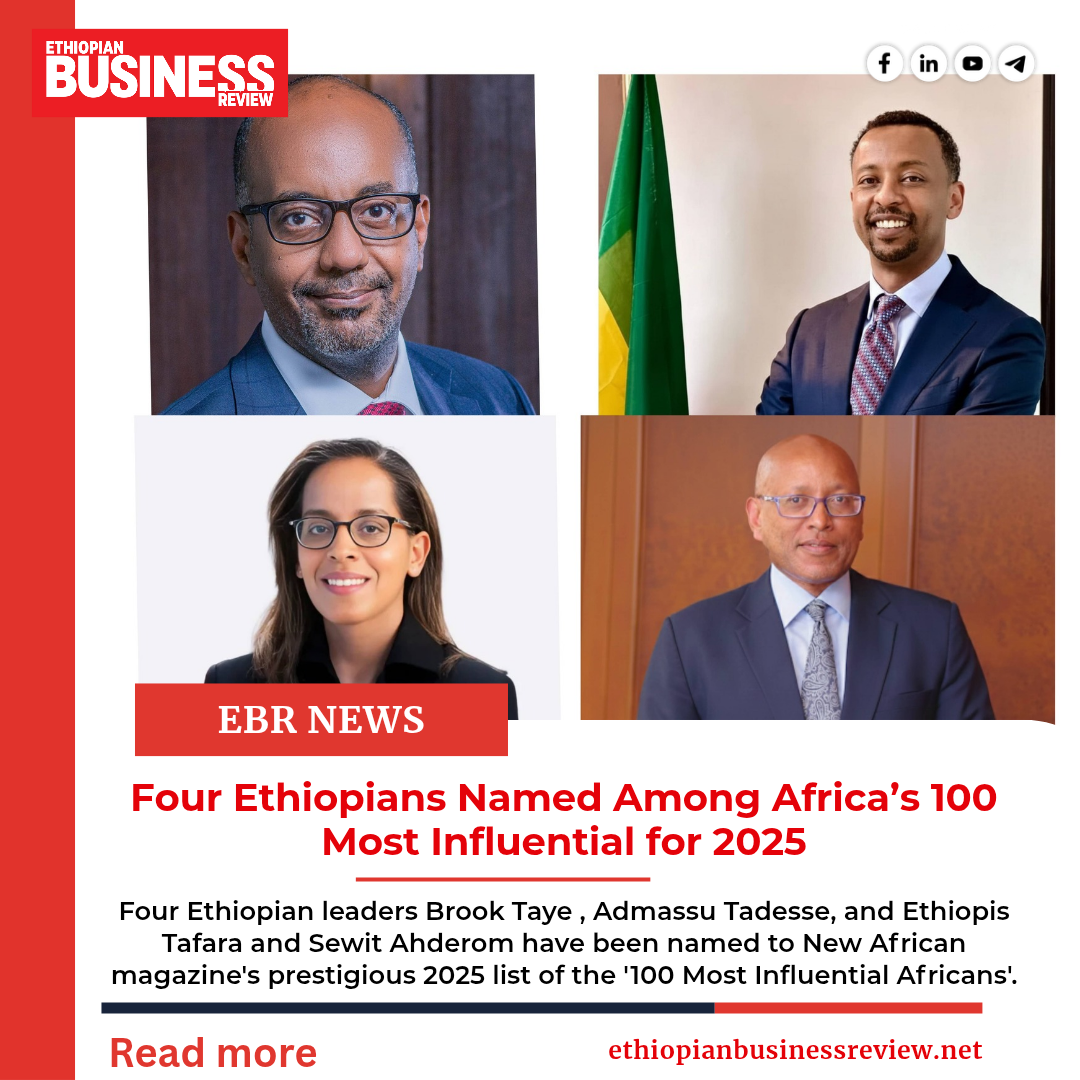
Four Ethiopian leaders—Brook Taye, Admassu Tadesse, Ethiopis Tafara, and Sewit Ahderom—have been named to New African magazine’s prestigious 2025 list of the ‘100 Most Influential Africans’.
The first three were selected in business category, while Sewit was named in the change makers category, their inclusion highlights Ethiopia’s growing impact in continental finance, investment, technology, and global philanthropy.
Brook Taye (PhD),CEO of Ethiopian Investment Holdings (EIH), is recognized as a “liberalisation guru” for his central role in Ethiopia’s economic reforms. The citation credits him with turning EIH into one of Africa’s most discussed institutions, unlocking billions in state assets through smart partnerships.
Admassu Tadesse, Group President of the Trade and Development Bank (TDB) Group, is highlighted as a “formidable strategic thinker.” He is praised for his influential voice in reshaping global development finance and advocating for Africa’s economic self-reliance, arguing that the continent must better harness its own capital.
Sewit Ahderom, the incoming President and CEO of the MasterCard Foundation, is acknowledged as a technology leader and finance executive. An Ethiopia-born techpreneur who co-founded Gro Intelligence, she will lead the foundation’s work in youth employment, education, and financial inclusion across Africa and in Canada.
Ethiopis Tafara, a senior leader at the International Finance Corporation, rounds out the honorees for his influence in global development finance, as EBR reported in a news article yesterday.
In total, the 2025 list represents 32 African nations and features 64 men and 36 women. Business leads the category breakdown with 21 entries, followed by Creatives with 19, Public Office and Thinkers and Opinion Shapers with 15 each, Sports with 13, Change Makers with nine and Technology with eight.
Nigeria remains the most represented country with 21 entries, followed by South Africa with 10, Kenya and Ghana with seven each, and Tunisia with five.
 Betegbar Yaregal