

 Zia Qureshi
Income inequality has been increasing in most major economies – and in many of them, it has been increasing significantly. This is a cause for growing concern, and rightly so: inequality not only can undermine an economy’s long-term growth prospects; it can restrain growth in the short term by depressing aggregate demand.

 Meseret Mamo
Ethiopia has enjoyed a centuries-old tradition of oral histories that depict the lives of characters for the sake of promoting a particular moral or ethical lesson, especially for young children. However, scholars note that this tradition is slowly dying, especially in an increasingly interconnected world in which young kids are exposed to stories from other cultures and countries, sometimes to the exclusion of traditional local stories. Some artists and storytellers are trying to preserve this tradition, but it is proven to be a more difficult task than some may think. EBR’s Meseret Mamo spoke with individuals close to this subject in order to learn more about what is being done to preserve the nation’s folklore tradition.
 Alemayehu Geda (Prof.)
Major issues to consider
One of the greatest achievements of Prime Minister Abiy Ahmed (PhD) in his short stay in power is bringing peace between Ethiopia and Eritrea, which is an excellent political and diplomatic success. This is also a smart political move on his part to fight established interest groups who could stand against his reform. His visits to Egypt, the UAE and Saudi is also a predictable political underpinning for the success.
 Melkamsew Abate
Despite the industrial transformation the Ethiopian government is developing as a launch pad for economic growth, the manufacturing industry sector is not doing as well as expected, lagging far behind in terms of competitiveness in the international market. This manifests itself in the reality that foreign currency generation from the manufacturing sector is trending down on pars of planned export targets.

One trend that appears to be growing among Ethiopian musicians is the practice of covering: rerecording old songs by new artists in order to give the song new life. Up-and-coming musicians say that covering old songs is a good way to gain exposure by introducing the artists to new audiences through famous songs. Others, however, feel the practice compromises the integrity of the original song and musician, and thwarts creativity in the music industry. EBR’s Meseret Mamo spoke with industry insiders to get a closer look at the debate and to see if any consensus can be reached on this controversial issue.

 Ashenafi Endale
The month of July marks the beginning of transfer season for Ethiopian football players. The period is usually marked by the active movement of players from one club to another. However, this year is different, because of a directive, that was adopted by the Ethiopian Football Federation (EFF) that no longer allows players to receive lump sum payments for transfer deals; instead, they receive their payments in monthly installments. The EFF says this action was taken to ensure players are accountable to their new teams, as some players in the past have taken their money and disappeared. Players, however, say the directive unfairly penalizes players. EBR’s Ashenafi Endale delved deeper into the debate to learn more about the effect the directive has had on Ethiopian football clubs summer transfer.
Michael Kalecki’s Advice on Financing Development
Michael Kalecki (1899-1970) was a rare economist of Polish origin who could be referred as the unknown prophet in economics. He actually developed his theories before or at the same time as the famous British economist J.M. Keynes’ ideas that revolutionized economics and economic policy from 1930s to 1970.
 Austine Sequeira (PhD)
History is replete with wars fought for access to land. There was a time when a piece of land had limited usage – you grow food grains and fruits or you just live on it. As societies evolved, land use changed purely based on human needs.
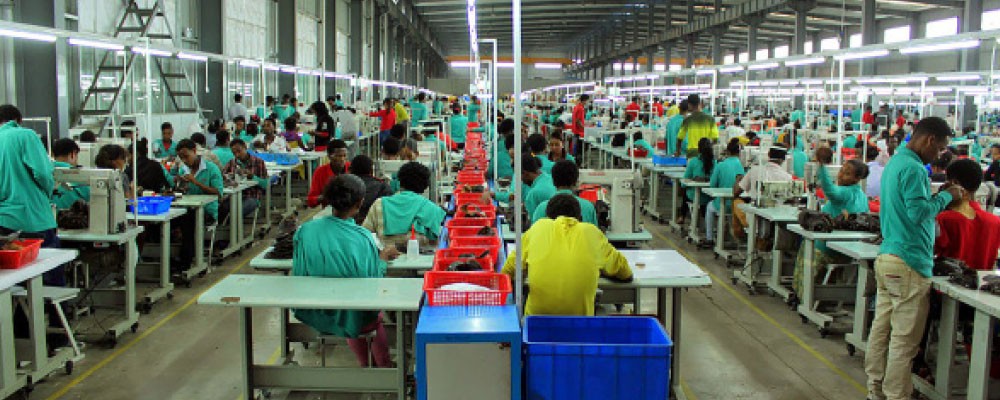
Are they a magic bullet for fast industrialization?
In an attempt to harness Ethiopia’s manufacturing potential, the government has plans to establish industrial parks for facilitating fast industrialization. These parks offer a number of privileges for the companies that operate on them. The benefits include provision of basic infrastructure, duty free import of machineries and tax holidays. Government officials argue that the parks allow for increased manufacturing capacity. Others, however, say that the companies who occupy these parks, many of which are owned by foreign investors, are doing little to contribute to the development of technical knowledge and capacity among local businesses and employees, which could prove less advantageous to the nation in view of huge investment made to establish them. EBR’s Ashenafi Endale spoke with industry insiders to learn more about the potential and pitfalls surrounding the development of industrial parks in Ethiopia.

 Amanyehun R. Sisay
Patricia M. Haslach, US Ambassador to Ethiopia
With an annual average of USD800 million in support for education, health, and agriculture, the United States has been a leading provider of humanitarian assistance to Ethiopia. The two countries have also established cooperation in matters of peace and security in the Horn of Africa. However, the same can’t be said when it comes to trade and investment.