Broken-Agreements.jpg

Ethiopia’s export performance falls short of the government’s plans. The country hoped to earn USD5.04 billion by the end of last fiscal year, but made less than 60Pct of that amount. For this year, the plan is USD6.5 billion and so far the six-month performance is less than the nation received last year during the same period. A number of structural issues have hindered the sector’s performance, but one has become more prevalent in recent years: exporters not honouring trade agreements with foreign countries. Exporters say that there are systemic reasons why they’re unable to honour trade agreements that have largely to do with the cost and quality of local products. Others, however, argue that this isn’t a sufficient excuse and that breaching contracts will create a negative image of the country’s already struggling export sector. EBR’s Asehenafi Endale spoke with key stakeholders to learn more about the intricacies of the issue and what’s being done to address the underlying problems.

Staggering-Inflation-Negative.jpg

Ethiopia hopes to increase private saving from 16.6Pct to 18.7Pct of gross domestic product (GDP) by 2020. This task, however, may prove cumbersome, given that real interest rates in the country have been below zero for years, which doesn’t bode well for people looking to put their money in banks. Even the World Bank has hinted at the adverse effects of this reality on Ethiopia’s development prospects. EBR’s Bantayehu Demlie spoke with banking sector experts, customers and academicians to learn more about this complex issue and offers this report.


Despite-Impressive-Growth.jpg

Mekelle is Ethiopia’s second largest city and is the seat of the Tigray Regional State. Over the last two decades, the city has witnessed an impressive amount of investment, especially in the service and construction sectors, which has brought in ETB5.7 and ETB6.6 billion in registered capital, respectively. In this way, the town is perhaps the most promising location for business outside of the nation’s capital. Still, local investors say that they face issues like a lack of finance and a dearth of quality raw materials, which hinder their abilities to operate their companies at full capacity. EBR’s Ashenafi Endale visited Mekelle and spoke with local business owners and regional government officials to better understand the issues plaguing investors and what’s being done to mitigate these problems.


As-More-Women-Work.jpg

According to the Central Statistical Agency (CSA), there are 2.5 million working women of child-bearing age in urban areas in Ethiopia. For many women, they’re the primary or sole breadwinners of their family, which often includes young children. Day-care centres provide women an alternative to hiring maids, relying on family, or having to sacrifice work in order to care for their children. EBR’s adjunct staff writer Meseret Mamo spoke with working mothers, day-care service providers and government officials to learn more about what’s being done to develop and regulate this nascent industry.


St.-George-FC.jpg

St. George FC, one of the most popular teams in the Ethiopian Premier League, has enjoyed many successes and endured its share of tribulations during its 80 years of existence. But one thing that still eludes the club is success on a continental level. EBR’s adjunct staff writer Abiy Wendifraw spoke with team administrators to learn more about it’s storied past and its plans to bring itself to the next level of success.


Over the last 35 years, Western democracies have seen a rapid rise in political instability, characterised by frequent shifts in governing parties and their programmes and philosophies, driven at least partly by economic transformation and hardship. The question now is how to improve economic performance at a time when political instability is impeding effective policymaking.


Women-Underrepresented-in-Music.jpg

Despite the fact that women have achieved greater equality in recent decades with regard to increased employment opportunities, the realm of music performance still remains overwhelmingly dominated by men. This trend isn’t exclusive to Ethiopia: countries in the West also feature predominately male orchestras and bands that perform at prestigious musical venues. EBR’s adjunct writer Meseret Mamo spoke with musicians and explored the issue further to parse through the different explanations behind why women are underrepresented as instrumentalists.


Safe-Houses.jpg

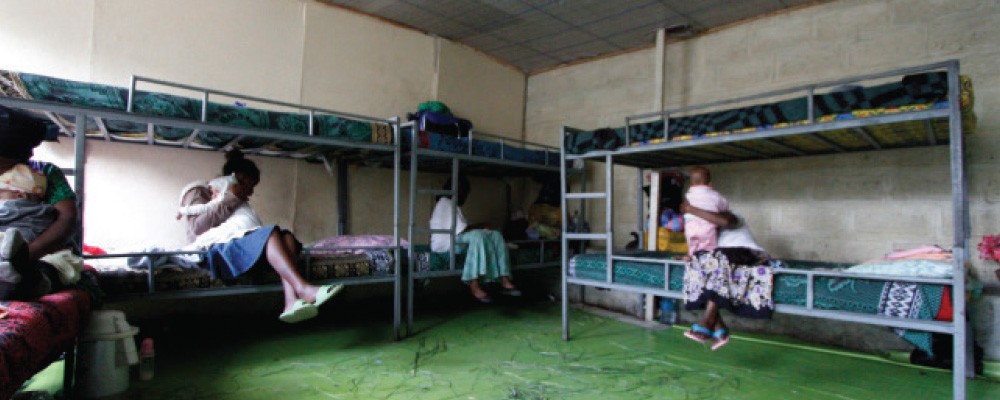
By some estimates, 70Pct of women experience abuse in their lifetime. The ordeal may leave some women and their children traumatised and feeling isolated, which can lead to long-term physical and mental anguish. Safe houses, also known as sanctuaries, were designed to provide these women and their children a safe place to receive shelter, food and counselling services to help them recover from the trauma they’ve experienced. EBR’s Meseret Mamo visited two sanctuaries and spoke with stakeholders to understand how the centres work to help women and children abuse survivors.


Hoarding-Commodities.jpg

Hoarding refers to the deliberate withholding of goods from the market, usually to create false demand and raise prices for certain commodities. According to the Addis Ababa Chamber of Commerce, the practice is prevalent throughout the country. While fairly common in developed nations, hoarding can be problematic for fragile economies like Ethiopia, where the Consumer Price Index is heavily impacted by food inflation. In order to exert more control over hoarders, the government is enacting a number of plans to quell the practice and its negative effects. EBR’s Bantayehu Demlie spoke with stakeholders and researchers to learn more about the problem, its implications and what’s being done to prevent it in the local economy.


Ethiopian Business Review | EBR is a first-class and high-quality monthly business magazine offering enlightenment to readers and a platform for partners.


2Q69+2MM, Jomo Kenyatta St, Addis Ababa

Tsehay Messay Building

Contact Us

+251 961 41 41 41