

Ethiopia’s-Growing-Population.jpg

Ethiopia’s population has grown by leaps and bounds in recent decades. According to United Nations (UN) estimates, the country’s population was just over 18 million in 1950 – today, that figure is around 90 million. But is this rapid growth good for Ethiopia’s overall economic development? Experts seem to be divided. In honour of the UN’s World Population Day on July 11th, EBR’s Bantayehu Demlie delved deeper into the issue to learn more about it.
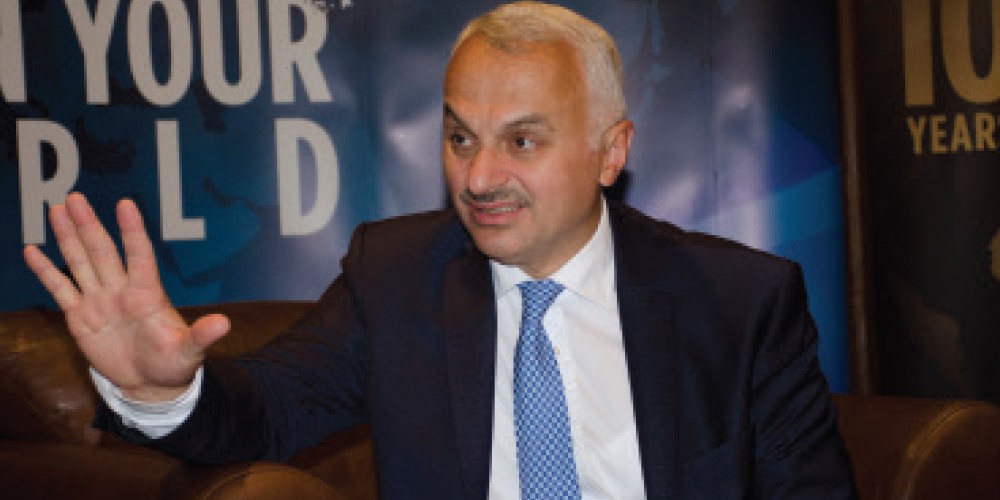

Temel-Kotil-PhD.jpg

Turkish Airlines is one of the biggest success stories in global aviation. In 2005, it was a regional carrier whose annual revenue was around USD2 billion, carrying 14 million passengers yearly. Today, it’s an international powerhouse, with revenues expected to reach USD12 billion this fiscal year, roughly 70 million passengers per year and nearly 300 destinations.
The company’s CEO, Temel Kotil (PhD), has been at the helm for 12 years. He credits this growth to capable employees, privatisation, and continuous expansion into new markets. EBR’s Tinbete Ermyas spoke with the ambitious leader during a trip to Ethiopia to mark the Airlines’ 10th anniversary flight to Addis Ababa. They discussed the company’s growth, plans to expand in Africa, and how the Airlines has managed during the ongoing crises in the region. The following is an excerpt.


Throughout human history, mankind has engaged in business transactions – from bartering simple goods to selling and purchasing sophisticated products and services. Governments have been one of the most visible agents in these processes. Initially, they were entrusted to create an efficient legal and regulatory framework for these exchanges to take place in a safe and fair environment. In turn, they became one of the largest financial beneficiaries of this activity – through levying taxes.


Improving-Emergency-Medical.jpg

Emergency medicine – the branch that deals with undifferentiated, often severe, conditions requiring immediate care – can saves lives after trauma. Studies indicate that expedient medical care, especially in severe cases, can significantly reduce fatalities. These services, however, are lacking in Ethiopia, where patients may wait more than 24 hours to receive treatment in an emergency room. EBR’s adjunct staff writer Meseret Mamo spoke with health care practitioners and government officials to learn more about what’s being done to develop the country’s emergency care infrastructure.


Tewelde-Gebremariam.jpg

With an annual growth rate of 20 – 25Pct since 2004, Ethiopian Airlines (ET) is the fastest growing airline in Africa. In its seven-decade history, it has earned a name for itself as a leading carrier, unrivalled in efficiency and operational success among its continental competitors. This success was made possible while so many of its African peers have vanished and the few existing ones are on the verge of perishing.
Several factors have contributed to ET’s success. Its CEO, Tewelde Gebremariam, who has worked for the company for more than 30 years, says the key has been good corporate governance and leadership. In connection with the company’s 70th anniversary, EBR’s Amanyehun Sisay, spoke with the detail-oriented CEO to learn more about the growth trajectories of Africa’s largest airline and what’s in store for ET.


Poor-Tax-Compliance-System.jpg

Tax compliance in Ethiopia has a long way to develop. According to the International Monetary Fund (IMF), the amount of dodged taxes in the 2009/10 fiscal year amounted to ETB19 billion, which accounted for 5Pct of gross domestic product (GDP) that year. This money would have covered more than 20Pct of the amount the nation spends on the construction of the Grand Renaissance Dam. In order to reduce this, the government enacted a plan to improve tax evasion, particularly when it arises from contraband and illicit business activities. But all these years later, has the plan proved fruitful? EBR’s Ashenafi Endale explored the issue to learn the details of what’s worked and what hasn’t.


Foreign-Currency.jpg

For developing countries, foreign currency is a necessary component to the success of manufacturing, overall industrialisation and greater inclusion into the global economy. Specifically, manufacturers, the purported backbone of what the Ethiopian government hopes to be a robust industrial sector, need foreign currency to import materials that are central to their enterprises. However, the country is facing a severe shortage of these funds, a dynamic that isn’t likely to change soon. To put the demand in perspective, the Commercial Bank of Ethiopia approved USD3 billion in foreign currency requests in two months, whereas the Bank earned that amount in the first six months of the current fiscal year. Furthermore, the government has meagre foreign currency reserves. So what’s being done to mitigate the situation? EBR’s Ashenafi Endale spoke with key insiders to learn more about the implications of the shortage and its potential solutions.


Will-Foreign-Furniture.jpg

Local demand for furniture is increasing rapidly. According to the Ethiopian Revenues and Customs Authority, 584,538 units of furniture were imported in 2011; that figure grew to 20,415,495 in 2015. This growth, however, is largely benefiting foreign companies – not local furniture producers. The latter identify a number of bottlenecks in accessing the market to meet this increased demand. EBR’s Bantayehu Demlie spoke with foreign companies, local producers and government officials to learn more about these bottlenecks and what can be done to overcome them to improve domestic firms’ performance and profitability.


Ethiopian Business Review | EBR is a first-class and high-quality monthly business magazine offering enlightenment to readers and a platform for partners.


2Q69+2MM, Jomo Kenyatta St, Addis Ababa

Tsehay Messay Building

Contact Us

+251 961 41 41 41