Tadesse-Tilahun.jpg

Tadesse Tilahun, CEO of NOC Ethiopia, Discusses the 2019 Financial Performance of his Company, the State of the Oil Industry

Born in 1950 in Wollega, western Ethiopia, Tadesse Tilahun, a father of three, made tremendous strides in his career before becoming a Shareholder and General Manager of National Oil Ethiopia (NOC). After studying accounting in the School of Commerce and Addis Ababa University, he directly joined the Shell Group where he acquired professional trainings in several countries. At Shell, he served in many African countries at numerous managerial positions.

Operations, Oil and Chemical Marketing General Manager of Shell in Nigeria; Shell East Africa Hub Regional Supply and Operations Manager (based in Kenya and encompassing 11 countries); and Country Chairman and General Manager of Shell Ethiopia Limited are among his former posts at the Shell Group. Before he was invited to NOC, Tadesse had already accumulated deep expertise on the east African oil market.

graduate.jpg

Having one of the largest reserves of human and natural resources, Ethiopia should have had a prosperous economy. However, it is one of the poorest countries in the world, as manifested through low per-capita income and low human-development index. The vast expansion of education and health services over the past two decades has not solved the problems of farmers and pastoralists or changed the lives of the overwhelming majority. As a result, the contribution of human capital to economic growth remains insignificant in Ethiopia. EBR’s Ashenafi Endale explores to shed light on the matter.


doro.jpg

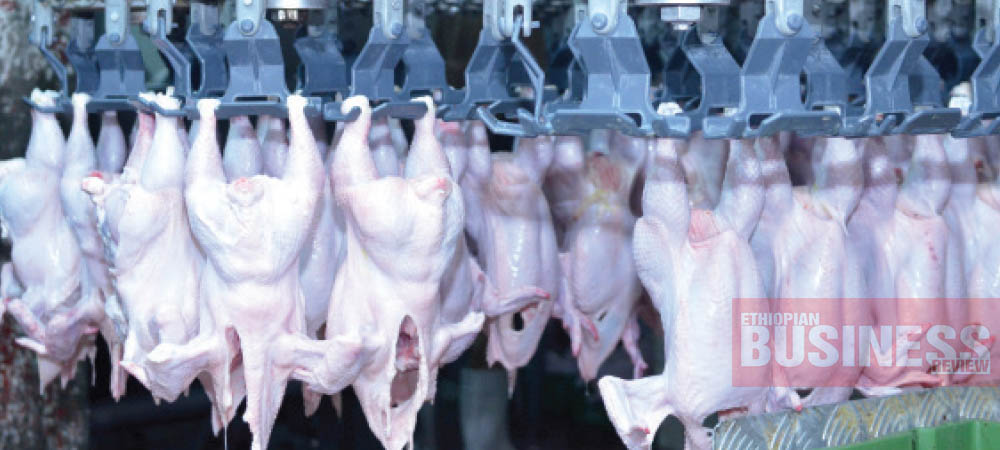
Despite having an immense potential, poultry farming is still at its infancy in Ethiopia. Commercial poultry production is characterized by a large number of small-holder farms, and few medium to large scale poultry farms. Production is concentrated mainly in the Addis, Bishoftu and Adama areas, with some small concentrations around northern and southern rural towns. Farmers lack basic knowledge on good poultry keeping practices and the inputs needed (feed, vaccines, drugs, and hardware such as drinkers and feeders) are scarcely available. Meanwhile, the demand for poultry is growing in a market which is characterized by seasonally fluctuating prices owing to religious fasting periods. EBR’s Ashenafi Endale explores.


gomeju.jpg

Not more than 10 oil suppliers were operational in Ethiopia a decade ago. Now that is just history. The number has now tripled, reaching 33 as of December 2019. Not only this, the ownership structure of these companies has also changed greatly. While oil suppliers established a decade ago were largely owned by foreigners or big corporate, they are now being replaced by locals. But making a profit and staying afloat has not been easy for the majority of them, largely because of the low profit margin set by the government and shortage of forex needed to import lubricants and bitumen. EBR’s Ashenafi Endale explores.


Turning-back-on-agricultural.jpg

The agricultural sector remains underdeveloped and untapped in Ethiopia. Although the sector contributes a third of the country’s GDP and accounts for two-thirds of the workforce, it has not been given the attention it deserves as demonstrated by the minimal finance provided to the sector. Agriculture modernization plans have also remained a myth. Mentioning that it is high-risk, commercial banks are not willing to provide loans to farmers and other actors in the agricultural sector. Even the Development Bank of Ethiopia is no longer interested in financing farmers. Even worse, microfinance institutions, expected to reduce poverty and reach out financially excluded communities, are not in a position to provide much-needed agricultural finance. EBR’s Ashenafi Endale explores.


Thanks to big corporations and financial companies, Addis is becoming a city with a high number of buildings compared to east African cities. Many of these buildings were constructed by local contractors that were able to learn fast in the past two decades, though not free from flaws. Majority of buildings constructed by local contractors lack quality and basic infrastructures and have very similar designs. Frustrated, many builders are now turning their backs on local contractors, while strengthening their ties with the foreign ones, particularly those from China. Almost all big buildings, roads and dam projects throughout the country are being handled by Chinese contractors. EBR’s Ashenafi Endale investigates.


green-manufacturing.jpg

Are theyAchievable?

With power interruption becoming the norm, implementing green manufacturing has been almost impossible in Ethiopia. Although there are many companies that have embraced the idea of using green energy as a source of power, poor electricity supply has forced them to be dependent on fossil fuels. Especially cement factories, and industries that require high voltage, have no choice but to spend increasing amounts of foreign currency to import coal and fuel. Such a reality, coupled with inefficient energy usage, is profoundly costing the country. EBR’s Ashenafi Endale explores.


ethiopia-nation-building.jpg

An Endeavor Far-removed from its Goal

With Ethiopia being at a crossroads, nation-building continues to be a contentious matter amongst politicians and policymakers in Ethiopia. Attempts of successive regimes to build an economically integrated society have borne no fruit. The administration of the Revolutionary Democrats is no different. The constitution adopted 25 years ago demands the formation of a single economic community which is crucial in promoting common rights, freedoms, and interests. The reality is, however, far from the intended goal. Not only that, the main ingredients of state building, providing citizens with basic functions and services, including maintaining internal order, are still unmet. EBR’s Ashenafi Endale probes into the matter.


the-gold-exile.jpg

Why & How Ethiopia is Losing its Precious Commodity

A decade ago, gold constituted close to one-fifth of the total export earnings of Ethiopia. But the country has not been able to sustain this momentum. Last year, export income from gold plummeted to a dismaying USD32 million from 654 million in 2011/12 fiscal year. This is largely due to the growth of contraband trade and the closure of mining companies for allegedly polluting the environment. EBR’s Ashenafi Endale investigates.


Public-Private-Partnership.jpg

Is it the right model to sustain Ethiopia’s growth momentum?

A year after parliament legislated a proclamation governing Public Private Partnerships (PPPs), a Saudi firm has become the first to be awarded the construction of two solar power projects under such scheme. Another 15 projects, on the basis of PPPs, will soon be awarded to winning companies. While such a move is expected to fill the huge financing gap in the electricity sector, there is hope that this will have a positive impact on the efficiency, equity and quality provision of services.
While the idea of PPPs in general is theoretically appealing, its practical implementation in developing countries is not as easy as theory suggests. Perhaps partly for that reason, a large number of implemented PPPs have left the contractual parties dissatisfied, indicating that either developing countries, investors, or both may have had unattainable expectations. Experts fear this may happen in Ethiopia as well. EBR’s Ashenafi Endale explores.


Ethiopian Business Review | EBR is a first-class and high-quality monthly business magazine offering enlightenment to readers and a platform for partners.


2Q69+2MM, Jomo Kenyatta St, Addis Ababa

Tsehay Messay Building

Contact Us

+251 961 41 41 41