

Economists Call for Paradigm Shift from Structural to System Transformation at Ethiopian Economic Conference
#EBR_News July 17, 2026
Betegbar Yaregal
Ethiopian economists and policymakers have called for a fundamental rethink of the country’s development strategy, arguing that the traditional model of structural transformation where labour moves from agriculture to industry in a predictable sequence is no longer sufficient in a world of simultaneous, interconnected global crises.
The message emerged during the opening plenary of the 23rd International Conference on the Ethiopian Economy, organized by the Ethiopian Economics Association (EEA) on Friday, where participants examined how geopolitical tensions, climate change, technological disruption and economic volatility are reshaping development prospects.
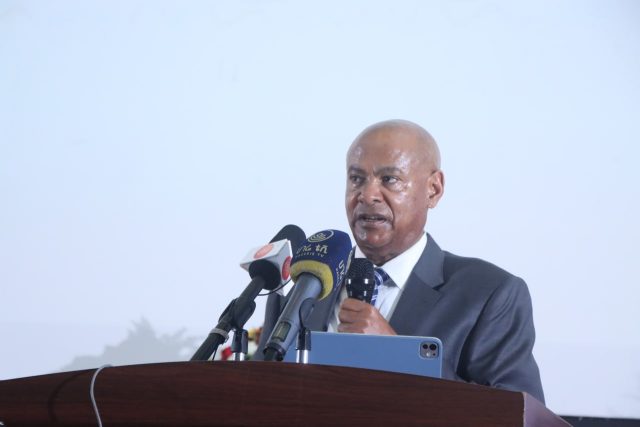
In his opening remarks, EEA President Professor Tassew Woldehanna welcomed participants to the conference, emphasizing the importance of open debate and intellectual diversity. “The value of an academic conference does not lie in everyone reaching the same opinion,” he said. “Its value is in improving our understanding, questioning unsupported assumptions, and identifying policy options that both the economy and society respond to.”
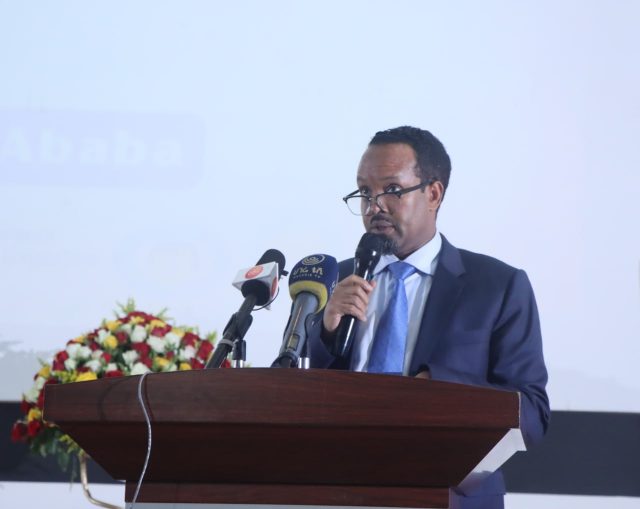
Finance Minister Ahmed Shide, delivering the opening address, acknowledged that the world is navigating an environment marked by geopolitical tensions, climate shocks, volatile global financial conditions, and rapid technological change.
He noted that Ethiopia’s economy has grown by 9.2 per cent over the past year, supported by performance in agriculture, services and industry, while tax revenue is projected to reach 9.5 per cent of GDP in the current fiscal year. However, he cautioned that “implementation gaps, export competitiveness, and productive employment must improve further.”
“We should remain happy about the challenges before us,” Ahmed said. “The reforms we have undertaken over the past several years have been among the most comprehensive in our country’s modern economic story.”
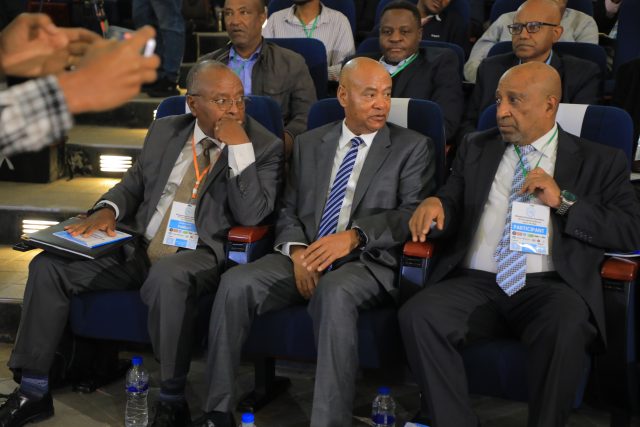
The conference’s central panel discussion, themed “The New Global Reality: Rethinking Development, Resilience and Economic Transformation,” brought together leading economists and policy researchers to examine how Ethiopia should respond to mounting external and domestic shocks.
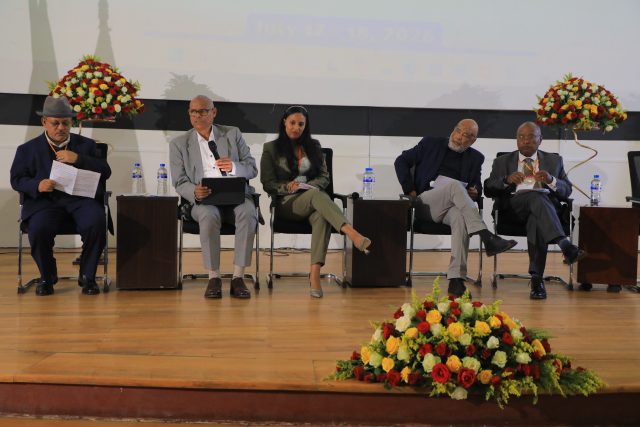
A recurring message from the discussion was that development strategies can no longer assume a stable global environment.
Panelists argued that economic policies should be designed to adapt quickly to multiple and simultaneous disruptions, including commodity price volatility, conflicts, climate shocks, financial instability and rapid technological change, rather than relying solely on fixed five- or ten-year development plans.
During a panel discussion Selamawit G/egziabher (PhD), a development economist and policy researcher, argued that the concept of growth itself must be redefined. “We are going to speak on a fast-growing economy. Rather, growth should be replaced with resilient growth, which is adaptive,” she said. “We grow fast, we also have resilient growth, which is adaptive. We should anticipate conflicts globally, locally, and then absorb them.”
She called for a shift from “structural transformation” to “system transformation” an approach that recognizes shocks affecting food security, energy transition, and unemployment are interconnected and require coordinated policy responses. “Policy should be adaptive. We cannot assume a stable system. Instead, we should adopt, learn, and adjust quickly.”
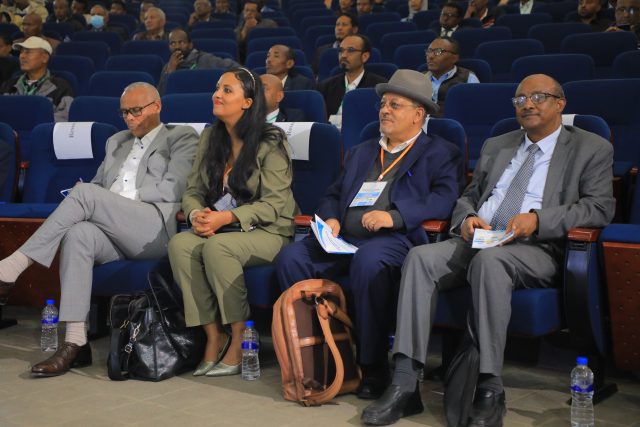
Kebour Ghenna (PhD), Executive Director of the Pan-African Chamber of Commerce and Industry, offered a sharp critique of Ethiopia’s development model. He argued that the country’s operational constraints, high interest rates, foreign exchange shortages, and weak private sector performance are symptoms of a deeper structural problem.
“The economy remains organized around dependence rather than autonomous accumulation,” Kebour said. “The first constraint is not in finance. It is in the structure of production. What kind of economy are we asking investors to invest in? If the economy is still dominated by raw commodity exports, imported machinery, imported industrial inputs, imported technology, imported consumption goods, then private investment itself becomes dependent on foreign exchange and external markets.”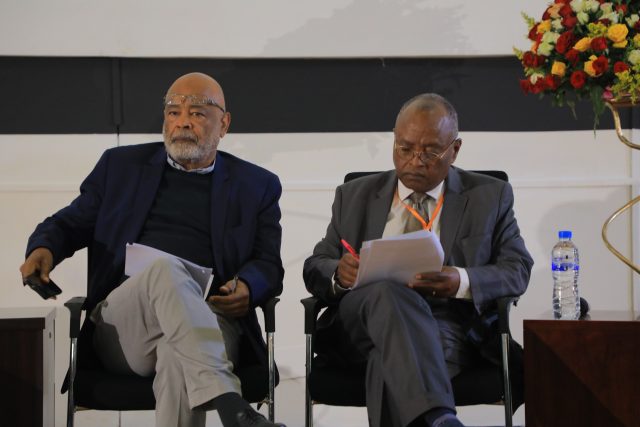
He criticized the fixation on attracting foreign investment without addressing the underlying industrial strategy, noting that “a factory does not industrialize a country by itself. It requires reliable electricity, local suppliers, skilled workers, transport and logistics, testing and certification services.”
Professor Abebe Shimeles, honorary professor at the University of Cape Town, highlighted Africa’s financial disadvantage in the global system. He noted that despite the continent’s economic resilience, it receives only a small fraction of global financial flows while bearing disproportionate climate and economic risks. African countries face borrowing costs averaging between 12 and 14 per cent, well above global averages, he said.
“Africa is being penalized despite its economic development,” Abebe said. “There is a bias in how risk is assessed.”
He called for reforming the global financial architecture, strengthening domestic resource mobilization, and leveraging technology to improve government efficiency and expenditure management.
Alemayehu Seyoum Laflosse (PhD), senior executive trainer at the International Food Policy Research Institute, emphasized the importance of state capacity in navigating the new global reality. He called for reforming the civil service through merit-based recruitment and selective pay incentives
“The civil service is at the heart of state capability,” Alemayehu said. “We need to protect merit at the point of entry. Universal examination-based recruitment could be an important meritocratic step.”
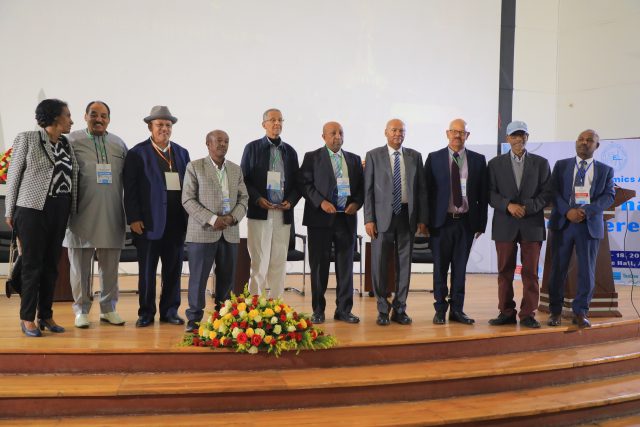
A moment of reflection came when the EEA honored two of its founding members, Professor Berhanu Nega (PhD), now Minister of Education, and Assefa Ademassie (PhD).
In his acceptance speech, Professor Berhanu recounted the association’s humble beginnings: “When I took over as president, its bank account had only 20,000 Birr. Later, when I left, it had 6 million Birr.” 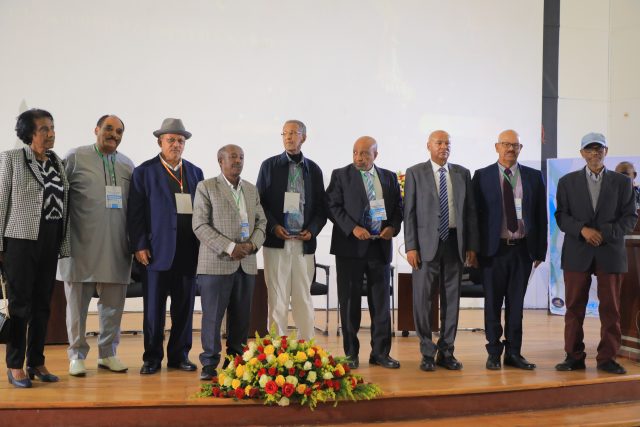
He described how the association’s current headquarters, now valued at approximately 600 million Birr, was built through the collective effort of its members. “At the time, because we didn’t have a meeting hall, we used to hold conferences at the ECA (Economic Commission for Africa) hall. We have overcome all those challenges to reach this point through our own capacity.”
During a Q&A session, participants raised concerns about the persistent gap between policy formulation and implementation. Selamawit noted that despite successive industrial policies, manufacturing’s contribution to GDP has never exceeded 6 per cent. “We have the policies, but we fail to implement them,” she said.
Kebour called for a shift in how success is measured, arguing that the number of investment licenses issued is a poor indicator of industrial transformation. “The relevant measure should be the number of firms that begin production, expand, source locally, export, and create sustainable employment.”
Addis, a participant, questioned the relevance of 10‑year development plans in a highly unpredictable global environment. The panelists argued that long-term plans provide essential direction but must be accompanied by real‑time monitoring, mid‑term evaluation, and a willingness to adapt as conditions change.
The first day of the conference concluded with a call for greater collaboration between researchers, policymakers and the private sector. In his opening remarks, Finance Minister Ahmed Shide reaffirmed the government’s commitment to engaging with academia, saying: “The quality of dialogue is very important. The Minister of Finance will listen carefully to the findings and recommendations that emerge from your discussions.”
The panelists emphasized domestic resource mobilization, regional integration under the African Continental Free Trade Area, and investment in technology and skills as key priorities.
Professor Berhanu, speaking after receiving his lifetime achievement award, offered a reminder of the intellectual independence needed for sound economic policy: “In the early 1990s, Ethiopia transitioned from a command economy to a market-oriented system, with international research and independent, objective economic analysis. Evidence-based tools came before every detail, including political convenience.”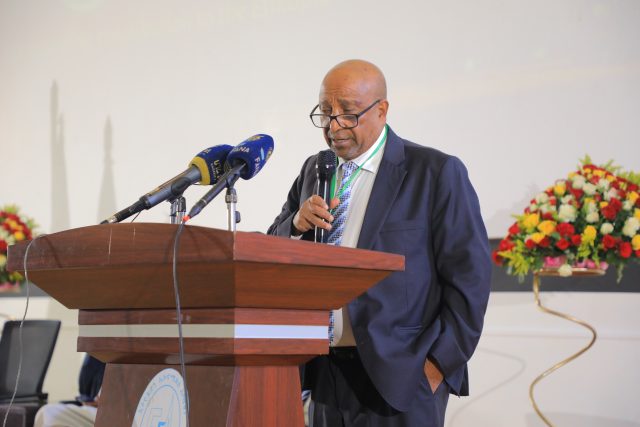
 Betegbar Yaregal