Unfinished-Task-of-Ensuring-Ethiopian-Coffees-Worth.jpg

Persisting efforts to reposition Ethiopian coffee in the international market have begun to bear fruit, as the price of the nation’s specialty coffee has grown by 35Pct from last year, notwithstanding coffees fetching way above that during the recent Cup of Excellence competition. Yet, international markets are still not working to the interest of coffee growers but rather for processors, who use Ethiopian coffee to spice up their final coffee recipes and thus compensate for low quality coffees bought in bulk from other countries.

Ethiopia has undertaken substantial investment in increasing productivity, as well as straightening the local supply chain. However, such accomplishments domestically are not equally backed with efforts of reasserting the worth of Ethiopian coffee in international markets. Ethiopia still has no decision-making power over its coffees internationally, as coffee is mainly exported just to generate foreign currency. EBR’s Ashenafi Endale explores the remaining homework in removing the glass ceiling looking down on Ethiopian coffee.


cement-factory.jpg

It is to be expected that whenever demand is high, the market usually responds by supplying more. But this year in Ethiopia, supply of cement was 5.5 million tons below demand. Though shortages began in 2018, major fluctuations have twice been seen in 2021 owing to spare part and maintenance problems on one side, and political insecurity and war on the other—even to the extent of the full shutdown of Messebo Cement Factory in Tigray and its 2.1 million tons of production.

Additionally, the government is handicapped to effectively oversee distribution of even produced cement, to the point where it could only be accessed from the black market for a certain period. EBR’s Ashenafi Endale assesses how Ethiopia could go from self-sufficiency to the reconsideration of cement imports.


striking-editorial-addis-maleda-ebr.jpg

The influence advertisers put on media is growing by the day. Commercial broadcasters, newspapers, and magazines generate the majority of their revenue from advertisements. As this is the case, ad placers usually use their economic power to influence content production in favor of their interests. Striking a balance between the freedom and autonomy of media, on the one hand, and influence from advertisers on the other is one of the biggest challenges private press faces. EBR’s Ashenafi Endale explores the issue in depth.


the-gravity-of-paper.jpg

Of the under-pressure media sector in Ethiopia, private press is perhaps enduring the highest burden—constantly increasing rates by printers. This expense, which takes up half of Ethiopian periodicals’ annual outlays, persists in an overall rough environment where distributors are cartel-like and government is not the friendliest. Add to this encroachment by cheaply produced digital news and reduced advertising activity, private weeklies and monthlies in Ethiopia are an endangered species. EBR’s Ashenafi Endale looks into the company’s parent industry where solutions are found in better local pulp and paper production, in-house printing and distribution, and better-quality journalism.


Ethiopia-is-the-sleeping-giant-in-the-global-coffee-industry.jpg

Tamiru Tadesse is Founder and Manager of Halloo Coffee PLC and Tamiru Tadesse PLC. The latter is an enterprise that collects coffee from over 300 small-scale farmers to supply to the former. Born in Bensa, Sidama Region, he studied electrical engineering at Hawassa University and taught at Debre Berhan University for two years before being employed at a coffee exporting company for six years. But after his friend, also from Bensa, won the 2020 Cup of Excellence global coffee competition, Tamiru decided to set up his own company that exports coffee. A year later in 2021, He won the competition with the top price of USD370 per kilogram after stiff competition from his home town’s coffees. His company currently has surplus orders from global buyers and plans of setting up a coffee processing plant instead of exporting raw beans.


demonetization.jpg

The portion of currency outside of banks and in individuals’ hands bulged to ETB127.5 billion during the third quarter ending March 2021, up from ETB109.3 billion in March 2020, according to the latest report from the National Bank of Ethiopia. During the year in between, the figure dramatically dropped to ETB64.6, after most monies entered banks’ vaults ensuing demonetization in September 2020. Birrs are now back in peoples’ pockets.


fre-ethio-telecom-1.jpg

The‌ ‌state-owned‌ ‌telecom‌ ‌firm‌ ‌disclosed‌ ‌ETB56.5‌ ‌billion‌ ‌in‌ ‌revenue‌ ‌for‌ ‌the‌ ‌just‌ ‌ended‌ ‌2020/21‌ ‌Ethiopian‌ fiscal‌ ‌year,‌ ‌up‌ ‌by‌ ‌ETB8.8‌ ‌billion‌ ‌from‌ ‌previous‌ ‌year.‌ ‌The‌ ‌enterprise‌ ‌netted‌ ‌ETB31‌ ‌billion‌ ‌during‌ ‌the‌ ‌second‌ half‌ ‌of‌ ‌2020/21,‌ ‌up‌ ‌from‌ ‌the‌ ‌ETB25.5‌ ‌billion‌ ‌during‌ ‌the‌ ‌first‌ ‌half‌ ‌year,‌ ‌during‌ ‌when‌ ‌it‌ ‌lost‌ ‌its‌ ‌assets‌ ‌and‌ service‌ ‌revenues‌ ‌to‌ ‌conflicts‌ ‌in‌ ‌Tigray‌ ‌regional‌ ‌state.‌  

5d2b9f90dd3e0.jpg

A new hope was dawn when two banks named Goh and Selam recently begun selling shares with the aim to finance specifically housing demand. Ethiopia’s housing gap is an accumulation from generations, with over 400,000 new demand annually matched by less than 100,000 supply, government schemes and private developers teamed up.  Now, Goh and Selam revived the demand of millions of house seekers, promising to deliver hundreds of thousands of houses in few years. Goh will provide loans for the house buyers, while Selam both the developer and buyer.


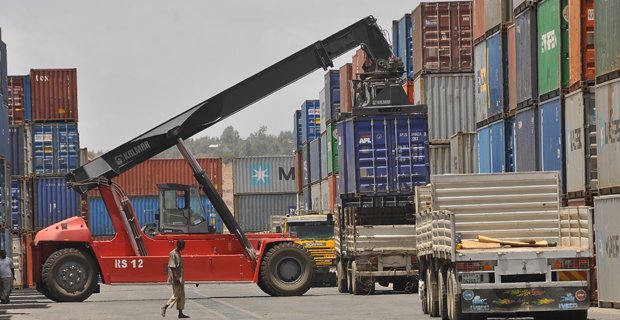
modjo-dry-port.jpg

The Ethiopian Maritime Affairs Authority (EMAA) is finalizing a new directive specifying requirements to govern the licensing of private multimodal transport operators.

“We are preparing to commence licensing the first private multimodal operators in the country. There are many logistics companies who have been requesting this,” Ewnetu Taye, Deputy Director at the Ethiopian Logistics Transformation Office (LTO), told EBR.


Ethiopian Business Review | EBR is a first-class and high-quality monthly business magazine offering enlightenment to readers and a platform for partners.


2Q69+2MM, Jomo Kenyatta St, Addis Ababa

Tsehay Messay Building

Contact Us

+251 961 41 41 41