africa-trap.jpg

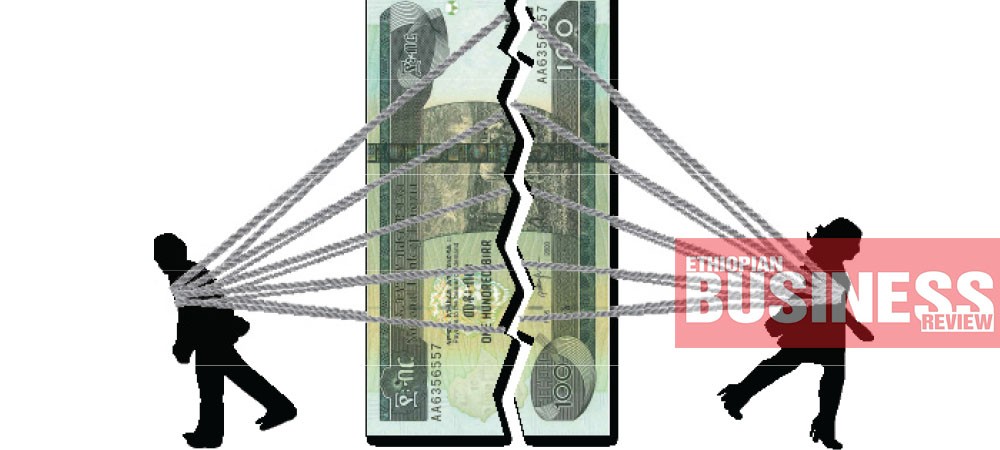
China’s rapidly rising economic and commercial relations with Africa have received much global attention in recent years. Over the last twenty years, China has climbed from being a relatively small investor in Africa to becoming its largest economic partner. Most importantly, China’s billions of dollars in aid and financing have helped many African countries, including Ethiopia, to pursue their most ambitious infrastructure development projects. However, as debt to the Asian Giant piles up, some experts fear the cost. EBR’s Samson Berhane investigates.


struggling-to-find-a-foothold.jpg

The Fight to Develop Commercial Farming

Commercial farming, which dates back to the imperial era in Ethiopia, has gone through many ups and downs. Even though the government gave local and foreign commercial producers the green light to start producing around five years ago, many of the companies that leased land and took loans from the Development Bank of Ethiopia (DBE) have left the sector altogether, citing difficulties with developing their land for production. However, this has left DBE unable to recover the billions of birr it disbursed to commercial farmers. EBR’s Ashenafi Endale explored the problems facing commercial farming, and the potential in its future.


left-in-limbo.jpg

The Harsh Reality Facing Firms Accused of Tax Evasion and their Employees

The subject of tax evasion, which refers to illegal practices used to escape from taxation, embraces many dimensions and problems. Global Financial Integrity estimates a sum of USD285 billion economic loss occurs in developing countries a year because of tax evasion. Although the exact figure is hard to find in Ethiopia due to insufficient data and different estimation techniques, tax evasion activities remain one of the major problem in Ethiopia. Even recently, the government announced that 135 companies were implicated in tax evasion activities, totaling around ETB14 billion. However, companies which are accused of involvement in tax evasion, as well as tax experts, stress that the gaps in the tax law is costing businesses unnecessary money, on top of leaving thousands of employees jobless as EBR’s Ashenafi Endale reports.


Navigating-The-Wage-Gap-Between-Women-Men.jpg

All over the world, the wage gap between men and women has become a point of debate. In many countries, men and women are not compensated equally for working in the same positions, to varying degrees in different areas. In Ethiopia, women make around 63 cents for every birr earned by men. There are also issues with being able to access equal employment opportunities, as EBR’s Ashenafi Endale found.


merkato-topic.jpg

Ethiopia’s Economic Slowdown Takes A Toll

Ethiopia been praised by the global community for its outstanding economic performances for decades. Although the country has registered one of the highest economic growth rates in Africa, the economy has been slowing down in recent years. In December 2018, the International Monetary Fund announced that Ethiopia’s economic growth dipped to 7.7 pct in 2017/18, due to political uncertainty and severe foreign exchange shortages. Now, Ethiopia’s economy seems to be at a crossroads. While the decline of exports, a rise in prices, a drop in construction activities and the disruption of main trade routes signal that the economy is indeed slowing down, experts are worried that decreasing state involvement, coupled with the drop in government spending, will make the problem worse, as EBR’s Samson Berhane reports.


Capital-Out-Flows.jpg

Illicit financial flows (IFFs) have become a major concern globally, especially in recent years. Ethiopia is not an exception in this regard. The country loses between USD1.3 billion and USD3.2 billion annually in the form of IFFs. This figure accounts for up to 29Pct of the country’s total international trade or 97Pct of the total aid inflows. There are a variety of reasons for capital flight from Ethiopia, including political reasons, decline in economic stability or stricter capital regulation. However, the most prominent causes in Ethiopia are related to the informal sector, crime, trade mis-invoicing and tax evasion, as EBR’s Ashenafi Endale reports.


money-Flooded.jpg

Commercial banks in Ethiopia are currently finding themselves with more liquidity than they can work with. While this is a good moment for those who have been desperately looking for credit, it has pushed commercial banks to sit on resources that come with a high cost. As a result, many banks are being forced to find alternatives to invest their extra liquidity, including introducing mortgage schemes with various real estate companies. EBR’s Samson Berhane spoke to bankers, experts and businesses to shed light on the matter.


Uphill-Climb.jpg

Fight Against Illegal Currency Trading

Over the recent months, the government has undertaken several measures to wipe out the parallel exchange market. But none of the measures were effective in arresting the spread of black market transactions. The first step was spreading a false rumor that the government would adjust the exchange rate. In doing so, it managed to temporarily weaken the black market and narrow the gap between it, and the official exchange market to as low as five cents. This was short-lived though. Black market players, who saw that the government did not keep its word, started raising the exchange rates again. Frustrated by their actions, the government, in an unprecedented move, shut down businesses engaged in the informal exchange market. But that also didn’t work, as the gap between the parallel and official market widened by almost eight birr. EBR’s Samson Berhane investigates.


Scramble.jpg

Gulf Nations Cast a Shadow Over the Horn of Africa

The Horn of Africa is one of the most unstable regions in the world. It has long been known for economic, political and humanitarian crises. However, these challenges have not repelled global and regional powers, chiefly because of the region’s strategic geopolitical importance for global security and international trade. This makes the region a battleground among global actors whose economic and security interests exceed their national boundaries. The United States, France, China, the United Arab Emirates, Turkey and Iran have already set up military bases in the region. Germany, Japan and India are also focusing on the area. More recently, with the security bloc formation, spearheaded by Saudi Arabia and Iran respectively, the region has further become a battle of religious, economic and security influences. In fact, the Horn countries have been highly influenced to side with either of the two blocs. Despite this influence, Ethiopia has remained neutral for many years. Recently, however, worries are mounting that Ethiopia will likely side with the bloc led by Saudi Arabia. However, the government claims that it is firm in its neutral position. EBR’s Samson Berhane investigates.


Transacting.jpg

Wide Spread Contraband Trade Cripples Ethiopia

Contraband , part of the shadow economy, is still a threat to Ethiopia’s economy. But even more, it has recently started to affect the well-being of the nation. The recent violence in the states of Ethio-Somali and Benishangul Gumuz shows the severity of the problem. Items from textiles products to precious metals are traded by contrabandists. This has paved a way for a shadow economy to thrive, raising its contribution to the GDP to as high as 40Pct. EBR’s Ashenafi Endale investigates.


Ethiopian Business Review | EBR is a first-class and high-quality monthly business magazine offering enlightenment to readers and a platform for partners.


2Q69+2MM, Jomo Kenyatta St, Addis Ababa

Tsehay Messay Building

Contact Us

+251 961 41 41 41