awash-and-dashen.jpg

Awash International And Dashen Banks’ Stiff Competition, the Defining Factors for this Year

Despite the fact that private banks are still a relatively new concept in Ethiopia, two stand tall among the nation’s 16 private banks: Awash International Bank and Dashen Bank. Both enjoy larger after-tax profits than their competitors do. According to the National Bank of Ethiopia (NBE), in the 2013/14 fiscal year alone, both banks’ collective net profits exceeded ETB1.37 billion, accounting for roughly 40Pct of the entire private banks’ after-tax profits that year. While the nature of their competition isn’t necessarily adversarial, both banks have been in stiff competition with one another in certain indicators – such as paid-up capital, total assets, and loan disbursements – in which each bank has enjoyed supremacy over the other in different years. However, the overall success of each bank obscures the reality behind the scenes: both have had their performance – and assets – adversely affected by foreign currency shortages, surging expenditures and liquidity challenges. EBR’s Fasika Tadesse explored each bank’s 2014/15 fiscal year performance – analysing the nuances of each company’s overall figures – in order to shed light on the two financial titans that have dominated Ethiopia’s private banking sector.


Financial-Inclusion.jpg

What needs to be done in order to create greater financial inclusion and literacy in a developing country like Ethiopia? That’s the question on the minds of many government officials who are looking to encourage greater financial knowledge among the country’s populace. Finance experts are looking to mobile technology to create greater financial awareness. Large banks and companies like M-BIRR, which provide mobile financial services, are emerging in Ethiopia and have ambitious plans to have millions subscribe to their services in a few years. These goals, however, are lofty, considering that Ethiopia has one of the lowest mobile penetration rates in sub-Saharan Africa. So what has to be done? EBR’s Samson Hailu spoke with stakeholders dealing with this issue in order to shed light on its complexity and potential solutions.


How-Costly-Will-the-Drought-be.jpg

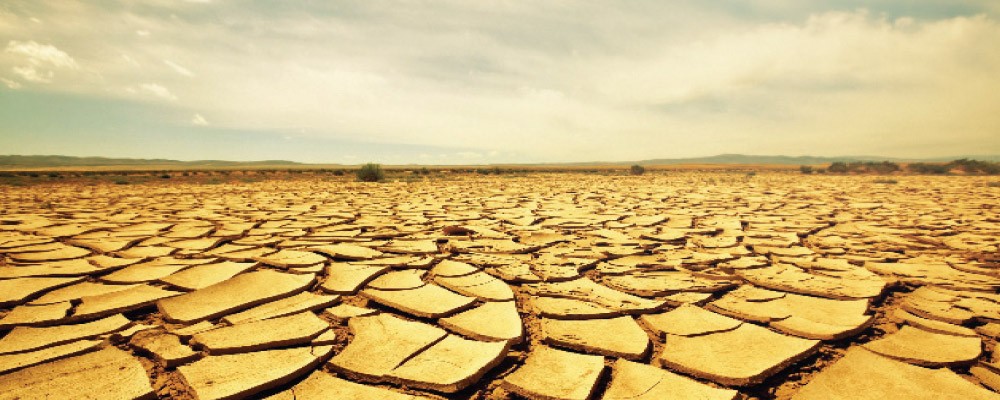
The current drought in Ethiopia has left more than 8.2 million people in need of aid. However, will this situation affect the country’s overall economic growth? That’s a subject of debate for many. Some say that one harvesting season isn’t likely to be overly detrimental to the country’s development goals. Prior droughts, however, paint a different picture. World Bank data demonstrates that Ethiopia’s GDP fell by 7Pct during the 1985 drought. Others are concerned that the drought will directly contribute to the country’s already increasing inflation rates. EBR’s Ashenafi Endale spoke with key stakeholders to learn more about the far-reaching implications of the current drought.


Industry-Parks.jpg

Are they a magic bullet for fast industrialization?

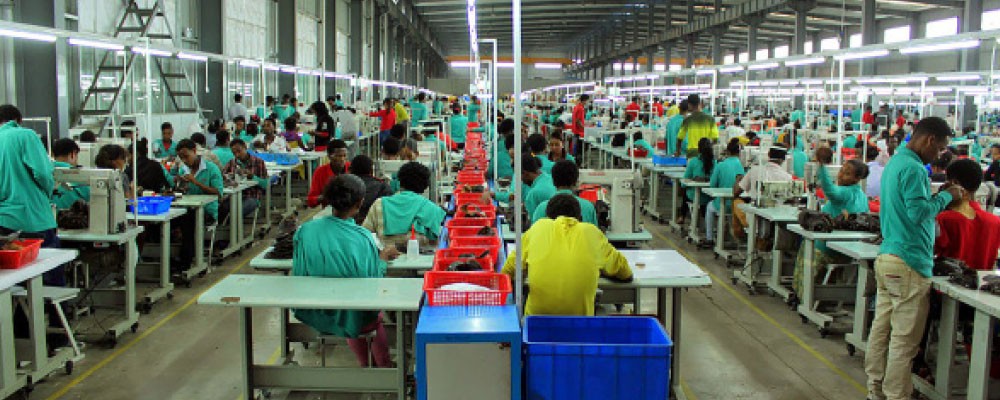
In an attempt to harness Ethiopia’s manufacturing potential, the government has plans to establish industrial parks for facilitating fast industrialization. These parks offer a number of privileges for the companies that operate on them. The benefits include provision of basic infrastructure, duty free import of machineries and tax holidays. Government officials argue that the parks allow for increased manufacturing capacity. Others, however, say that the companies who occupy these parks, many of which are owned by foreign investors, are doing little to contribute to the development of technical knowledge and capacity among local businesses and employees, which could prove less advantageous to the nation in view of huge investment made to establish them. EBR’s Ashenafi Endale spoke with industry insiders to learn more about the potential and pitfalls surrounding the development of industrial parks in Ethiopia.


After-MDGs-Ethiopia.jpg

The year 2015 marks the end of the Millennium Development Goals (MDGs) – a set of global targets that mainly aim to reduce global poverty by half and improve the livelihoods of impoverished communities. Despite marked improvements in the reduction of poverty in some countries, there’s still much work to be done to achieve the goals set in 2000. That’s why global leaders are convening a series of meetings to establish the Sustainable Development Goals (SDGs) in order to build on the achievements of the MDGs.


Striking-a-Delicate-Balance-.jpg

Ethiopia’s Sectoral Economic Growth, Sustainability

At the end of the 2008/09 fiscal year, for the first time in Ethiopian history, agriculture gave way to service as the biggest contributor to the nation’s Gross Domestic Product (GDP). Experts argue this was unhealthy because economic theories suggest a healthy structural transformation of a growing economy shifts focus from agriculture to industry and then to service. That was why the service sector’s extraordinary growth was like “putting the cart before the horse”. Accordingly the administration of the late Prime Minster Meles Zenawi took a series of policy measures to adjust the growing economic imbalance. Samson Hailu, EBR’s Research Editor, writes about the implications of these policy measures for the current business slowdown in the country.


The-White-Box.jpg

The agricultural sector remains our Achilles heel, nonetheless, we remain convinced that agricultural-based development remains the only source of hope for Ethiopia.” This statement was made by the late Prime Minister Meles Zenawi, who described the irony facing Ethiopia’s agricultural sector, in a nutshell, a decade ago. The direction was what the ruling party, Ethiopian Peoples’ Revolutionary Democratic Front (EPRDF), has been implementing for the last 23 years. The party has been stressing that the development of the country lies in transforming the rural economy in general and agriculture in particular.


Into-the-Unknown.jpg

Are the “Salad Days” for Private Banks Ending?

Teklewold Atnafu, the longest serving governor of The National Bank of Ethiopia (NBE), in his speech on financial liberalization in the country, at the eighth general assembly of the Ethiopian Economic Association (EEA) on July 15, 2000 asked the assembly, “Have we created, through financial sector liberalization, a diversified and deep financial system?” and answers himself “Obviously, there is still a long way to go in this respect. We still don’t have active money and capital markets. The types of financial instruments remain limited. The sector is not well diversified in terms of financial institutions. Competition in the sector is far from being fierce.” Fast forward 13 years and almost nothing is changed, except may be for the competition part, and his institution’s Neanderthal nature and the stifling directives it formulated through the years are partly to blame. And now the sector is facing yet another obstacle.


Led-by-the-Market-.jpg

How the Market-oriented Ethiopian Infant Film ‘Industry’ Staggers to Stand on its Feet

How It All Began

We neither eat nor drink it, why would we pay for something we see with our own eyes?” was the question posed by many of the aristocrats of Emperor Menelik II, when asked to pay to watch the first ever film screened in Ethiopia at what later became to be known as “Saitan Bet” – the house of the devil. Others concluded “this is the work of the devil not humans” after watching it.


Service-Bonanza.jpg

Why Ethiopian Investors are Avoiding the Manufacturing Sector

In our meetings with Prime Minister Meles Zenawi, he frequently raised questions regarding the lack of private sector dynamism [in Ethiopia]. One of his questions was why Ethiopians with large sums of money invested in urban properties instead of building factories. On another occasion he asked how East Asian governments steered the private sector away from speculation and rent seeking and into manufacturing and technology. He also wished to receive literature explaining concretely how Meiji Japan and post-WWII Korea absorbed technology so quickly from foreign-assisted industrial projects.”


Ethiopian Business Review | EBR is a first-class and high-quality monthly business magazine offering enlightenment to readers and a platform for partners.


2Q69+2MM, Jomo Kenyatta St, Addis Ababa

Tsehay Messay Building

Contact Us

+251 961 41 41 41