
We-Need-Economic.jpg

Established in 2009 with 35 founding national chambers to be the main business advocacy organization in Africa, the Pan African Chamber of Commerce and Industry (PACCI), is the most representative business organization in the continent. The Chamber held its annual general assembly meeting in Addis Ababa on November 28 and 29 2013 to discuss about the establishment of a continental free trade area in 2017. In this interview, Amanyehun R. Sisay, executive editor and Mikias Merhatsidk, editor-in-chief of Ethiopian Business Review, discuss, with Seth Adjei Baah, President of Ghana’s National Chamber of Commerce and Industry and President of PACCI, discusses issues about the state of affairs of the chamber, challenges of doing business in Africa, and Labour Mobility in the continent, among others. Excerpt:


Mikias-Merhatsidk.jpg

Following Ethiopia’s drive for continued economic growth and development, the need for investment financing has significantly increased. The state-owned Development Bank of Ethiopia (DBE), one of the main project financiers in the country has also significantly increased its capacity to respond to the country’s strong drive for development.

In this exclusive interview, Amanyehun R. Sisay, executive editor and Mikias Merhatsidk, editor-in-chief of Ethiopian Business Review, discuss, with Esayas Bahre, president of the century-old bank, issues concerning the financing of the manufacturing sector, corruption in the institute and the opening up of the financial sector for foreign banks, among others. Excerpts:


hilemariyam.jpg

For many, the untimely death of Meles Zenawi, Ethiopia’s long-serving and able prime minister, on August 20, 2012 was considered as a serious threat to the country’s unity. This was because; the premier had been too powerful as he had drawn overwhelming political and military control particularly after 2001. His sudden death after 21 years of firm control was anticipated to create vacuum and power struggle within the ruling Ethiopian Peoples’ Revolutionary Democratic Front (EPRDF) and the four parties that constitute it.

Nevertheless 10 months later, his successor Hailemariam Desalegn has managed a peaceful transition and maintains the same economic growth like his antecedent.


You-Cannot.jpg

When the Ethiopian economy was hit by a foreign currency crunch in 2009, the East African Bottling Share Company, which bottles Coca Cola in Ethiopia, was forced to stop production. The Company was unable to import raw materials because opening a letter of credit (LC) was a challenge at the time. This led to the closure of its plant in March 2009. Production resumed when the Commercial Bank of Ethiopia allowed the bottler to open a 1.8 million dollar LC. Four years later, the Ethiopian Economy is experiencing the same bottleneck. However, this time around, the Company seems prepared for the storm. It has received a 25 million dollar transfer from its shareholders abroad so that history will not repeat itself. Mr. Greig Jansen, Managing Director of the Company talks with Amanyehun R. Sisay, Executive Editor of Ethiopian Business Review about the situation and what is in store for Coca Cola, Excerpts:


Insuring-the-Uninsured.jpg

  • OIC’s new Index Based Livestock Insurance for Borena pastoralists

Oromia Insurance Company (OIC) has recently launched a new product dubbed Index Based Livestock Insurance (IBLI) for pastoralists in Borena Zone, Oromia National Regional State. For farmers and pastoralists in Ethiopia’s drought vulnerable zone, the launching of IBLI is very good news.

Borena has been affected by drought recurrently over the past couple of years. According to the United Nations Office for the Coordination of Humanitarian Affairs, in 2010 and 11, drought in Borena caused serious damage to the rich livestock resources of the region. As a result 412,000 out of a total of 1.29 million people in the region were receiving food assistance including aid provided under the Productive Safety Net Programme.


mulu_solomone.jpg

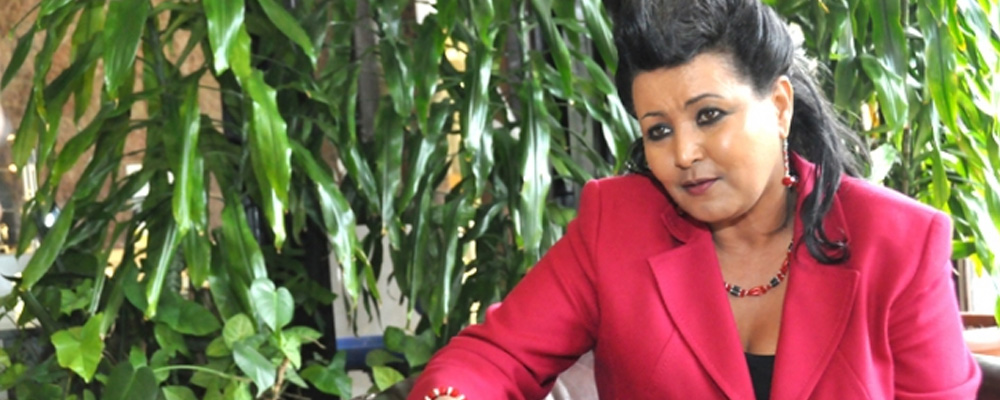
Last December, Mulu Solomon rose to the helm of the Ethiopian Chamber of Commerce and Sectoral Association (ECCSA), becoming the organization’s first female president. During her brief time she has worked to smooth relations with the Addis Ababa Chamber of Commerce and Sectoral Association (AACCSA), facilitate discussions on Ethiopia’s plan to join the World Trade Organization. She has also been working to improve Ethiopia’s business climate. After a recent visit to Handwerkskammer (HWK), a Chamber of Commerce based in Berlin, Germany, she sat down with Amanyehun R. Sisay, Executive Editor of the Ethiopian Business Review (EBR) Magazine, for an exclusive interview to talk about the latest progress of ECCSA.


Ethiopian Business Review | EBR is a first-class and high-quality monthly business magazine offering enlightenment to readers and a platform for partners.


2Q69+2MM, Jomo Kenyatta St, Addis Ababa

Tsehay Messay Building

Contact Us

+251 961 41 41 41