

Ethiopia Backs Global Carbon Market Push as Forest Credit Deals Remain Unsigned

#EBR_News Nov 12, 2026
Ethiopia, which will host COP32 in 2027, has joined China and Türkiye in launching a global initiative to strengthen cooperation on carbon crediting markets, even as its own efforts to turn forest carbon into revenue are still waiting to reach the deal-making stage. The initiative was unveiled on Wednesday at the 31st United Nations Climate Change Conference (COP31) in the Turkish coastal city of Antalya, Xinhua reported.
According to Xinhua, the launch took place at the COP31 China Pavilion and was attended by government officials and representatives of international organisations, including the United Nations and the World Bank. COP31 opened on Monday and runs until Nov. 20, with representatives from nearly 200 countries and regions taking part, the news agency said.
The initiative’s document calls on governments and intergovernmental bodies to improve governance systems for high-integrity carbon credits, Xinhua reported. It encourages cooperation among carbon crediting mechanisms and market participants to promote a high-integrity supply of credits, and calls for the responsible use of those credits to generate effective market demand.
It also urges parties to enhance information sharing and the interconnectivity of market infrastructure. The three countries noted that carbon crediting mechanisms help optimise the allocation of mitigation resources, channel climate finance and unlock new drivers of green development.
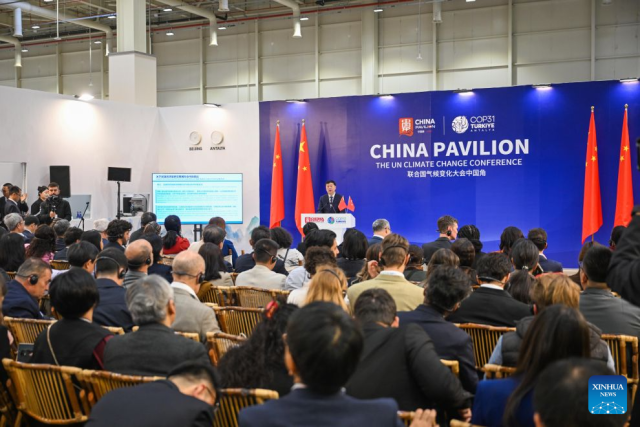
Li Gao, China’s vice minister of ecology and environment, said the initiative is guided by fairness, inclusiveness and voluntary participation, and is open to all. “We welcome governments, international organisations and relevant institutions to join us in delivering a new global public good for climate action,” Li said, according to Xinhua.
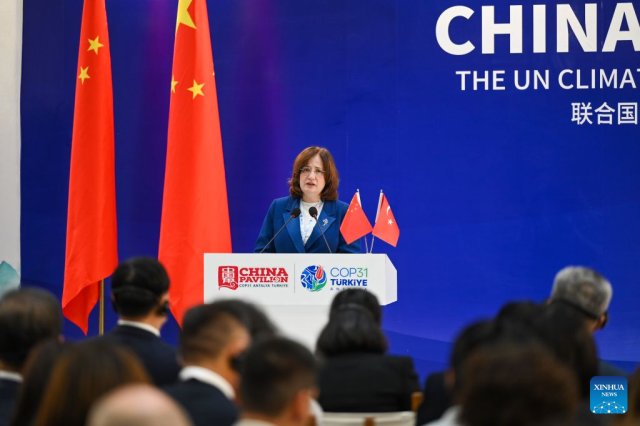
Fatma Varank, Turkish deputy minister of environment, urbanisation and climate change, told Xinhua the initiative would give emerging economies a platform for South-South collaboration. She noted that developing countries often face financial and technical constraints in establishing and operating carbon markets, and said partnerships formed directly among such countries are especially valuable.
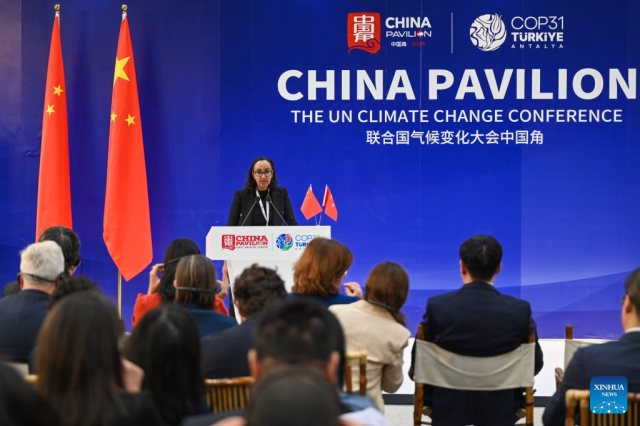
Selam Kidane (PhD), chief strategist for Ethiopia’s COP32 Presidency, thanked the Chinese government for proposing the initiative and described it as an important platform for international cooperation on climate solutions. She said Ethiopia was pleased to join China and other partners in co-sponsoring and launching the initiative, describing it as an important platform for strengthening international cooperation on climate solutions.
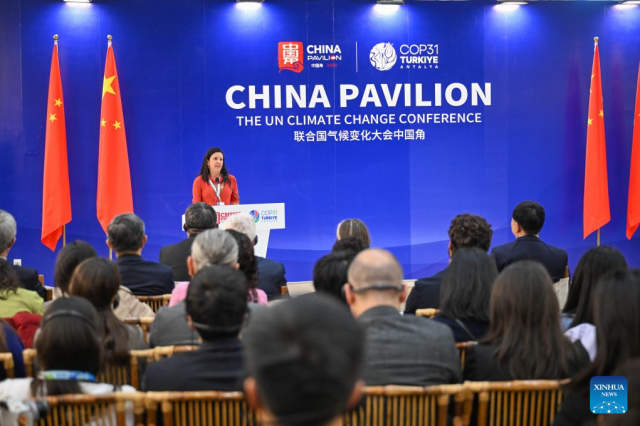
Cristina Reis, extraordinary secretary of carbon markets at Brazil’s Ministry of Finance, also welcomed the move, telling Xinhua that bridging voluntary and compliance carbon markets is essential to driving corporate emissions reductions.
Ethiopia has also been laying the groundwork for forest carbon trading. As EBR reported reported in June, the country has put a legal framework for forest carbon trading in place through Forest Carbon Trading Directive No. 1122/2025, which allows forest owners and project developers to register carbon credit projects and jurisdictional programmes. Under the directive, communities engaged in state forest co-management are entitled to 80 per cent of revenue proceeds.
The House of Peoples’ Representatives approved the directive on 30 June, the same day it was discussed at the Second Agriculture Science Seminar Series. In May, the Council of Ministers also approved a draft Carbon Market Proclamation aimed at operationalising carbon trading, revenue sharing and international transactions.
Yet turning that readiness into revenue has proved slower. Speaking at the seminar, Motuma Tolera (PhD), Head of the Forest Sector Transformation Unit at the Ethiopian Forestry Development, said the Oromia Forested Landscape Program (OFLP) was still in “advanced negotiations” after more than a year of market outreach.
According to Motuma, potential revenue could reach $200 million if CORSIA-eligible certification is achieved, but the figure remains provisional and depends on securing international buyers and meeting stringent standards. CORSIA is the International Civil Aviation Organization’s offsetting scheme, where credits have traded at a premium of $10 to $20 per tonne over the past year, he said.
Motuma added that the programme engaged more than 25 prospective buyers across three continents before narrowing talks to a shortlist of traders and intermediaries. He also said the ISFL standard was approved for CORSIA use only in April, and that the National Jurisdictional Forest Carbon Program, being registered under the ART-TREES methodology, is still in validation.
Ethiopia holds 26.75 million hectares of forest, equal to 23.6 per cent of its land cover, according to Motuma, which points to substantial carbon stock potential. The experience of the Humbo and Sodo reforestation projects, started in 2006, shows how long the road can be: they have sequestered 462,606 tonnes of carbon dioxide equivalent and channelled $1.63 million to community cooperatives over two decades.
Its emphasis on high-integrity supply, responsible demand and connected market infrastructure mirrors buyers’ growing insistence on rigorously verified credits, which the directive itself reflects by requiring independent, internationally accredited verification and ten-year record keeping.
Those requirements raise costs, particularly for smaller projects, so a South-South platform that shares information and pools technical experience could help. With COP32 due to be hosted in Ethiopia in 2027, the country has a visible stake in how such markets are shaped, and also a reputational incentive to show that its carbon framework can deliver real transactions by then.
 Betegbar Yaregal