
Ethiopia’s Date Import Bill Shrinks by Over 90% as Afar Prepares to Host UAE-Backed Festival
#EBR_News Sep 17, 2026
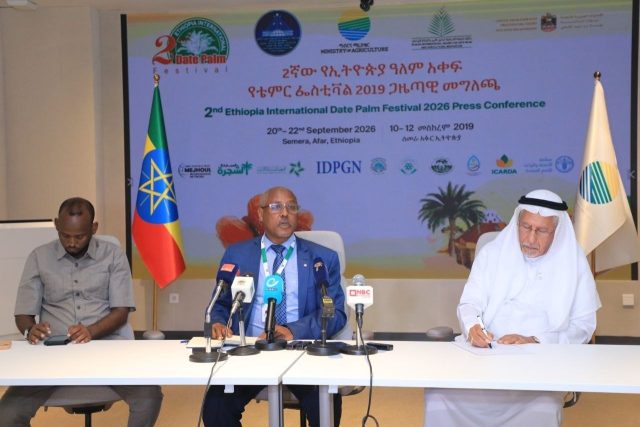
Ethiopia has slashed its legal date import bill from 9.8 million USD five years ago to just 650,000 USD last year, a drop of more than 90 percent, according to figures disclosed by the Ministry of Agriculture at a press conference held at its Addis Ababa office on September 17, 2026.
The decline was presented as evidence of growing domestic production capacity ahead of the Second International Date Palm Festival, set to take place in Semera, Afar Region, from September 20 to 22.
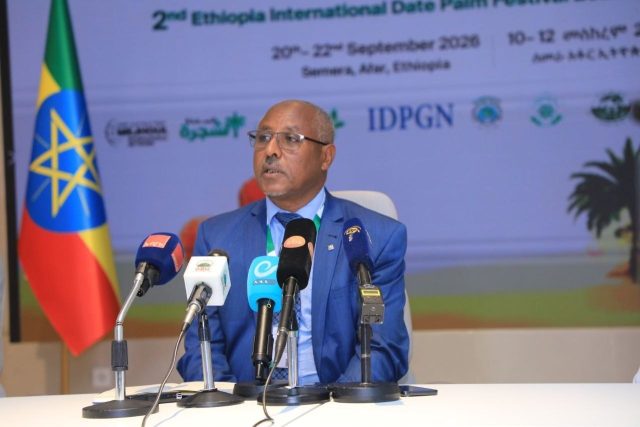
Ali Mohammed, advisor to the State Minister of Agriculture, said the figure excludes dates brought into the country informally by individuals, meaning actual national demand for imported dates remains somewhat higher than the official number suggests.
Still, he pointed to the trend as a sign that Ethiopia’s date palm sector, long dominated by scattered, traditional cultivation, is beginning to respond to deliberate government intervention.
That intervention includes a forthcoming 10-year research and development programme aimed at modernising production methods and scaling up output for both domestic consumption and export, Ali said.
He noted that Ethiopia currently has the potential to bring more than 500,000 hectares of land under date palm cultivation, a figure that dwarfs existing production levels and points to the scale of the untapped opportunity in the sector.
Afar remains the country’s leading date-producing region, followed by the Ethiopian Somali Region, Gambella, Benishangul-Gumuz, parts of Oromia including Borena and Guji, and Dire Dawa.
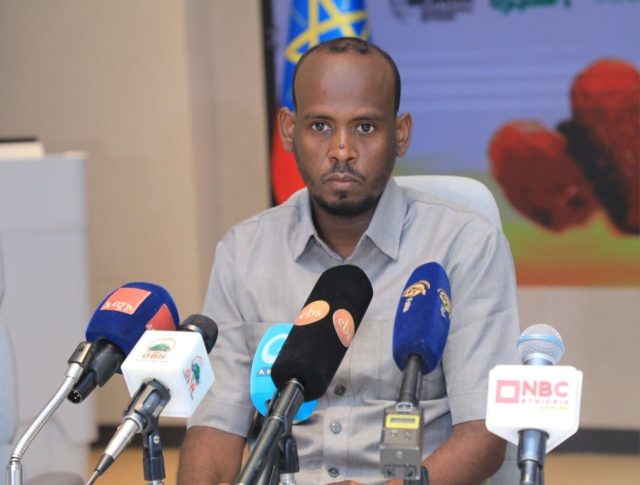
Harun Ali, deputy head of the Afar Region Agriculture and Natural Resources Bureau, said date palm cultivation in Afar has a documented history of more than 250 years, traditionally used for both human consumption and livestock feed, and remains deeply tied to the livelihoods and culture of the Afar people.
The festival itself, now in its second edition, is being organised jointly with the Khalifa International Award for Date Palm and Agricultural Innovation, representing the UAE.
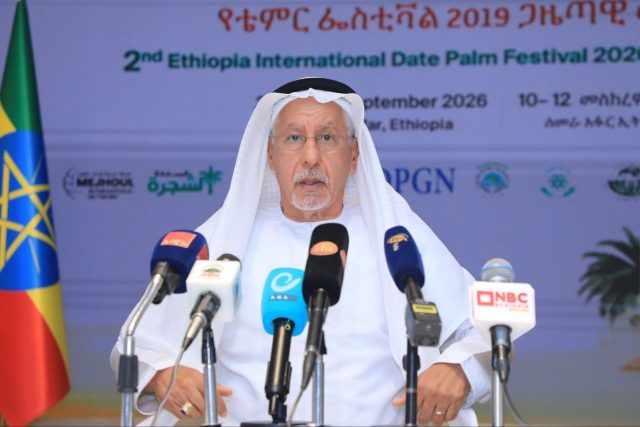
Abdelouahhab Zaid, representing the Khalifa Award, said this year’s programme would focus more heavily on knowledge transfer, capacity building for growers, and building an integrated value chain from cultivar selection through to processing and market access, building on a UAE-Ethiopia relationship he said spans five decades.
Officials said Semera offers investment-ready plots, suitable land, and abundant water resources, and used the briefing to invite private investors and international partners to explore opportunities in the sector.
Harun added that the region, under President Awol Arba, has already begun capacity-building training for local farmers following lessons drawn from the first festival held in Semera last year.
 Betegbar Yaregal
 EBR
EBR