

Ethiopia’s Diaspora Remittances Reach $8.2 Billion in 2025/26, Diaspora Service Says
Betegbar Yaregal
#EBR_News Sep 9, 2026
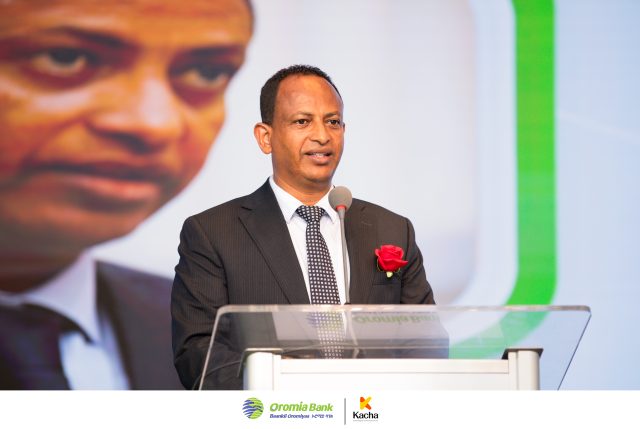
Ethiopia’s diaspora remittances reached $8.2 billion in the 2025/26 fiscal year, up from $7.1 billion the previous year, Fitsum Arega, Director General of the Ethiopian Diaspora Service, said at the official launch of Oromia Bank’s Abba Fardaa digital remittance platform, held at Skylight Hotel in Addis Ababa on Tuesday. Fitsum said the figures are based on data from the National Bank of Ethiopia.
The scale of that inflow places Ethiopia among the more significant remittance economies on the continent. Ethiopia ranked fourth in Africa for remittance inflows in 2024, behind Egypt at $22.7 billion, Nigeria at $19.8 billion, and Morocco at $12.05 billion, and ahead of Kenya at $4.94 billion, according to global remittance data. Ethiopia’s 2024 inflows of $7.1 billion represented 4.8 percent of the country’s GDP that year.
Fitsum said the growth has been building over five years. He said the three years preceding the two most recent fiscal years averaged over $5.5 billion annually, and that combined with the $7.1 billion recorded in 2024/25 and the $8.2 billion recorded in 2025/26, the five-year period has brought roughly $32.4 billion into Ethiopia in remittances.
He attributed the growth to Ethiopia’s Homegrown Economic Reform programme and subsequent banking sector reforms, particularly the transition to a market-based foreign exchange system, which he said has strengthened the flow of remittances through formal banking channels.
In October 2025, the Commercial Bank of Ethiopia said only 22 percent of Ethiopia’s diaspora remittances, estimated at $7.2 billion, were flowing through formal channels, while the remaining 78 percent moved through informal networks, including hawala and black-market currency dealers.
Speaking in Pretoria, South Africa, CBE President Abe Sano told Ethiopians and second-generation diaspora members that if diaspora funds were fully channeled through formal mechanisms, Ethiopia could generate more than $35 billion annually. He urged the diaspora community to increase the use of formal remittance channels and expand investment in Ethiopia.
Fitsum said digital platforms such as Kacha, which bring modern operational systems into the remittance space, have helped create a more favourable environment for formal transfers. He said there are currently 76 money transfer operators registered with the National Bank of Ethiopia, though only six operate at the level of Kacha or offer integration across systems naming Telebirr and M-Pesa, both backed by telecom companies, alongside Kacha, as among this group.
The cost of sending money remains a global factor shaping whether diaspora communities use formal or informal channels.
The World Bank reported that the global average cost of sending $200 stood at 6.4 percent in the fourth quarter of 2023, above the UN Sustainable Development Goal target of 3 percent, with digital remittances costing an average of 5 percent compared to 7 percent for non-digital methods, a gap that underpins the push by Ethiopian banks and fintechs toward app-based and wallet-linked transfer platforms.
On digital infrastructure, Fitsum pointed to Ethiopia’s Digital 2025 strategy, saying the country had surpassed 80 million mobile subscribers by the end of 2025, with a target of reaching 115 million subscribers by 2030. He cited the Ethio Coders programme and the push toward cashless transactions as part of the same digital literacy effort.
Fitsum also said the Ethiopian government has signed labour agreements with five countries Saudi Arabia, the UAE, Qatar, Kuwait, and Jordan and is in discussions with Bahrain, alongside a separate skills and employment agreement signed with Italy.
He said working closely with these countries allows Ethiopia to address challenges facing Ethiopian workers abroad, including Know Your Customer verification hurdles, rather than only passively receiving remittance funds.
He described the Ethiopian Diaspora Service as an independent institution under the Ministry of Foreign Affairs, with diaspora diplomats posted in more than 50 embassies abroad and regular forums held with the Ministry and Ethiopian ambassadors to strengthen the legal flow of remittances.
Globally, Ethiopia’s remittance economy remains modest by the standards of the world’s largest recipients. According to World Bank Migration and Development tracking for 2024–2025, India led all countries in remittance receipts at an estimated $125 billion to $135 billion, followed by Mexico, China, the Philippines, and France. The United States remained the world’s largest source of outward remittances in 2024, sending over $100 billion, followed by Saudi Arabia, Switzerland, Germany, and the UAE.
 EBR
EBR Betegbar Yaregal