

Ethiopia’s $200 Million Carbon Market Bet Faces Commercialization Hurdles, Officials Say
#EBR_News Jun 30, 2026
Betegbar Yaregal
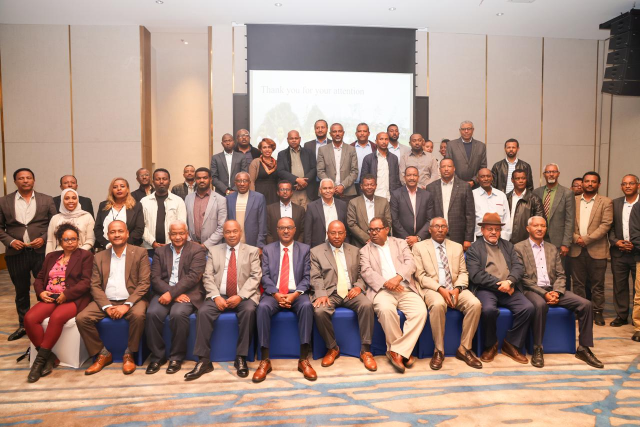
Ethiopia has formally established a legal framework for carbon trading in the forest sector, but forest officials acknowledged today that efforts to convert the potential $200 million USD in forest carbon revenue into actual deals remain stalled in buyer negotiations. Speaking at the Second Agriculture Science Seminar Series, Motuma Tolera (PhD), Head of the Forest Sector Transformation Unit at the Ethiopian Forestry Development, revealed that the Oromia Forested Landscape Program is still in “advanced negotiations” after more than a year of market outreach, highlighting significant gaps between regulatory readiness and actual revenue generation.
The regulatory framework itself is comprehensive. According to the Forest Carbon Trading Directive No. 1122/2025, issued in December and formally discussed today, forest owners and project developers can now register carbon credit projects and jurisdictional programmes, with forest carbon credits defined as tradable units representing one tonne of carbon dioxide equivalent sequestered or reduced from the atmosphere.
Communities engaged in state forest co-management are entitled to 80 per cent of revenue proceeds, whilst private forest owners retain ownership rights to credits from their land.
Eyasu Elias (PhD), State Minister of Natural Resources Development Sector at the Ministry of Agriculture, framed carbon markets as integral to Ethiopia’s broader agricultural transformation agenda. According to Elias, carbon finance can provide innovative mechanisms to support sustainable agricultural practices, improve soil health, restore degraded landscapes, and create livelihood opportunities for farmers and rural communities.
He emphasised that Ethiopia’s Green Legacy Initiative the government’s landscape restoration and ecosystem rehabilitation effort provides a critical foundation for strengthening nature-based solutions and exploring responsible carbon market participation. The initiative, he suggested, positions Ethiopia to capitalise on emerging global carbon finance opportunities.
Mandefro Nigussie (PhD), Chief Executive Officer of the Ethiopian Agricultural Transformation Institute, stressed that scaling these opportunities requires collaboration across government, research institutions, development partners, and the private sector. Nigussie called for “evidence-based dialogue” to ensure that Ethiopia’s engagement with carbon markets supports the country’s climate and agricultural transformation goals. His remarks reflected broader institutional recognition that carbon finance, whilst promising, cannot succeed in isolation and requires coordinated policy support and stakeholder alignment.
The Ethiopian Forestry Development and the Ministry of Agriculture will oversee registration, verification, and the monitoring of benefit-sharing arrangements. Motuma outlined during the seminar that Ethiopia holds 26.75 million hectares of forest 23.6 percent of land cover representing substantial carbon stock potential.
However, the seminar presentations and ongoing project experience reveal that generating credits and securing a buyer are entirely different challenges. The Humbo and Sodo reforestation projects, initiated in 2006, have sequestered 462,606 tonnes of carbon dioxide equivalent over two decades and channelled $1.63 million USD in revenue to community cooperatives. These successes have taken 20 years to materialise and required sustained donor involvement.
The Oromia Forested Landscape Program, which signed an Emission Reduction Purchase Agreement with Norway in February 2023, is described as being in “advanced commercial negotiations” to close deals on 2022–2023 credits. According to Motuma, the potential revenue if CORSIA-eligible certification is achieved could reach $200 million USD, yet this remains provisional and contingent on securing international buyers and meeting stringent methodological standards.
The commercialisation process itself reveals institutional and market constraints. Motuma explained that the OFLP engaged over 25 prospective buyers across three continents during a market-sounding phase before narrowing discussions to a shortlist of leading traders and intermediaries. The project is targeting compliance carbon markets, particularly the International Civil Aviation Organization’s CORSIA scheme, where credits trade at a premium to voluntary markets (ranging from $10 to $20 USD per tonne over the past year).
Yet CORSIA access requires approval under international standards the ISFL standard was only approved for CORSIA use in April this year and ongoing negotiations suggest deals remain uncertain. The National Jurisdictional Forest Carbon Program, being registered under the ART-TREES methodology, is still in validation, with monitoring reports pending and preliminary results described as “not for circulation.”
The seminar highlighted that quality, not volume, is driving buyer interest. International buyers increasingly demand high-integrity carbon credits verified through rigorous measurement, reporting, and verification systems. The directive mandates that forest owners maintain records for at least ten years and that verification bodies be independent and internationally accredited. This raises the cost and complexity of programme implementation, particularly for smaller or less-resourced projects.
Speakers emphasized that managing expectations amongst communities and policymakers is essential: carbon finance is “only a fraction” of the benefits that forests provide, and institutional coordination across government agencies, regional authorities, and project developers remains fragmented.
The path to meaningful revenue generation, therefore, hinges on factors beyond Ethiopia’s control. International carbon prices, CORSIA accreditation, and buyer appetite for emerging market jurisdictions remain volatile. The government has committed to strengthening institutional capacity and preparing investment proposals, but the timeline remains unclear.
The policy framework was further strengthened in May 2026, when the Council of Ministers approved a draft Carbon Market Proclamation aimed at operationalizing carbon trading, revenue sharing and international transactions. The proclamation is expected to provide a broader legal basis for Ethiopia’s participation in both domestic and international carbon markets. And the directive is expected to be approved by House of Peoples Representatives today.
#EBR_CarbonMarkets #EthiopiaForestry #CORSIA #ClimateFinance #OFLP #RuralLivelihoods
 Betegbar Yaregal