Ethiopia has signed a significant cooperation agreement with Russia to support the modernization of its naval forces. On Friday, a Russian Navy delegation, led by Deputy Commander-in-Chief Admiral Vladimir Vorobyev, visited Ethiopia’s naval facilities and training center in Bishoftu, 30 miles south of Addis Ababa. The agreement focuses on naval training and capacity building, marking a major milestone in Ethiopia’s effort to rebuild its naval forces.

This partnership follows an initial 2022 visit and underscores Ethiopia’s commitment to enhancing its maritime capabilities. Ethiopia’s navy, which was disbanded in 1993 after the country became landlocked, has been in the process of reconstruction since 2018 under Prime Minister Abiy Ahmed. The recent agreement with Russia expands Ethiopia’s foreign partnerships as it works to modernize its navy and improve its readiness to protect its interests in international waters.

Commodore Jamal Tufisa, Deputy Commander of Operations for the Ethiopian Navy, stressed that the cooperation will strengthen Ethiopia’s naval rebuilding efforts, ensuring the country’s naval forces are better equipped to secure its maritime interests.

The agreement comes as Ethiopia continues to push for seaport access and a stronger naval presence, which is crucial for enhancing both trade and defense capabilities. This collaboration with Russia also aligns with Moscow’s growing interest in the Indian Ocean, as it seeks to establish a permanent naval base in Port Sudan, according to The Marine Times. However, the ongoing conflict in Sudan may delay such developments.


Africa’s reliance on foreign currencies such as the U.S. dollar, and euro is draining its economies, exacerbating financial instability, and stunting growth. With essential imports—from fuel to machinery—priced in these currencies, fluctuations in their value directly drive up costs, fueling inflation and widening trade deficits. When African nations sell goods internationally, they are forced to reconvert foreign earnings into local currency, incurring additional costs in exchange rate spreads and banking fees.

A 2024 report by the United Nations Conference on Trade and Development (UNCTAD) highlighted that currency volatility further strains small businesses reliant on foreign currency transactions. The report noted that energy dependency poses another major challenge for African economies.

In an interview with Sputnik Africa on the sidelines of the 57th session of the ECA Conference of African Ministers of Finance, Planning, and Economic Development in Addis Ababa, Dr. Melaku Geboye Desta, Coordinator of the African Trade Policy Centre (ATPC), explained, “By removing non-African currencies as intermediaries and eliminating the costs associated with currency conversion and reconversion, we can significantly reduce transaction costs. This will make trade cheaper, more efficient, and highly competitive.”

Dr. Melaku further highlighted that Africa’s dependence on currencies like the U.S. dollar costs the continent approximately USD5 billion annually, according to data from Afreximbank.

He also pointed to the Pan-African Payment and Settlement System (PAPSS), an innovative solution developed by the continent to address this challenge. PAPSS allows for the direct clearing of transactions between African countries, bypassing the need for an intermediary currency.

“With PAPSS, there are vast opportunities to cut transaction costs, speed up trade, and make intra-African trade more competitive,” Dr. Melaku added.

PAPSS, supported by 15 central banks, is set to launch an African currency market platform later this year. This initiative aims to facilitate direct exchanges between local currencies, bypassing the need for intermediate currencies like the U.S. dollar.


Ethiopia’s economic reforms have driven USD3.8 billion in foreign exchange earnings over the past seven months, according to Minister of Trade and Regional Integration Kassahun Gofe (PhD). As the country strengthens its trade and investment environment, over 200 local and international companies are participating in the 14th Ethio-Chamber International Trade Fair, which opened today in Addis Ababa.

Running from March 13 to 17, 2025, the trade fair is organized by the Ethiopian Chamber of Commerce and Sectoral Associations in collaboration with the Ministry of Trade and Regional Integration. The event, themed “Buy Ethiopian,” aims to enhance business partnerships, expand market opportunities, and stabilize product prices.

Minister Kassahun emphasized that Ethiopia’s policy reforms are boosting trade competitiveness and increasing export revenues, contributing to the foreign exchange growth.

Chamber of Commerce President Sebseb Abafira highlighted the fair’s role in fostering business connections, investment opportunities, and international trade linkages. Held at the Addis Ababa Exhibition Center, the event showcases local enterprises and global trade institutions working to expand Ethiopia’s market presence.


Ethiopia’s claims of wheat self-sufficiency are facing growing scrutiny as new data raises doubts about the government’s figures. Prime Minister Abiy Ahmed has hailed the country’s agricultural reforms, claiming Ethiopia has gone from importing wheat to becoming a major exporter, with production supposedly reaching 23 million tonnes in 2023-24, up from 15.1 million tonnes in 2022-23.

However, The Economist analysis reveals significant discrepancies in the government’s reported figures. Independent estimates from the African Development Bank (AfDB) and the U.S. Department of Agriculture (USDA) suggest Ethiopia’s actual wheat production is far lower—7.5 million tonnes in 2023-24, and 5.8 million tonnes in 2022-23, respectively.

These conflicting numbers raise questions about the accuracy of Ethiopia’s self-sufficiency claims. Despite assertions that the country no longer imports wheat, USDA data shows private traders brought in 1.4 million tonnes in 2023, with a 57% increase in imports during the first five months of 2024.

The Ethiopian government’s agricultural strategy, which includes the promotion of “cluster farms” and increased irrigation, has drawn praise from international bodies. However, critics argue that focusing heavily on wheat monocropping could harm soil quality in the long run.

The controversy over wheat production data also points to potential issues within the country’s statistical agencies. The Ethiopian Statistical Service (ESS) recently removed figures from the central bank’s website that contradicted official estimates, according to The Economist.

While international organizations like the FAO and AfDB have recognized Ethiopia’s agricultural progress, neither has fully endorsed the government’s wheat production numbers. Meanwhile, food aid remains a pressing issue, with 16 million Ethiopians still relying on assistance in 2024, according to the World Food Programme.


In a significant move to deepen bilateral relations, Ethiopia and Cuba have signed two memoranda of understanding (MoUs) focusing on the development of sports and technology. The agreements were formalized by Dr. Belete Mola, Ethiopia’s Minister of Innovation and Technology, and Maylin Suarez Alvarez, Cuba’s Ambassador to Ethiopia, with the participation of His Excellency Shewit Shanka, Ethiopia’s Minister of Culture and Sports, and Bruno Eduardo Rodriguez Parrilla, Cuba’s Minister of Foreign Affairs.

These MoUs are poised to strengthen the long-standing friendship between the two nations, fostering cooperation in areas of mutual interest. Both countries aim to leverage their partnership in the technology sector, with Cuba offering its extensive experience to help Ethiopia accelerate its digital transformation. Cuba’s expertise will serve as a catalyst in Ethiopia’s efforts to enhance its technological capabilities, supporting a broad range of sectors, including innovation, digital infrastructure, and education.

Ambassador Maylin Suarez Alvarez emphasized the historical significance of the relations between Ethiopia and Cuba, underscoring the importance of further collaboration in the technology sector. The MoU is not just a document, but a commitment to ongoing dialogue, aiming to turn these agreements into tangible projects that will benefit both nations.


The European Union has unveiled a €4.7 billion (USD5.1 billion) investment package in South Africa, according to Reuters, marking a strategic push to deepen economic ties with Africa’s most industrialized nation at a time when both Pretoria and Brussels face increasing tensions with Washington. The announcement comes as South Africa holds the G20 presidency, a role that has been largely ignored by U.S. officials.

European Commission President Ursula von der Leyen and European Council President Antonio Costa arrived in South Africa as part of a high-level delegation, using the visit to reaffirm Europe’s commitment to a stronger partnership. Reuters reports that European leaders see the trip as an opportunity to navigate shifting geopolitical currents, particularly as the U.S. redefines its global alliances.

Tensions between the U.S. and its traditional allies have escalated, with European leaders increasingly frustrated by Donald Trump’s pivot toward Russia in the ongoing Ukraine war, a move that has disrupted long-standing Western unity on the conflict. Meanwhile, Pretoria has drawn criticism from Washington over its genocide case against Israel at the World Court, further straining relations.

As Reuters notes, the U.S. administration has also waded into European and South African domestic politics, criticizing the EU’s efforts to isolate far-right movements while simultaneously cutting aid to South Africa over land reform policies aimed at addressing racial inequality. Relations between the EU and South Africa have also been uneasy since Pretoria declined to explicitly condemn Russian President Vladimir Putin for his 2022 invasion of Ukraine.

Speaking in Cape Town, von der Leyen framed the EU’s investment as part of a broader effort to reinforce strategic alliances. “In a moment of increased confrontation and competition, we must strengthen our partnership further,” she said. A key area of focus is clean hydrogen, where South Africa’s abundant raw materials and renewable energy potential position it as a future global leader.

For South African President Cyril Ramaphosa, the investment signals progress, but he emphasized the need for balance. “African relations with the European Union should be built on a mutually beneficial partnership,” he said. He also welcomed European support for multilateralism, particularly at a time when nationalism is on the rise.

The visit, as highlighted by Reuters, is part of Europe’s broader effort to counterbalance shifting U.S. policies and reaffirm its economic and diplomatic influence in Africa. For South Africa, it presents an opportunity to leverage global realignments while securing foreign investment to drive industrial growth.


Ethiopian Shipping and Logistics (ESL) is celebrating its 61st anniversary with a stellar mid-year performance, achieving a 99.4% year-on-year revenue growth. In the first half of the 2024/2025 Ethiopian fiscal year, ESL transported 2.9 million tons of cargo, while profit before tax soared by an impressive 182.3%.

Amid rising competition in the sector, Ethiopian Investment Holdings (EIH) leadership, during their mid-year performance review, underscored the need for ESL to enhance efficiency, expand services, and adopt an integrated strategy to sustain its market position.


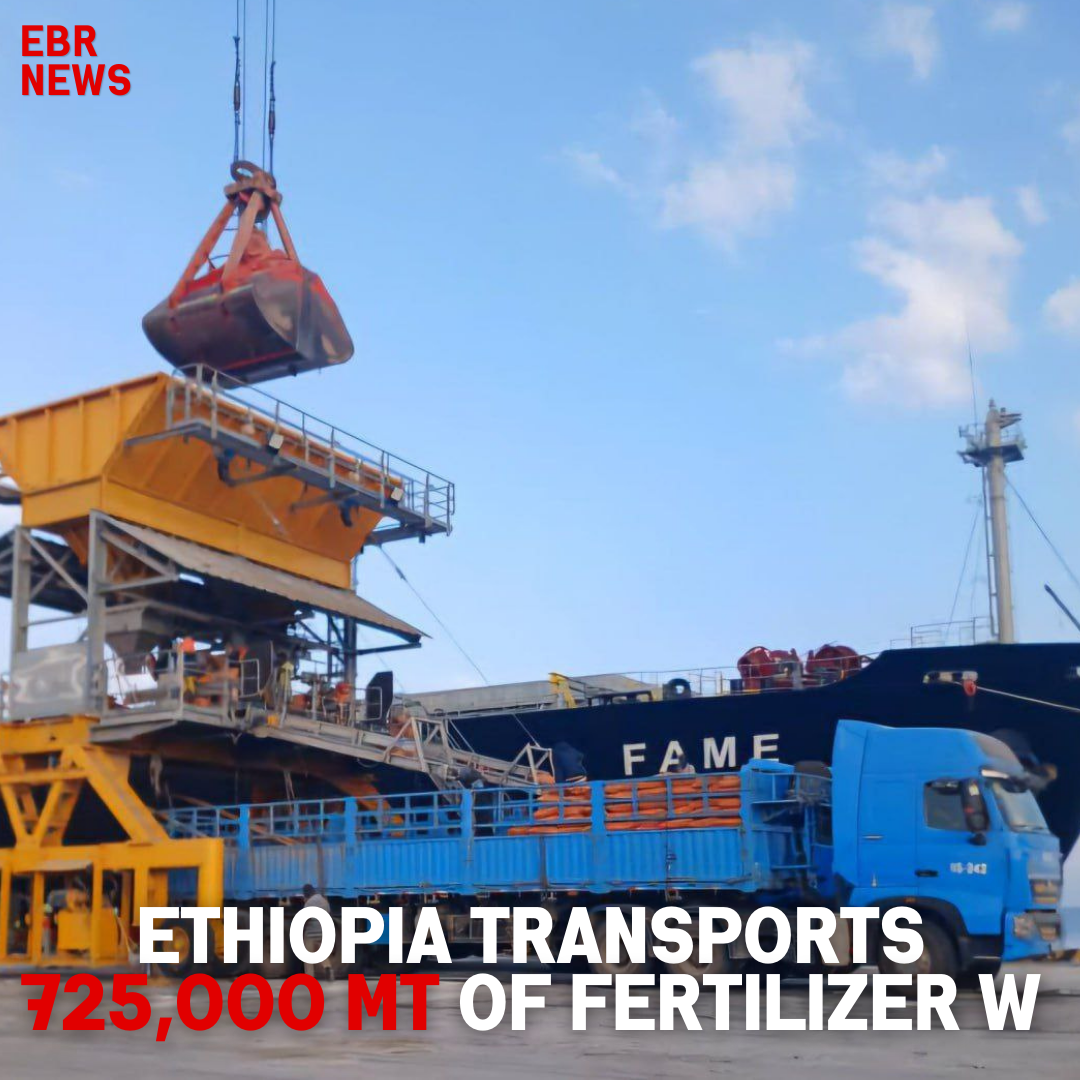
Ethiopia has made significant progress in its fertilizer import strategy, with over 724,965 metric tons (MT) of fertilizer successfully transported into the country. This forms part of the broader plan to secure 2.4 million metric tons (24 million quintals) of fertilizer for the 2025/26 production season, ensuring adequate supplies for the country’s agricultural sector.

By March 12, 2025, a total of 797,463.1 MT of fertilizer had been offloaded from 15 ships at the port of Djibouti. Among these, 9 vessels brought in 512,968 MT of Di-ammonium Phosphate (DAP), while 6 ships delivered 284,495.1 MT of urea.

Of the total amount unloaded, 724,965.2 MT has already been transported into Ethiopia, with the remaining 72,497.9 MT still awaiting transfer at the Djibouti port. The transportation of the fertilizer has been efficiently handled, with dry bulk carriers moving 724,965.2 MT of urea, and rail networks managing the delivery of 610,935.2 MT.

Further shipments are on the horizon, with 227,000 MT of fertilizer—comprising 175,000 MT of DAP from three ships and 52,000 MT of urea from one ship—expected to arrive later this month.


Ethiopian Maritime Transport and Logistics has announced a remarkable performance for the past six months, with a profit of ETB 9.3 billion before tax, marking a 188% increase from the previous year. This impressive result also exceeds the institution’s initial target of 6 billion birr in pre-tax profit.

The announcement was made in the presence of Ethiopian Investment Holding Deputy CEO, Habtamu Haile Michael, and other key officials overseeing the institution’s operations.

Berhane Gebreezgar, Head of the Business and Development Department, shared insights on the institution’s pivotal role in Ethiopia’s trade infrastructure. He highlighted that Ethiopian Maritime Transport and Logistics has been instrumental in facilitating the country’s import and export operations, providing comprehensive logistics services. These include transporting factory products, machinery, vehicles, construction materials, and various cargoes by both sea and land.

In the first half of the year, the institution handled 3.9 million tons of import and export cargo, surpassing expectations. Additionally, the revenue generated from these services reached over ETB 46 billion, exceeding the target of ETB 44.1 billion and reflecting a 99% year-on-year growth.


The Ethiopian Capital Market Authority (ECMA) has announced a one-month extension for publicly held companies to submit required regulatory documents, offering a final opportunity for compliance with the newly enacted Public Offer and Trading of Securities Directive No. 1030/2024.

The extension, granted in response to industry requests, pushes the deadline to April 9, 2025. This move underscores the Authority’s commitment to fostering transparency and investor protection as Ethiopia’s capital market takes shape.

Companies with over 50 shareholders—whether publicly listed or in the process of raising capital—are urged to submit key details about their securities. This includes the total number of shares issued, their valuation, historical offering details, and relevant promotional materials.

ECMA emphasized that failure to comply by the new deadline will have regulatory consequences, with any share issuance by non-compliant companies being considered as occurring after the directive’s effective date of November 14, 2024.

Hard copies of the required documents must be delivered to ECMA’s head office at Minaye Building, Addis Ababa, while digital copies should be sent via email.

The Authority reiterated that this submission does not equate to formal registration of existing securities. Companies will still need to complete the full registration process within a year from the directive’s enactment.


Ethiopian Business Review | EBR is a first-class and high-quality monthly business magazine offering enlightenment to readers and a platform for partners.


2Q69+2MM, Jomo Kenyatta St, Addis Ababa

Tsehay Messay Building

Contact Us

+251 961 41 41 41