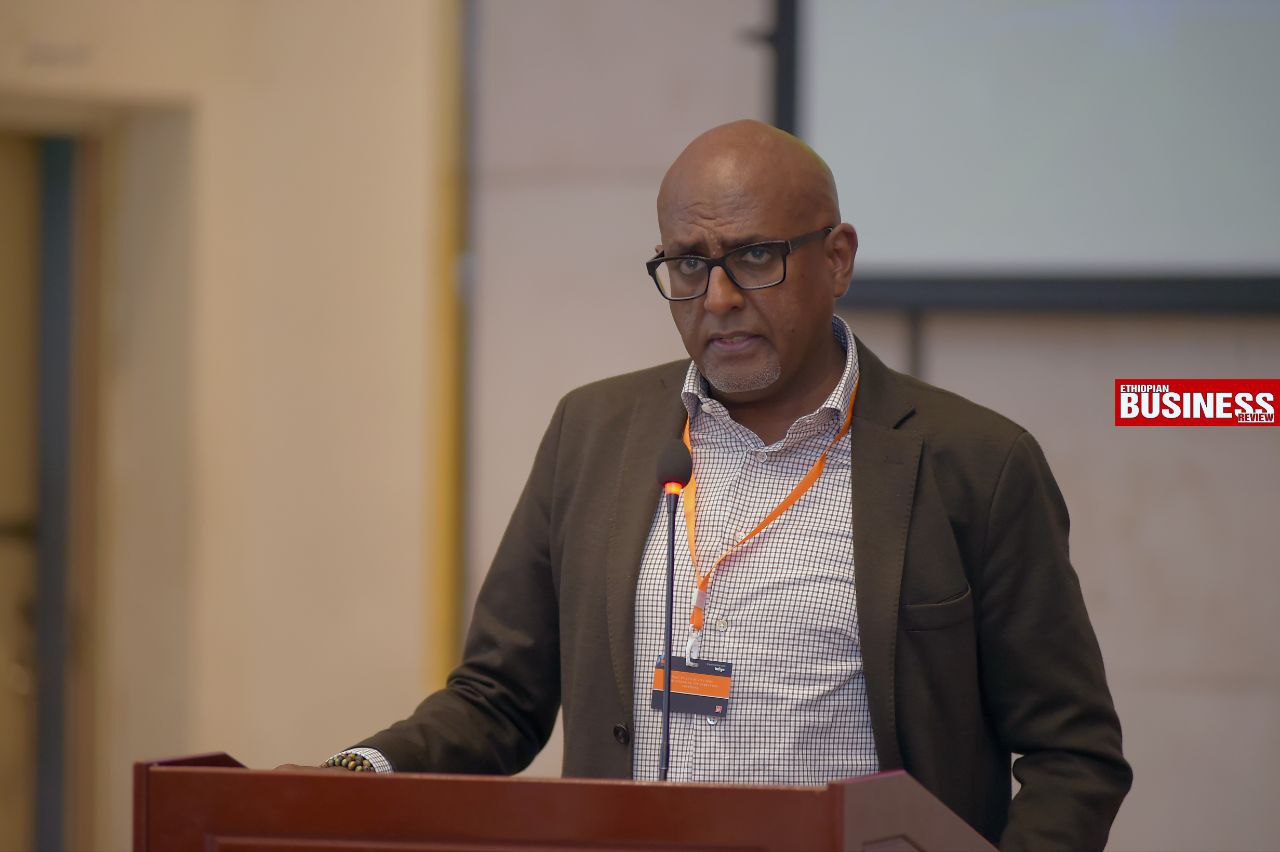
In a groundbreaking move set to transform Ethiopia’s digital financial ecosystem, Ethio Telecom and MasterCard Africa are exploring a strategic collaboration to introduce cutting-edge digital financial services.

A high-level delegation, led by Ethio Telecom CEO Frehiwot Tamiru and MasterCard Africa President Mark Elliott, engaged in discussions to leverage their respective platforms—Telebirr and MasterCard—to expand financial access, accelerate digital payments, and drive sustainable economic growth.

CEO Frehiwot Tamiru emphasized Ethio Telecom’s strong market position, highlighting its vast customer base and robust infrastructure as key enablers in unlocking new digital opportunities. “Our partnership with MasterCard is driven by a shared vision to revolutionize Ethiopia’s financial sector and empower millions through innovative digital solutions,” she stated.

Echoing this sentiment, Mark Elliott, Division President, Mastercard Africa underscored MasterCard’s commitment to the Ethiopian market, citing Ethio Telecom’s rapid growth and infrastructure capabilities as a solid foundation for success. “This collaboration aligns with our mission to drive financial inclusion and create a more connected and competitive digital economy,” he said.


Ethiopia’s negotiating team has returned from the 5th Working Group Meeting for WTO Membership in Geneva, Switzerland, after securing significant progress in the country’s long-awaited bid to join the global trade body. Minister of Trade and Regional Integration, Dr. Kassahun Gofe, addressed the media in a press conference today, highlighting the fruitful outcomes of the meeting.

Dr. Gofe emphasized that Ethiopia’s successful participation was the result of thorough preparation, recognizing the hard work required for WTO negotiations. At the meeting, Ethiopia received support from 19 countries, signaling increasing global confidence in the country’s reform efforts. “We have not only created a platform to achieve WTO membership in a short time, but we’ve also earned the trust of the organization’s members,” Dr. Gofe stated.

The Minister also explained that Ethiopia’s lengthy application process, which has taken over two decades, was due to the country’s previous “very protectionist” economic policies. “You can’t access WTO membership by closing the economy to foreign players,” he said. Dr. Gofe highlighted that the ongoing economic reforms in Ethiopia, which have opened the country up to foreign investment and trade, are pivotal to securing membership.

Looking ahead, Dr. Gofe emphasized the national benefits that WTO membership will bring. While there may be some initial impact on government revenue, he assured that it would not harm the economy. “Beyond this, it will expand the market for Ethiopia’s products,” he said, reinforcing the long-term advantages of global trade integration. He confirmed that the country is working toward full membership at the WTO Ministerial Conference in Cameroon in 2026, with the 6th Working Group Meeting set for July.


Green Motion, a global car rental company headquartered in the UK, has expanded its operations to Ethiopia, marking a significant step in the country’s evolving tourism and economic landscape. With a presence in 88 countries and over 700 locations worldwide, Green Motion is now bringing its renowned services to Addis Ababa, joining the ranks of international brands making an impact in the region. The move is expected to bolster Ethiopia’s growing conference tourism industry and contribute to the country’s wider economic transformation.

As Ethiopia embarks on ambitious economic reforms, including the liberalization of its market and the opening of key sectors to foreign investment, Green Motion’s entry underscores the country’s commitment to modernization. Recent government initiatives such as issuing investment banking licenses, reopening its stock market, and permitting foreign banks to operate signal Ethiopia’s growing attractiveness to international investors. In the tourism sector, the government is focusing on infrastructure upgrades, easing investment barriers, and promoting its rich heritage, making Ethiopia more accessible to global travelers.

“We’ve turned challenges into opportunities, expanding tourist destinations across Ethiopia,” said Dr. Endegena Abebe, State Minister of Tourism. He also highlighted the country’s push towards digitalization and EcoTourism, adding that the entry of Green Motion is a testament to the strength of the private sector and its role in Ethiopia’s economic growth. He noted that Ethiopia’s global visibility will be enhanced by Green Motion’s established reputation but emphasized the need for collaboration between the government and private companies to create jobs, foster a green economy, and develop innovative products.

The CEO of Green Motion Ethiopia, Bizuayehu Tadesse, sees a major shift in the car rental market, which was previously dominated by traditional services for global tourists. “With everything now digitized through our app, we’re not only improving the customer experience but also generating foreign currency, transferring knowledge, and creating jobs beyond Addis Ababa,” he told EBR.

Richard Lowden, Founder and CEO of Green Motion, shared his excitement about entering the Ethiopian market, noting that the country’s underdeveloped car rental sector presented a unique opportunity. “We saw a gap in the market, not because of a lack of demand but due to the absence of international brands,” he told EBR. “We took the leap, and now we’re proud to be part of Ethiopia’s journey toward modernization.”

While Ethiopia’s electric vehicle (EV) infrastructure is still in its early stages, Green Motion is committed to supporting its development. Lowden recalled the company’s experience in the UK, where it launched its first EV ten years ago when there were only 1,000 charging stations. “Today, there are nearly 50,000 charging points in the UK,” he said, emphasizing that the progress made in the UK demonstrates that similar success can be achieved in Ethiopia. In the meantime, Green Motion will offer hybrid vehicles as a bridge to full electrification, ensuring a practical and sustainable solution for the country’s evolving transportation needs.


Adama Special Economic Zone (ASEZ) has launched an innovative digital system to monitor the liquid waste discharged from factories operating within the zone, marking a significant step in modernizing waste management practices.

The system was officially unveiled by Dr. Feseha Yitagesu, CEO of the Industrial Parks Development Corporation (IPDC), who emphasized that the technology will not only improve service efficiency but also streamline operations, positioning ASEZ as a leader in sustainable industrial practices.

Dr. Feseha further pointed out that the insights gained from this initiative will serve as a model for other economic zones to adopt, contributing to the broader goal of environmental sustainability across the country.

Gulilat Abebe, General Manager of ASEZ, highlighted the system’s potential to simplify sewage treatment management, enhance operational oversight, and offer faster, more efficient services to investors. He also expressed gratitude to the development organization IDH for their financial backing and crucial role in the successful implementation of the project.


The Ethiopian Electric Power (EEP) announced that it is supplying 265 megawatts of electricity per day to Kenya under the power sales agreement between the two nations.

The 500 kV Ethio-Kenya Converter Station, a critical infrastructure project in East Africa’s energy landscape, is playing a pivotal role in strengthening cross-border power connectivity.

According to Mekonnen Kassie, a maintenance and operations specialist at the station, the facility receives electricity from Wolayta Sodo Substation No. 2 through four 400 kV incoming lines. It then transmits power via 12 converter transformers and 1,680 thyristors, ensuring a steady and efficient flow of electricity to Kenya.

The station operates with two high-voltage direct current (HVDC) poles, each with a capacity of 2,000 megawatts, and facilitates power transmission through a 1,600-kilometer line stretching from Ethiopia to Kenya.

Under the current power sales agreement, Kenya receives 200 megawatts of electricity for 18 hours daily, up until 6 p.m., followed by an additional 65 megawatts for the remaining six hours.

With the capacity to scale up supply, the station is also preparing to support planned power transmission to Tanzania. The broader vision includes expanding Ethiopia’s role in the continental energy market by facilitating power exports to other countries.

To sustain and enhance its contribution, the station is undergoing various capacity-building and infrastructure improvements, aligning with Ethiopia’s long-term strategy to become a regional energy hub.


The Ministry of Transport and Logistics has announced that the Ethio-Djibouti Railway has steadily increased its transportation capacity, with plans to handle 50% of Ethiopia’s export cargo in the near future. The railway has consistently boosted its cargo capacity by 14.2% annually, solidifying its critical role in Ethiopia’s trade infrastructure.

Currently, the railway plays a pivotal part in the export of Ethiopian coffee, transporting 98% of the country’s coffee exports. It also handles a diverse range of goods, from fertilizers and livestock to heavy machinery, buses, and new trucks, showcasing its capacity to manage both multimodal and unimodal container loads.

In addition, the railway is instrumental in transporting perishable goods in containerized form, maintaining quality, and ensuring that products reach foreign markets in optimal condition—vital for safeguarding Ethiopia’s expected income from foreign trade.

Looking ahead, the Ethio-Djibouti Railway Corporation has set ambitious targets. It aims to cover 50% of Ethiopia’s freight transport needs, increase train frequency to 14 trains per day, and enhance the speed of freight trains to 58 km/h. Furthermore, the corporation is moving toward a fully digitalized rail service, focusing on improving operational efficiency and customer satisfaction.

Recent strides include obtaining multimodal operating and freight forwarding licenses, expanding its service offerings, and positioning itself as a key player in Ethiopia’s freight and logistics sector. The railway’s growth reflects not only its expanding capabilities but also Ethiopia’s ongoing efforts to improve trade efficiency and strengthen its position in the global market.


Ethiopian consumers are facing yet another fuel price increase as the government adjusted petroleum prices overnight, marking the second hike in just two months. The Federal Ministry of Trade and Regional Cooperation announced that the new prices took effect yesterday.

The latest adjustment sets a liter of gasoline at ETB 112.67, while white diesel now costs ETB 107.93 per liter. This follows a significant increase in January 2025, when gasoline prices crossed the ETB 100 per liter mark for the first time, reaching ETB 101.47, while white diesel was priced at ETB 98.98 per liter. The March hike represents an additional 11% rise in gasoline prices and a 9% increase in diesel prices within just two months.

The January fuel price adjustment was attributed to fluctuations in global oil markets and ongoing economic reforms. However, the latest hike comes unexpectedly, as authorities had previously signaled that fuel prices for March would remain unchanged from February. The sudden revision has left businesses and consumers concerned about its impact on transportation, logistics, and the overall cost of living.

With inflation already a pressing issue in Ethiopia, experts caution that consecutive fuel price hikes could further drive up costs across various sectors. Both consumers and businesses are expected to keep a close watch for any potential price adjustments in the coming months.


Ethiopia’s financial sector is accelerating its shift toward AI-driven innovation, with banks and fintech firms scrambling to recruit top digital talent. At the KAIM 3 & 4 Graduation and Career Fair, 121 newly trained AI and data science professionals were introduced to hiring managers from leading financial institutions, bringing the total number of KAIM graduates to 229.

For decades, access to finance in Ethiopia remains a major hurdle for MSMEs, smallholder farmers, and individuals, as stringent lending requirements and high collateral demands have long limited their ability to secure credit. While financial constraints have stifled grassroots economic growth, large businesses with established networks and stronger financial standing have traditionally dominated access to funding. However, fintech innovations are disrupting the status quo. Kifiya Financial Technology PLC, a digital finance firm, has developed an AI-powered credit scoring system, allowing anyone to access finance without traditional collateral. “Now, your credit score is the new collateral,” said Hayat Abdulmalik, Program Director for Sustainable Access to Finance to Enable Entrepreneurship (SAFEE) at Kifiya Financial Technology. “This will minimize a huge portion of costs, and lenders will be able to extend credit remotely, directly through mobile phones.”

“AI is the backbone of our effort to transform how MSME can access financial services supporting the Ethiopia’s financial sector,” said Munir Duri, CEO of Kifiya Financial Technology. He further highlighted for the graduates that AI has entered the age of agentic AI, as Kifiya is also undergoing an internal transformation to integrate AI at an operational level. “We are developing a full-fledged AI-powered HR system that can receive, analyze, and interview job applicants. What’s exciting is that students from this program built it.”

While these advancements mark a turning point, challenges remain. A lack of AI-skilled professionals threatens the adoption of digital finance solutions. “Many students graduate without the skills the industry demands,” Hayat noted. To bridge this gap, Kifiya is launching the Kifiya AI Mastery Training Program in partnership with 10 Academy and signing an MoU with Addis Ababa University to integrate AI-focused courses into the university curriculum. Additionally, collaborations with banks aim to upskill professionals already working in the sector.

Ethiopia’s broader digital literacy challenge also looms large. Seyoum Mengesha, CEO, Digital Economy Development, the Ministry of Innovation and Technology, acknowledged that gaps in the country’s education system have slowed the adoption of AI-powered financial solutions. “Kifiya’s AI Mastery Training Program will undoubtedly help equip youth with industry-relevant skills,” he said. “But this needs to be scaled up nationwide.”

Backed by the Mastercard Foundation, 10 Academy, and Kifiya Financial Technology, KAIM isn’t just training professionals—it’s shaping the future of Ethiopian finance. The initiative is focused on three critical shifts: moving from collateral-based to non-collateral lending, shifting credit access from large businesses to MSMEs and smallholder farmers, and leveraging AI and data to drive financial inclusion.


In a major development for Ethiopia’s financial sector, the Ethiopian Capital Market Authority has unveiled the country’s first investment bank. CBE Capital Stock Company and Wegagen Capital Investment Bank Stock Company have been granted licenses to establish these pioneering institutions, marking the beginning of a new era for investment banking in Ethiopia.

Alongside the establishment of these investment banks, the Authority has also approved the licensing of several other key players in the capital market. Ethio-Fidelity Securities Stock Company will serve as a Securities Market Operator, while HST Investment Advisory Services Private Limited and Equus Securities Investment Advisor Private Limited are now officially recognized as Securities Investment Advisors.

Mamo Mihret, Governor of the National Bank of Ethiopia and Chairman of the Capital Market Authority, highlighted the profound impact a well-developed capital market could have on Ethiopia’s economic trajectory. He stated, “A developed capital market is essential for the country’s economic growth and prosperity. It holds great potential, particularly in solving financial challenges in sectors like manufacturing, while also addressing the government’s budgetary needs.” Mihret also pointed out the role of the capital market in the privatization of state-owned enterprises, saying, “This development will empower society by enabling broader public ownership in state-owned enterprises.”

Hana Tehelku, Director General of the Capital Market Authority, expressed optimism about the arrival of these new players. She noted, “The expansion of services, from investment banking to securities transaction execution, will significantly diversify and strengthen the capital market.” Tehelku added, “Until now, the capital market was limited to just four licensed investment advisors. This expansion will provide broader access to essential services, enhancing investor confidence, promoting fairness, and offering better opportunities for raising capital.”

The entry of these new capital market service providers is crucial for creating a more diversified market in Ethiopia and for offering key services to the public. Services range from investment banking and advisory services to the execution of securities transactions. This expansion will bring new depth and efficiency to the market, opening the door to better capital-raising and investment opportunities. These new service providers are expected to enhance investor confidence, promote market fairness, and provide better tools for capital raising, making the market more accessible to both institutional and retail investors.

In particular, the entry of CBE Capital and Wegagen Capital Investment Bank into the sector is highly significant. Both institutions are majority-owned by two major commercial banks: Commercial Bank of Ethiopia and Wegagen Bank. Their entry into the capital market services sector is seen as a major step forward for the revival and growth of Ethiopia’s capital market. This move is made possible by the recent issuance of National Bank of Ethiopia Directive No. SBB/92/2024, which allows banks to hold up to 100% of shares in capital market service providers, marking a positive development in the country’s financial regulatory landscape.

The situation also highlights the growing role of women in Ethiopia’s financial sector, as two of the newly licensed firms—Wegagen Capital Investment Bank and HST Investment Advisory Services—are led by female CEOs.


In a bold step towards enhancing Africa’s transit trade and investment ecosystem, the African Export-Import Bank (Afreximbank) and ZEP-RE (PTA Reinsurance Company) are set to launch the Trans-Africa Bond Alliance (TABA) on March 28, 2025, in Kenya.

TABA is a transformational initiative designed to bridge the insurance capacity gap, empowering African contractors to secure more construction and procurement projects while boosting cross-border trade and investment flows. By providing robust transit guarantee mechanisms, the alliance is expected to reduce trade barriers, lower costs, and improve efficiency in the movement of goods across Africa.

The launch of TABA aligns seamlessly with the goals of the African Continental Free Trade Agreement (AfCFTA), which aims to create a single market for goods and services across 54 countries. By facilitating seamless transit trade, TABA will strengthen the trade insurance sector, making it easier for businesses to operate with confidence while minimizing financial risks.

This initiative builds on prior high-impact collaborations between Afreximbank and ZEP-RE. Notably, in November 2023, the two institutions signed a USD300 million African Collaborative Transit Guarantee Scheme (AATGS) agreement, a facility designed to enhance ZEP-RE’s capacity in supporting primary and national sureties issuing transit bonds under the COMESA regional customs transit guarantee scheme. The agreement was a major step in reducing risk exposure and increasing support for businesses engaged in intra-African trade.


Ethiopian Business Review | EBR is a first-class and high-quality monthly business magazine offering enlightenment to readers and a platform for partners.


2Q69+2MM, Jomo Kenyatta St, Addis Ababa

Tsehay Messay Building

Contact Us

+251 961 41 41 41